
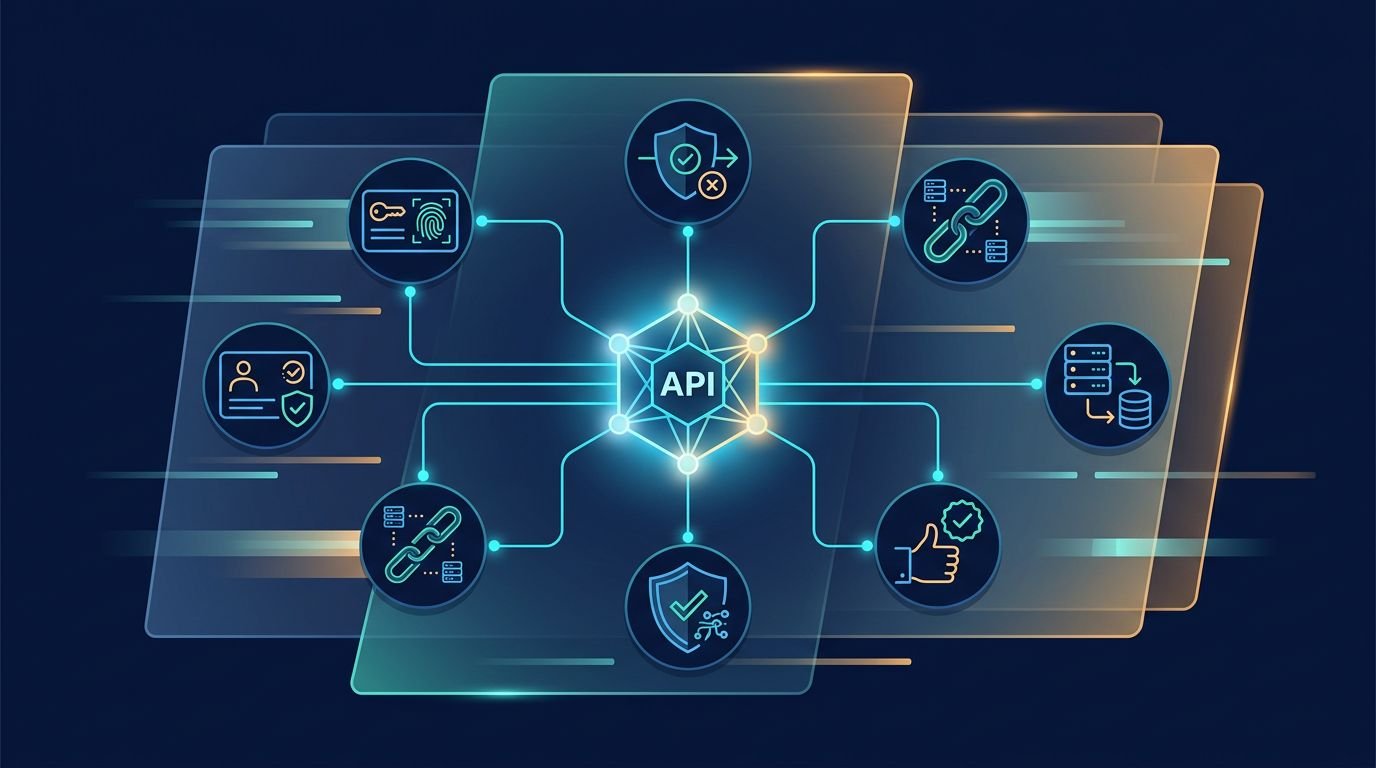
An agent can make one valid API call and still create a serious incident. A 200 response only proves the endpoint accepted the request. It doesn’t show who gave the agent authority, what data shaped its decision, or whether policy should have stopped it.
AI agent audit logs close that observability gap. I treat them as a replayable audit trail of authority, decision context, data provenance, and policy enforcement, not a pile of debug messages.
Key Takeaways
- Treat AI agent audit logs as a replayable trail of authority, decision context, data provenance, policy enforcement, and outcomes—not as debug messages.
- Record every meaningful tool invocation with stable event and trace IDs, identity and delegation details, tool arguments or payload hashes, authorization scope, policy results, and affected resources.
- Require approval records for high-impact actions and match them to the executed payload; any payload change requires a new approval.
- Build the audit pipeline around pre-execution and completion events, centralized collection, tamper-evident storage, and deliberate failure tests that support incident reconstruction.
- Protect sensitive prompts and payloads with classification, hashing, access controls, and separate evidence storage while mapping retention and audit records to applicable requirements.
Why traditional application logs fail autonomous agents
Traditional application logs are built around predictable software paths. A request enters a service, a function runs, and a response returns. That works for many systems.
Autonomous AI agents follow less fixed paths, retrieving documents, calling a model, delegating work, retrying failures, or selecting another tool as context changes. This non-deterministic behavior means requests can produce different action paths, creating an observability gap that ordinary request records can’t close.
| Log type | What it usually records | What goes missing during an incident |
|---|---|---|
| System state logging | Request IDs, response codes, latency, exceptions | The authority and context behind the action |
| Model telemetry | Tokens, model version, duration, cost | The business action and affected resource |
| Tool-call audit logging | Tool arguments, policy result, identity chain, outcome | Nothing material, if fields are complete |
A log stating that crm.update_contact succeeded isn’t enough. Each tool invocation needs enough context to support a complete audit trail. You need to know the initiating user, the agent identity, the approved scope, the exact field change, and whether the tool payload changed after approval.
A completed tool call is not evidence of an authorized tool call.

AI agent audit logs need more than request metadata
I log an event for every meaningful tool invocation, not one summary event at the end of a session. Each event needs a stable event_id, plus a shared trace_id and session_id that create a session trace across the full workflow.
The minimum event record should capture these details:
- Record the UTC timestamp, event ID, trace ID, session ID, and parent event ID.
- Identify the human initiator, the agent workload identity, and the service account used by the target tool.
- Capture the agent version, model provider, model version, orchestration framework, and deployed policy version.
- Store the tool name, endpoint or action name, target tenant, and affected resource type.
- Keep a protected copy of normalized tool arguments, plus a payload hash for integrity checks.
- Log the authorization scope, OAuth scopes, approval reference, and whether access was delegated.
- Record the policy check result, including allow, deny, challenge, or approval-required status.
- Save a bounded decision record that states the task goal, selected tool, retrieved source IDs, evidence used, and reason for escalation.
- Capture the result, error code, retry count, rollback action, and before-and-after state when a tool changes data.
The decision record matters, but I don’t archive raw hidden chain-of-thought. It creates privacy, security, and retention problems without giving investigators a reliable explanation. A concise reasoning trace should show the evidence used, selected action, retrieved source IDs, and guardrail outcome.
A support agent with billing access is a practical example. If it issues a refund, the audit trail should show the approved refund limit, customer account reference, invoice ID, policy version, reviewer identity when required, and returned transaction status. A chat transcript alone can’t answer those questions.

Preserve the delegation chain and policy decision
Identity attribution gets harder when agents call other agents. The root user may authorize a research agent, which delegates data collection to a sub-agent, which then calls a CRM connector. If the CRM record changes, the CRM connector is not the only accountable identity.
I use a three-part identity model for every action:
- The parent identity, meaning the human or upstream system that initiated the work.
- The agent workload that chose or executed the action.
- The tool principal that authenticated to the destination system.
Record the full delegation chain in the audit trail. Add parent_agent_id, delegation_id, delegated scope, scope expiration, and the approving policy to every handoff. This makes it possible to trace an update through all delegated actions.
Policy records need the same care. Log the rule ID, ruleset version, input classification, decision, exception reference, and reviewer outcome. If a prompt injection attempts to steer an agent toward a disallowed export, investigators need evidence that the security guardrails ran before the action. When needed, retain a bounded reasoning trace that explains the policy decision, not raw chain-of-thought.
For high-impact actions, I require an approval event before execution and a matching completion event afterward. The approval record should include the proposed payload hash. If the agent changes the payload, the earlier approval shouldn’t still apply. A changed payload requires a new approval.
Build an audit pipeline that works during an incident
Most teams start with application logs from stdout, embedded in prompts or agent nodes. That helps development but stays weak for operations. A better design uses structured logging at one instrumented boundary around every tool connector.
I use this rollout sequence:
- Define a versioned JSON schema for tool-call events before adding more logs.
- Generate a trace ID at the initial request and pass it through every model call, agent handoff, and tool invocation.
- Emit a pre-execution event with identity, payload hash, authorization context, and policy result.
- Emit a completion event with the outcome, changed resource IDs, errors, retries, and rollback status.
- Send events to a centralized collector and correlate them in the SIEM with identity, API, and security telemetry. Together, these correlated events form a usable audit trail.
For critical events, tamper-evident storage should be part of the durability requirements.
OpenTelemetry is a practical transport layer because it already handles distributed trace context. LangChain callbacks and AutoGen event handlers can feed an adapter that maps framework events into your own schema. OpenTelemetry context should survive model calls, handoffs, and deliberate failure tests. Keep the schema independent of the framework. Agent libraries change faster than governance requirements.
I also test the pipeline with deliberate failures. Denied tool calls, expired approvals, malformed arguments, retrieval failures, and a changed payload after approval should all produce complete records. If a red-team test can’t support incident reconstruction, the production incident won’t be reconstructable either.

Keep logs defensible without creating a second data leak
AI agent audit logs should be detailed, but they shouldn’t become an unprotected warehouse of prompts, credentials, and customer data. Store hashes, opaque identifiers, data classifications, and retrieval document IDs in the central trail. Put sensitive payloads in a separate evidence store with strong access control when retention is necessary.
Tamper-evident storage needs more than a restricted database role. Use append-only event storage, hash chains that link each event to the prior event, signed event batches, and immutable retention controls such as WORM storage. A hash chain makes edits detectable. It doesn’t encrypt the underlying log data.
Applicable high-risk systems face specific automatic event-logging requirements under the EU AI Act. It sets a six-month baseline for log retention, while jurisdiction-specific rules still apply. Review the Article 19 logging requirements against your deployment and jurisdiction. A useful high-risk audit trail overview also shows why lifecycle records need more than model telemetry.
The NIST AI RMF is voluntary and doesn’t prescribe one universal schema. Together, its Govern, Map, Measure, and Manage functions and applicable requirements provide useful inputs to a practical compliance framework for AI governance. That framework should maintain enough structured evidence to reconstruct behavior, assess harm, and assign responsibility.
Auditability is the release criterion
I don’t give an agent unattended authority over money, records, or external messages unless an audit trail can reconstruct its actions. It must show who initiated the work, what authority applied, which tool ran, what changed, and why the action passed policy.
The record should stay quiet until something fails. Then incident reconstruction turns a confusing sequence of model output and API calls into an accountable incident record.
FAQ
What should AI agent audit logs record for every tool call?
Log the event and trace IDs, timestamps, human initiator, agent identity, tool principal, action name, payload hash, authorization scope, policy result, outcome, and affected resource. Include approval and delegation references when they apply.
Are raw prompts required in an AI audit trail?
No. I prefer a protected prompt store when full retention is justified, while the central audit trail retains hashes, classifications, and source references. This supports investigations without exposing sensitive data to every log viewer.
How do AI agent audit logs help with prompt injection?
They show whether untrusted content reached the agent, which policies evaluated the request, what tool scope was active, and whether the agent attempted a blocked action. That evidence shortens containment and makes policy tuning less speculative.
How does tamper-evident storage protect event integrity?
Append-only storage, hash chains, signatures, and immutable retention help detect alteration. These controls strengthen record integrity, but they don’t replace encryption for protecting data.
Do these records need to follow a specific compliance standard?
The EU AI Act can create mandatory obligations for certain systems and uses. The NIST AI RMF is voluntary guidance that helps organizations manage risk. Map records to applicable requirements rather than treating either source as universal.