

Is Pionex a useful free crypto trading bot, or does “free” only mean you won’t see a monthly subscription? The short answer is that Pionex’s standard built-in bots are free to start, but automated trading itself isn’t free. When a bot executes buy or sell orders, normal trading fees still apply, and a bot that makes no trades doesn’t generate those transaction costs.
That distinction matters if you’re comparing Pionex with other crypto trading bot and automation tools. Automation can follow preset rules, but it can’t remove market risk, volatility, spreads, slippage, poor settings, or exchange outages. I also wouldn’t treat backtests or advertised returns as proof of future profit, as I explain in this AI crypto trading guide.
I’ll examine Pionex’s bot choices, real costs, risks, ease of use, alternatives, and the type of trader it may suit. Fees, product rules, bot availability, and regional access can change, so confirm current details on Pionex’s official pages before depositing funds.
Key Takeaways
- Pionex’s built-in bots have no subscription fee, but executed trades still incur normal exchange fees, commonly listed as 0.05% for spot trading.
- I would treat “free crypto trading bot” as free access to automation, not free or risk-free investing.
- Grid, DCA, and rebalancing bots follow your settings; they don’t predict markets or protect you from losses.
- Fees, slippage, volatility, outages, and poor parameters can turn automation into a costly mistake.
- Pionex’s official bot fee explanation is worth checking before depositing funds.
Is Pionex the Best Free Crypto Trading Bot?
Pionex is one of the strongest options if you want automation without paying for a separate bot platform. Its bots are built into the exchange, so you don’t need to connect another service with API keys or manage a second subscription.
That convenience doesn’t make Pionex the best choice for everyone. I would judge it on seven points: total cost, bot variety, control, usability, exchange dependence, risk, and suitability for beginners. Pionex’s official materials describe 12 built-in trading bots, including grid, DCA, and rebalancing tools, although availability and product details can change.

Why Pionex is attractive
The main benefit is the simple setup. You create a bot inside the same account where funds are held and trades are executed. There is no separate management fee for standard bots, but trading fees still apply whenever the bot places an order. Pionex currently lists a 0.05% maker and taker fee for spot trading on its official exchange website.
That makes Pionex more accessible than services that charge a monthly fee before you place a single trade. Beginners also get preset strategies instead of building automation from scratch.
Still, a preset is not a recommendation. A grid bot can perform poorly in a sharp trend, while a DCA bot continues buying during a prolonged decline. I treat automation as a workflow tool, not an investing shortcut. The same caution applies when using TradingView AI tools to analyze charts or test trading ideas.
Where Pionex falls short
Pionex ties your automation, funds, execution, and platform access to one exchange. If the exchange has an outage, changes its rules, restricts your region, or removes a feature, your options are limited.
The bots also follow your settings rather than predicting the market. You remain responsible for choosing the asset, price range, investment size, stop conditions, and risk level. In my view, Pionex is a good fit for users who want straightforward exchange-native automation, but not for anyone expecting guaranteed returns or hands-off risk management.
Which Pionex Bots Are Free and What Do They Actually Do?
Pionex lists Spot Grid, Futures Grid, DCA, and Rebalancing among its standard built-in bots. They are free to use, but trading fees, market losses, and platform risks still apply. The best choice depends on your goal, not the number of settings available.

Spot Grid and Futures Grid Have Very Different Risk Profiles
A Spot Grid bot places repeated buy and sell orders inside a price range. It uses the underlying asset, so it doesn’t have the same liquidation mechanics as leveraged futures. That doesn’t make it safe. If the asset drops below the range, the bot can keep the asset while selling opportunities disappear.
Futures Grid also places orders across a range, but it trades perpetual futures. Leverage can magnify gains and losses, while funding payments are settled every eight hours. A position can also be liquidated if losses consume the available margin. Pionex explains these mechanics in its Futures Grid Bot documentation.
I wouldn’t describe either strategy as passive income. Spot Grid can struggle during a strong trend, and Futures Grid adds funding, leverage, liquidation, and exchange-specific limits to the decision.
DCA and Rebalancing Bots Fit Different Long-Term Goals
A DCA bot spreads purchases over time or selected price levels. Its purpose is to reduce the pressure of choosing one entry point, not to guarantee a better average price. You still buy into declines, and the asset can continue falling.
Rebalancing works differently. Suppose you choose a portfolio target of 60% Bitcoin, 30% Ethereum, and 10% cash. If price movements change those weights to 70%, 20%, and 10%, the bot trades to move them back toward your chosen percentages.
Both approaches remain exposed to asset selection, timing, fees, execution, and platform risk. Even a free crypto trading bot can automate a poor plan faster.
How Much Does Pionex Cost When the Bot Is Free?
Pionex’s standard bots have no separate subscription or usage charge. That doesn’t make trading free. Every order still faces exchange costs, and other charges can affect your final result.
Trading Fees Matter More Than the Monthly Subscription
Pionex’s current fee information lists a 0.05% maker fee and 0.05% taker fee for spot trading. Leveraged tokens are listed at 0.1% for both. You can check the current Pionex trading interface, but verify live rates before depositing funds.
A low rate can still become expensive when a high-turnover bot repeatedly buys and sells. For example, a bot that completes $20,000 in total spot trading volume would generate about $10 in fees at 0.05%. That is an illustration, not a profit forecast. It excludes spread, slippage, funding charges, withdrawal fees, and network costs, which may apply depending on the product and transaction.
A free crypto trading bot removes the subscription bill, not the cost of execution.
I pay more attention to expected turnover than the monthly price. A strategy that trades constantly needs enough gross profit to cover fees before it produces anything for you.
Futures Moon Is Not the Same as a Standard Free Bot
Futures Moon needs a separate warning. Pionex states that it charges 20% of total profits as an order management fee when you close or reduce a profitable position or withdraw profits. The same fee doesn’t apply when the order isn’t profitable.
That structure is closer to a profit share than a normal trading fee. If a position produces $500 in profit, a 20% charge would reduce the amount received by $100 before other applicable costs. Don’t compare Futures Moon’s pricing directly with a standard free bot, where fees are generally tied to executed trades.
Pionex’s official bot information and product terms can change. I would confirm the current Futures Moon rules, trading fees, limits, and withdrawal costs before using it.
Pionex Usability, Performance, and Limits in Real Trading
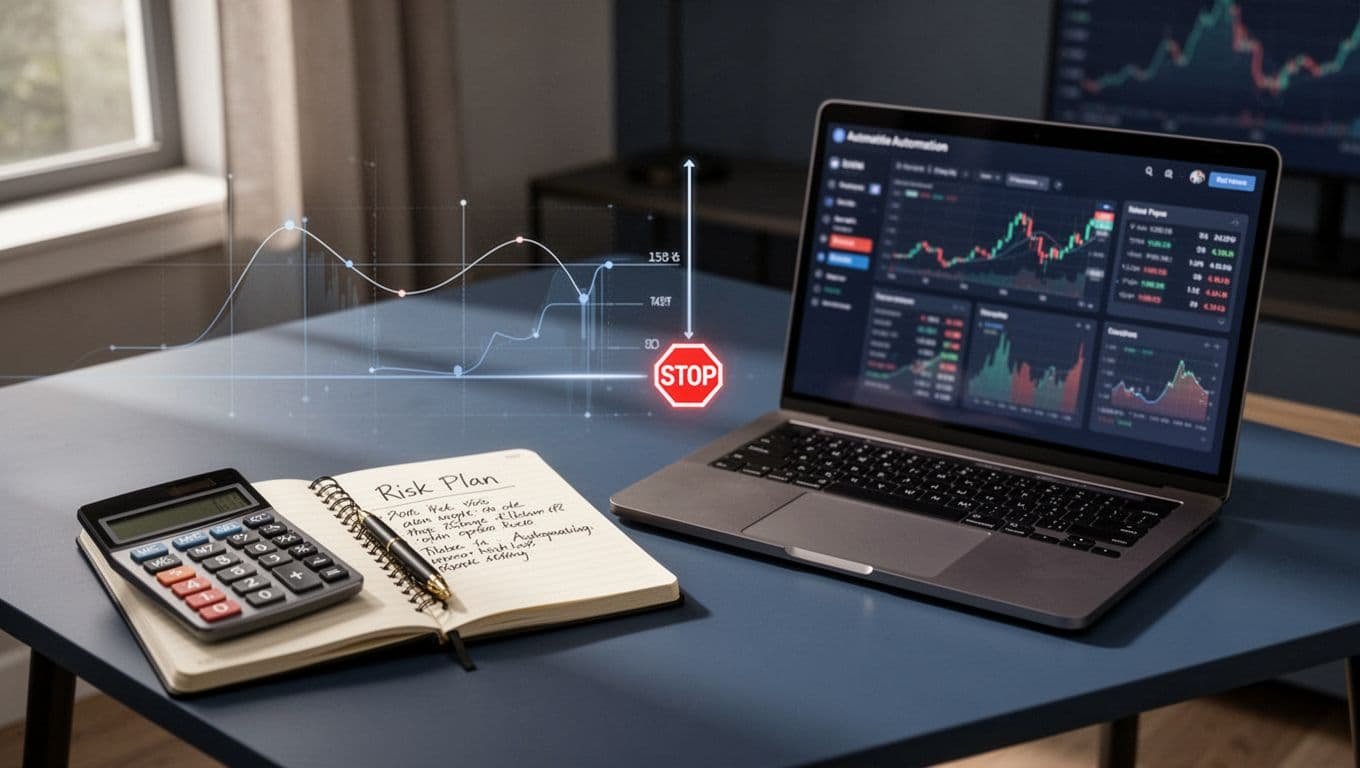
Pionex is easy to operate because the bot, exchange account, and order execution sit in one place. That reduces setup friction, but it doesn’t turn automated trading into hands-off investing. The bot follows instructions reliably; it doesn’t decide whether those instructions still make sense.
What a Bot Can Automate, and What It Cannot Decide
A Pionex bot can place orders based on settings such as the trading pair, price range, order count, investment amount, and schedule. It can repeat that process without emotional hesitation or missed manual entries.
What it cannot know is just as important. It doesn’t understand that:
- The market has shifted from a range into a sharp trend.
- Liquidity has weakened, widening spreads or increasing slippage.
- Pionex is experiencing maintenance, an outage, or a market-specific restriction.
- Your financial situation or tolerance for loss has changed.
A grid strategy can keep following its rules while the asset falls outside its range. A DCA bot can continue buying during a prolonged decline. Neither bot guarantees liquidity, avoids every loss, or repairs a poor strategy.
I also treat crypto automation with the same caution recommended by FINRA’s crypto asset guidance, especially because volatility and custody risks remain separate from software usability.
A Safer Setup Checklist for First-Time Users
Before funding a free crypto trading bot, I would check the following:
- Confirm that you’re using Pionex’s official website or app.
- Review current trading, withdrawal, and product-specific fees.
- Enable a strong password and available account security controls.
- Understand custody, withdrawal limits, and external wallet procedures.
- Choose a liquid spot pair and avoid leverage at the start.
- Set a defined loss limit and decide when to pause or close the bot.
- Test with a modest amount you can afford to lose.
- Record the strategy settings, funding amount, and review date.
Don’t assume automation removes supervision. Review open orders, range conditions, fees, and platform notices regularly. The CFTC’s digital asset fraud alert is also a useful reminder to verify platforms and investment claims before sending funds. A bot needs an exit plan before it needs more capital.
Pionex vs Other Free Crypto Trading Bot Platforms
Pionex is exchange-native, while 3Commas, Cryptohopper, and Coinrule are separate automation services that connect to supported exchanges. That difference affects setup, exchange choice, account security, and recurring cost.

When Pionex Makes More Sense Than a Subscription Bot
Pionex is the simpler choice if you want one exchange, built-in bots, and no separate bot bill. You create the bot inside your Pionex account, fund it there, and let the exchange handle execution. That removes API connections, another login, and one more subscription to monitor.
The cost advantage is real, but limited. You still pay trading fees when the bot executes orders, and losses remain possible. I see Pionex’s main benefit as lower setup friction and a simpler cost structure, not evidence of better performance.
Pionex may suit you if you:
- Want a straightforward grid, DCA, or rebalancing setup.
- Prefer keeping exchange funds and automation in one account.
- Don’t need to manage several exchanges.
- Want to avoid paying monthly software fees before trading.
When 3Commas, Cryptohopper, or Coinrule May Be Better
A separate platform makes more sense when exchange choice matters. These services can connect supported accounts through API permissions, giving you more flexibility than an exchange-native bot. They may also offer cross-exchange management, advanced rules, strategy marketplaces, alerts, and more detailed automation controls.
| Platform | Free access or pricing signal | Strongest fit | Main trade-off |
|---|---|---|---|
| Pionex | Built-in bots without a separate subscription | Simple, exchange-based automation | Limited exchange choice |
| 3Commas | Primarily subscription-based, with paid plans | Multi-exchange management and advanced bots | Recurring cost and API setup |
| Cryptohopper | Free entry tier, with paid plans for broader features | Strategy tools and exchange connections | Subscription required for automated trading |
| Coinrule | Free Starter tier, with paid upgrades | Rule-based automation | Plan limits and added setup work |
Plans, limits, and exchange support change, so verify current pricing on the 3Commas platform and each provider’s official pricing page before publication or purchase. I would also use an AI software comparison tool as a reminder to compare total cost and workflow fit, not just the advertised free tier.
The trade-off is added responsibility. API permissions, account security, exchange compatibility, and platform outages now involve more moving parts. Choose Pionex for simple exchange-based setup, a separate platform for multi-exchange access or deeper rule building, and neither option as proof that automated trading will be profitable.
Who Should Use Pionex, and Who Should Avoid It?
Pionex is best for users who want simple exchange-based automation and understand that a free crypto trading bot is still a high-risk trading tool. It can reduce repetitive manual work, but it cannot decide whether your strategy fits current market conditions.

Pionex May Suit These Traders
I see Pionex as a reasonable starting point for beginners who already understand basic crypto risks and want preset rules instead of a separate automation subscription. It may also suit traders who:
- Prefer spot grid, DCA, or rebalancing bots with straightforward setup.
- Want to keep funds and automation inside one exchange account.
- Can monitor the bot and review its settings regularly.
- Are using money they can afford to lose.
- Don’t expect automation to create guaranteed income.
A grid bot may work better in a defined range, where prices move up and down without a sustained direction. That advantage can disappear during a sharp one-way move. Sudden volatility can also cause rapid fills, slippage, and losses before you have time to adjust the range.
I would compare the exchange, custody model, fees, and risk controls before depositing funds. My broader AI software comparison guide covers the same basic principle: compare the full cost and limitations, not only the free entry point.
Who Should Avoid Pionex
Pionex is a poor fit if you want guaranteed returns, hands-off investing, or a bot that makes decisions for you. I would also avoid it if you:
- Need one dashboard for several exchanges.
- Cannot monitor open positions or respond to market changes.
- Feel uncomfortable holding funds on a centralized exchange.
- Don’t understand futures leverage, funding, or liquidation.
- Would panic if a bot continued buying during a prolonged decline.
Backtests and suggested parameters are planning tools, not promises. Overfitting, short test periods, ignored fees, slippage, and unrealistic fills can make a strategy look safer than it is. FINRA describes crypto assets as risky and often highly volatile in its crypto asset risk guidance.
Before starting, ask yourself:
- Can I explain exactly how this bot loses money?
- Have I calculated fees and likely turnover?
- Do I have a written stop condition?
- Can I monitor the account consistently?
If any answer is no, I would not fund the bot yet.
Frequently Asked Questions
Pionex looks simple because the bots are built into the exchange. The practical questions are less simple, especially around account access, withdrawals, and what happens when market conditions change.

Is Pionex really free to use?
Pionex doesn’t charge a separate subscription or management fee for its standard built-in bots. You still pay trading fees when the bot executes orders, and withdrawals may carry asset- or network-specific charges. I would confirm the current fee schedule in Pionex’s official beginner guide before funding an account.
Do Pionex bots guarantee profits?
No. A bot follows its programmed rules, regardless of whether the market is favorable. Grid bots can struggle during sustained trends, while DCA bots may keep buying as an asset falls. Fees, spreads, slippage, liquidity, and outages can also reduce results.
Are Pionex bots safe for beginners?
They can be easier to configure than third-party automation platforms, but simple controls don’t remove financial risk. I would start with a spot bot, a modest amount, and settings you can explain without relying on suggested parameters. Avoid futures until you understand leverage, funding, margin, and liquidation.
Does Pionex require an account or identity verification?
You need a Pionex account, and identity verification requirements can depend on your region, account level, and product. Verification may also affect withdrawal limits or access to certain services. Check the Pionex Help Center for the current US requirements before depositing funds.
Can funds be withdrawn while a bot is running?
There isn’t one universal rule for every bot and account balance. Pionex documents margin adjustments for some Futures Grid positions, but withdrawals from the main account can depend on the product, available balance, and region. Review the exact withdrawal conditions, including the bank withdrawal instructions, before starting.
What happens when the market leaves a bot’s range?
The result depends on the bot type and its documented rules. A grid bot may stop placing new orders when prices move outside its configured range, but existing assets, positions, or orders can still carry risk. I would check the product-specific documentation instead of assuming the bot automatically closes everything or protects your balance.
Conclusion
Pionex is one of the clearest options for users who want built-in crypto bots without paying for a separate bot subscription. Its standard bots can simplify grid, DCA, and rebalancing strategies, but “free” only describes access to the automation. Trading fees, spreads, slippage, market losses, platform outages, and poor settings can still reduce or erase your results.
The strongest fit is a beginner or hands-off-minded trader who wants a simple exchange-based setup and is willing to monitor it. The biggest warning is that automation doesn’t manage risk for you. Futures add leverage, funding costs, and liquidation risk, so I wouldn’t use them until you fully understand those mechanics.
A paid alternative may be better if you need multi-exchange support, advanced rules, or more control than Pionex provides. Verify live fees, product terms, and regional eligibility before depositing funds. Start small, avoid leverage at first, and judge any free crypto trading bot by its transparency and risk controls, not by the word free.