Contracts rarely cause problems on signature day. Trouble usually appears later, when a renewal date passes, a customer asks what was promised, or a vendor’s auto-renewal clause goes unnoticed.
The right AI contract management software gives a small business a reliable record of commitments, deadlines, and approved language. It won’t replace legal judgment, but it can keep routine contract work out of inboxes, shared drives, and one person’s memory.
I look for tools that reduce manual work without forcing a small team into an enterprise-grade implementation.
Key Takeaways
- The best AI contract management software helps small businesses centralize agreements, extract key terms, manage approvals, and track obligations, renewals, and notice periods.
- Choose a platform based on your contract volume and main workflow. Repository-first tools suit scattered signed agreements, while fuller CLM platforms help with drafting, negotiation, approvals, and post-signature management.
- Look beyond the AI label. Test automated data extraction, clause deviation tracking, natural-language search, integrations, audit trails, and approval workflows against representative contracts.
- Budget for more than subscription fees, including migration, template cleanup, training, ownership, and add-ons. Security, model-training policies, access controls, and data export should also be reviewed before rollout.
- AI can reduce routine contract work, but it cannot replace legal judgment. Human review remains essential for unusual terms, material financial exposure, intellectual property, privacy obligations, and regulatory compliance.
What AI changes in contract lifecycle management
Contract lifecycle management covers the work before, during, and after a signature. That includes drafting, internal approvals, contract revisions, e-signature, storage, obligation tracking, renewal management, and reporting.
AI contract management software adds value when artificial intelligence uses automated data extraction to turn contract language into usable data. Instead of opening fifty PDFs to find termination dates, an operations lead can search a central repository and see the relevant terms in one view.
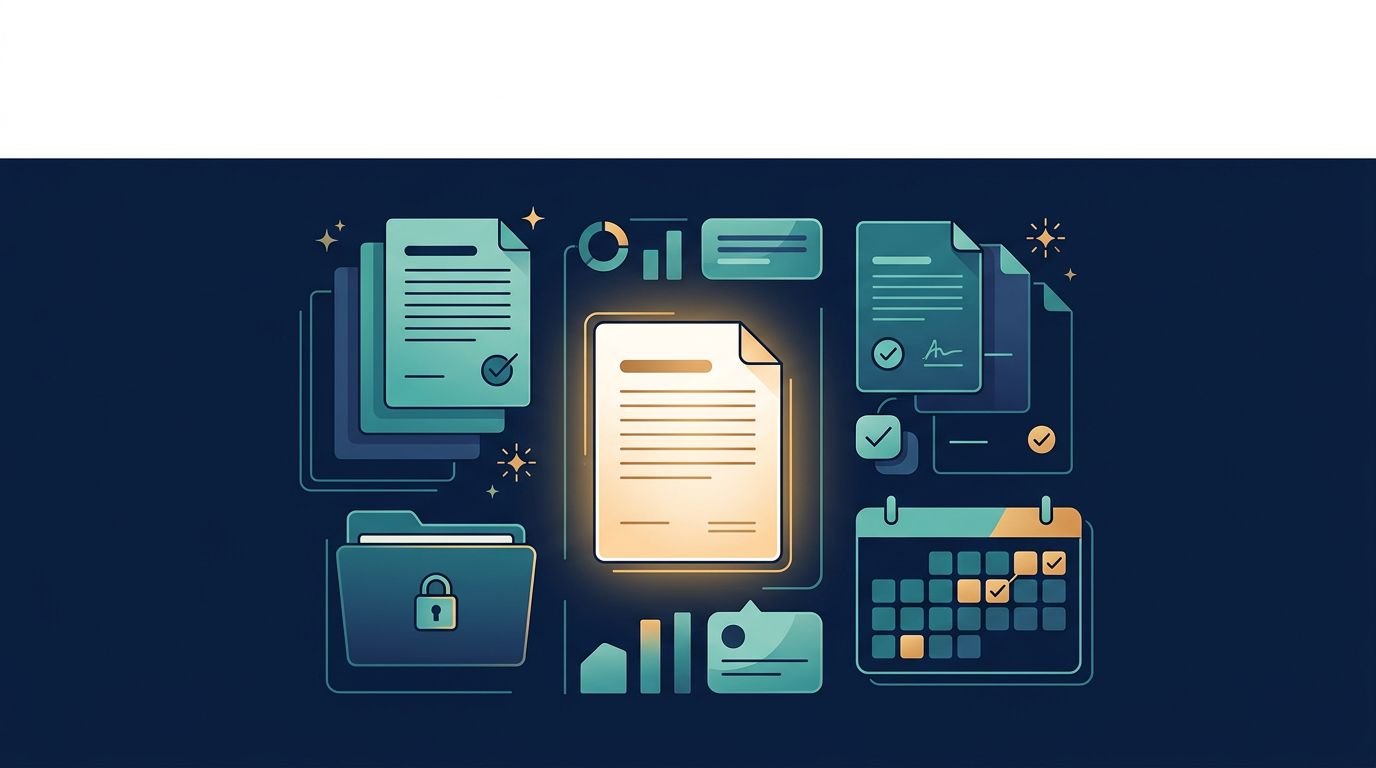
A useful platform usually handles four jobs:
- It supports document generation from approved templates and helps teams prepare initial drafts.
- It supports redlining and negotiation against a clause library with approved and fallback language. It flags non-standard terms.
- It summarizes long agreements and helps users find relevant provisions through natural-language search.
- It routes contracts through approval workflows based on value, risk category, or document type, while supporting obligation management for post-signature commitments.
That last point matters. These approval workflows should reduce chasing, not create another place where work gets stuck.
A renewal alert only helps if the system captures both the renewal date and the notice window. Missing either field can create the same costly problem as having no alert at all.
AI is most reliable on repeatable agreements with familiar structure. NDAs, SaaS subscriptions, vendor MSAs, statements of work, and sales agreements are common starting points. Highly negotiated contracts, regulated agreements, or documents with unusual commercial terms still need careful human review, especially where regulatory compliance is at stake.
If your main issue is reviewing third-party PDFs before signing, I’d start with these AI contract review tools for small businesses. A broader CLM platform makes more sense once your team also needs storage, approvals, and renewal controls.

Best AI contract management software for small businesses
There isn’t one best-fit platform for every company. A five-person agency managing sales proposals has different requirements than a 30-person services firm with hundreds of vendor agreements and recurring statements of work.
I would separate the shortlist by your main need, contract volume, repository needs, workflow complexity, and sales or procurement use cases. Some products are built around repository search and deadlines, while others support approval workflows. A few focus on drafting and signatures or offer a more complete CLM platform.
| Tool | Best fit | AI and workflow strengths | Reported starting price |
|---|---|---|---|
| Bind | Small businesses needing a fuller AI CLM system | AI drafting, review, extraction, search, templates, and e-signature integration | About $90 per seat monthly or $500 monthly, depending on package |
| ContractSafe | Teams with scattered signed contracts | Repository search, data extraction, renewal tracking, and unlimited-user plans | From about $450 monthly |
| Zoho Contracts | Budget-conscious teams already using Zoho | Workflow automation, templates, approvals, and clause controls | About $6 per user monthly |
| ContractWorks | Small teams with high document volume | AI search, repository management, unlimited users, and Zapier support | About $299 monthly |
| PandaDoc | Sales-led teams that need proposals and signatures | Document generation, e-signatures, payment collection, and CRM connections | Plan-based, usually lower than full CLM platforms |
| Juro | Growing companies with repeatable agreements | Automated workflows, AI search, tagging, and extraction | Commonly reported around $15,000 to $40,000 annually |
| Concord | Teams wanting basic management at a low seat price | Storage, collaboration, approvals, and tracking, with limited AI depth | From about $17 per user monthly |
Published starting prices rarely show the full bill. User limits, implementation, data migration, AI add-ons, e-signature volume, and premium integrations can change the number quickly. Treat every price as a screening signal, not a final budget. Businesses handling regulated data should also consider regulatory compliance requirements before choosing a platform.
For a small business that needs the most complete AI contract management software, Bind is worth a closer look. It combines review, drafting, extraction, and repository functions in one product. The trade-off is cost. It may be difficult to justify if you only send a few contracts each month.
ContractSafe and ContractWorks fit a different need. They make more sense when the business has signed agreements spread across folders and inboxes, but doesn’t need complex approval workflows. Their strength is visibility. Procurement teams can use a searchable contract repository to organize vendor contracts and support obligation management. You can find an agreement, see what it says, and track the next date that matters.
PandaDoc is often the better fit for sales proposals and standard customer agreements. It shouldn’t be mistaken for deep legal operations software. That distinction is useful. A tool can be excellent for getting quotes signed and still be weak at contract review, clause deviation tracking, or post-signature monitoring.

Features that matter more than an AI label
Many platforms now claim AI capability. With AI contract management software, ignore the label until the vendor shows how the feature works on a real contract.
Start with automated data extraction. The system should identify dates, parties, commercial terms, and obligations, then let a human correct the result. A tool that pulls the wrong notice date with confidence is more dangerous than a tool that asks for review.
It should also support obligation management after signing, not just store the document.
A useful clause library should do more than store approved text. Standardized templates create consistent source language for comparison and fallback clauses. The system should identify deviations and retain an audit trail of who accepted a change. This is where contract review becomes repeatable instead of dependent on one experienced employee.

Approval workflows also need realistic controls. A low-value NDA may only need sales approval. A vendor contract with a multi-year term, data-processing terms, automatic renewal, or regulatory compliance implications should move to finance, security, or legal review. Risk scoring can prioritize which agreements need attention, but it shouldn’t make the legal decision.
Check integrations before signing. Most small businesses need Google Workspace, Microsoft 365, Slack, a salesforce integration, HubSpot, QuickBooks, and an e-signature integration. An integration that only pushes a PDF into a folder isn’t enough. Look for workflow automation that routes approvals and updates status while keeping approval workflows visible to responsible team members. You want contract status, renewal data, and approved fields available where the team already works.
The platform should also handle search well. Ask it questions that reflect actual work:
- Which customer agreements renew in the next 120 days?
- Show vendor contracts with automatic renewal and less than 60 days’ notice.
- Which active MSAs include a limitation of liability above our standard cap?
- Find all agreements signed by a named customer or supplier.
If search can’t answer those questions reliably, the repository will become another document archive.
What small businesses should expect to spend
Subscription cost is only one part of the decision. Implementation time, migration quality, and ongoing ownership often determine whether the software delivers value.
Sirion’s contract management pricing overview puts a typical small and mid-sized business range around $30 to $100 per user each month. For a five-person team, that works out to roughly $1,800 to $6,000 per year before setup work, add-ons, or higher-tier automation.
Repository-first tools can use platform pricing instead. ContractSafe’s published pricing comparison lists plans starting around $450 per month. That can be reasonable when many people need access and the platform includes unlimited users. It can be excessive for a company storing twenty agreements.
Don’t assume e-signature pricing covers a complete contract platform. GetAccept’s pricing comparison points out that DocuSign eSignature starts at a lower seat price, while DocuSign CLM is a separate, custom-priced product. The same issue appears across the market.
I’d budget for these costs before committing:
- Plan fees for the people who draft, approve, and administer contracts.
- Migration time to upload old contracts, check extracted fields, and remove duplicates.
- Template cleanup, since AI can’t compensate for inconsistent source documents.
- Training and ownership, including who corrects data and maintains approved terms.
A small team with low contract volume can often start with a repository and renewal reminders, creating cost savings through less manual searching. A business with recurring vendor negotiations, renewals, or post-signature duties gets more value from structured approval workflows and obligation management.
Security, model training, and human oversight
Contracts contain pricing, customer data, liability terms, trade secrets, and negotiation history. Security due diligence can’t be an afterthought.
At minimum, ask a vendor for current SOC 2 Type II documentation or an equivalent independent security report. ISO 27001 certification can also be useful, but certification alone doesn’t answer every operational question. Review the scope, date, and covered services.
I would ask these questions before uploading a contract archive:
- Are contract files encrypted in transit and at rest?
- Can you restrict access by role, department, customer, or entity?
- Is multifactor authentication available, and does the platform support single sign-on?
- Does the vendor use customer content to train shared AI models?
- Which subprocessors can access document data, and where is that data stored?
- Can you export records, the audit trail, and original files if you leave the platform?
The answer on model training deserves direct language. “We may use data to improve services” is not a clear answer. You need to know whether your documents are used for training, whether that is optional, and whether retention settings apply to AI prompts and outputs.
AI risk assessment should also remain visible to people, supporting compliance oversight without replacing human judgment. A clause score can help prioritize review, but it doesn’t understand your commercial context. A broad indemnity may be acceptable for a low-risk supplier and unacceptable for a core technology vendor.
I don’t treat a generated summary as evidence that contract review is complete. The source document, tracked changes, and final approval record still matter. High-stakes negotiations, unusual indemnity provisions, intellectual property assignments, privacy obligations, and regulatory compliance questions belong with qualified legal counsel.
A practical way to choose a platform
Avoid choosing based on a polished demo. Ask each shortlisted vendor to process a small, representative contract set. Use signed agreements, third-party paper, a contract with an automatic renewal, and one with unusual language, regulated data, privacy requirements, or other regulatory compliance implications.
Then follow a controlled pilot:
- Define the first workflow. Pick one, such as vendor agreements managed by procurement teams, sales contracts, or renewal tracking. Don’t try to fix every contract process at once.
- Measure extraction quality. Check whether the platform correctly identifies parties, effective dates, renewal terms, notice periods, contract value, and governing law. Record errors, not impressions.
- Test approval workflows and exceptions. Route a standard agreement and a non-standard agreement. Verify that the right people receive the right task and that the audit trail is usable.
- Test retrieval after upload. Search for exact clauses, not broad topics. During contract review, confirm the team can find a specific termination provision quickly. If it can’t, the system isn’t ready for production.
I would also assign a contract owner before rollout. That person doesn’t need to be a lawyer. They do need authority to maintain templates, correct records, manage access, and follow up on alerts.
Frequently asked questions
What does an AI contract platform do?
AI contract management software stores, creates, reviews, routes, and tracks agreements using machine learning and natural language processing. It extracts key details, identifies clauses, summarizes documents, flags deviations, and makes search faster.
The best systems pair those tools with a contract repository, approval workflows, e-signature connections, renewal alerts, and an activity log.
Can AI replace a lawyer in contract negotiations?
No. AI can identify missing clauses, compare language with a playbook, and summarize agreement terms. It can’t determine whether a legal risk is acceptable for your company, industry, bargaining position, or state-specific requirements.
Use AI to reduce routine work when reviewing agreements. Use legal counsel for agreements where financial exposure, regulatory requirements, intellectual property, or dispute risk is material.
Which small businesses need a full CLM platform?
A full platform is usually justified when contracts have recurring approval steps, many renewal dates, repeat negotiations, or a growing archive employees struggle to search. It also makes sense when sales, procurement, finance, and legal each need visibility into the same agreement.
A lightweight repository or proposal tool is often enough for a solo consultant or a business with low contract volume and standard templates.
Contracts should be visible, not mysterious
The strongest choice isn’t the platform with the longest AI feature list. It’s the one that captures your team’s commitments, routes decisions to the right people, and surfaces deadlines early enough to act.
Start with the contract process that creates the most friction. A focused rollout, clean templates, and human review will deliver more value than an expensive system nobody trusts.
Suggested related reading