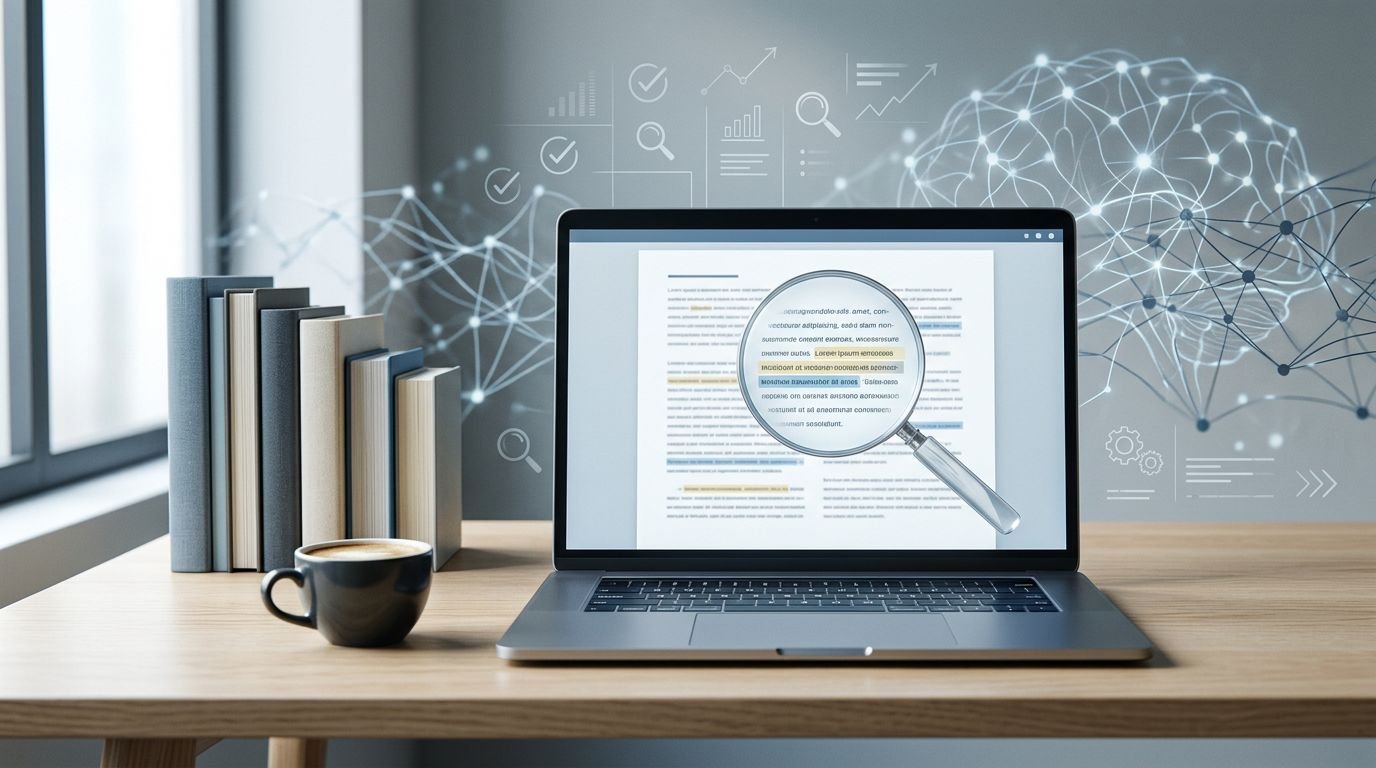
AI-generated content can read clean, confident, and complete while still getting the facts wrong. That is the fundamental problem. Because of its persuasive nature, the tool’s inherent fluency often masks AI hallucinations, making these errors much harder to detect than they would be in poor writing.
When I fact check AI content, I do not start by polishing sentences. I start by assuming the draft is unproven until the source trail holds up. That mindset saves time, catches risk early, and keeps weak claims from reaching the publish button.
Key Takeaways
- Prioritize claim isolation: Don’t edit prose first; break the draft into verifiable components like statistics, dates, quotes, and product claims to audit them systematically.
- Assume the source trail is broken: Treat AI-generated citations as leads rather than evidence. Always verify claims against primary sources—such as government databases or official product documentation—rather than trusting AI-provided links.
- Match rigor to risk: Implement a tiered review system where high-stakes topics like health, finance, and law require exhaustive primary-source verification, while lower-risk content can be managed via targeted spot-checks.
- Audit the logic, not just the facts: AI often synthesizes accurate data points to form misleading or unsupported conclusions; ensure the evidence truly supports the argument being made.
Why AI-generated copy fails factual review
Most AI errors are not random. I see the same patterns again and again.
Large language models often blend two distinct sources into a single claim. The software might pull an outdated statistic into a current article or state a trend as if it is confirmed data. Sometimes, the model invents a citation that looks plausible enough to pass a quick skim.
That is why I do not judge accuracy by tone. A paragraph can sound measured and still spread misinformation if the underlying data is stale.
The biggest risk is surface credibility. AI often gets the shape of authority right. It uses the right vocabulary and mirrors the style of researched writing, which gives the impression that the work has already been checked. In practice, that impression is what creates the miss.
I also separate low-risk and high-risk failure. If an AI draft gets a movie release year wrong, that is sloppy. However, if it gets pricing, compliance rules, medical advice, legal guidance, or company performance wrong, it creates a business problem that can lead to significant reputational damage for brands.
For US publishers, the risk is higher on fast-moving topics. Product specs change, state-level rules change, economic data updates monthly, and leadership roles shift. A model trained on older patterns will not tell you when its memory is stale.
So before I fact-check AI content, I ask one question: what would happen if this is wrong?
That question sets the depth of review. It also keeps me from wasting time on trivia while missing the claims that carry real exposure.
Start by isolating claims, not sentences
I do not edit line by line at first. Instead, I focus on how to verify claims.
That means I look for anything a reader could verify, dispute, or rely on. Facts, numbers, quotes, names, dates, rankings, feature claims, legal guidance, and cause-and-effect statements all go into the review pile.
A lot of AI-generated content is filler around a smaller number of checkable statements. Once I isolate those statements, the draft becomes easier to audit.
I usually sort claims into four groups:
- Hard facts, such as statistics, dates, names, and locations
- Attributed material, such as quotes, studies, and expert opinions
- Product or process claims, such as features, pricing, steps, or capabilities
- Interpretive claims, such as “this trend shows” or “this proves”
That last group is where many drafts go off track. Effectively managing these claims requires human oversight to ensure the logic follows the evidence, as the facts may be real, but the conclusion may not follow from them.
If a claim could cost trust, money, or legal exposure, I verify it from a primary source.
I also do not check every line with the same intensity. For lower-risk content, I sample first. A rough 10 percent spot check works well. If I find multiple errors early, I widen the audit. If the first sample is clean, I keep going with more confidence.
This claim-first approach also speeds up team review. Editors do not need to argue about tone while the facts are still uncertain. Writers can see exactly what needs proof. Review becomes operational instead of vague.
My workflow for checking AI content quickly and properly
I use the same core workflow whether I’m reviewing a blog post, a product page, or a tool roundup. It’s the same discipline behind expert-driven AI tool analysis: test the claim, inspect the evidence, and document the limitation.
First, I ask the model to show its sources, even if I don’t trust them. In 2026, source transparency is the minimum bar, not a mark of quality. If the model can’t point to where a claim came from, I treat that claim as unsupported. Even when using tools like ChatGPT, you must verify sources manually to ensure they exist and support the argument provided. Never assume a link provided by an AI is automatically accurate.
Second, I open new tabs and verify outside the draft. I don’t stay inside the AI’s framing. I search the exact number, quote, company name, or study title. This is lateral reading. It keeps me from inheriting the model’s mistakes and helps me confirm the factual accuracy of the information provided.

Third, I prioritize primary sources. If the draft cites government data, I go to the agency. If it references a company feature, I verify with official documentation or current product pages. If it uses a study, I look for the original paper or publisher, not a recap. Accessing primary sources is essential because AI often struggles to correctly interpret complex datasets.
Fourth, I verify context, not only the existence of the source. A real source can still be misread. A statistic can be regional, not national. A study can be old. A product announcement can describe a beta feature, not a general release. Context is the difference between a helpful insight and a misleading claim.
Fifth, I keep a simple pass or fail record. Clean. Needs source. Wrong. Outdated. Ambiguous. That small system prevents re-checking the same line and gives me an audit trail if someone asks why a claim was cut.
This isn’t a slow process once it’s standard. It’s faster than publishing bad information and fixing it in public later.
For teams that want a lightweight external framework, PRSA’s guidance on AI content accuracy lines up with the same rule set: verify, cross-check, and keep human review in charge.
Match the proof to the type of claim
Different claims require different evidence. I do not verify a pricing statement the same way I verify a macro trend.
This table shows the check I use most often.
| Claim type | What I verify | Best source to check | Common failure |
|---|---|---|---|
| Statistics and market data | Year, geography, sample, original wording | Government datasets, original reports, research publishers | Old number presented as current fact |
| Product features or pricing | Current availability, plan limits, release status | Official docs, pricing pages, changelogs | Beta or legacy info stated as live |
| Quotes and expert opinions | Exact wording, speaker, date, context | Original interview, transcript, press release, talk | Fabricated or paraphrased quote treated as direct |
| Advice in legal, health, or finance topics | Scope, jurisdiction, required caveats | Primary regulatory or institutional source | General guidance framed as universal rule |
The takeaway is simple. Proof has to match the claim.
When I review AI drafts for US readers, relying on trusted sources like government agencies is non-negotiable. That may mean referencing the Census or BLS for labor data, the SEC for public company filings, the FDA for product claims, or IRS materials for tax guidance. For high-stakes advice in legal, health, or finance topics, you must always verify the information using primary sources. Secondary summaries are useful for orientation, but they are weak as final proof.
How I spot-check stats, dates, names, and quotes
This is where most fact-check AI content workflows either hold up or fall apart.
Numbers come first. I check whether the figure is current, whether it refers to the US or a global sample, and whether it is measured or forecasted. A projected market size is not the same thing as present demand, and AI drafts blur that line all the time. To ensure accuracy, I always cross-reference statistics across multiple credible news sources before accepting them.
If a statistic looks polished but oddly generic, I search the exact number in quotes. That often exposes recycled summaries, affiliate posts, or blogs citing each other in a circle.
Dates are next. I verify both the publication date and the effective date. An article updated in 2026 may still rely on a rule, plan, or product screenshot from 2024. The timestamp on the page does not guarantee the claim itself is current.
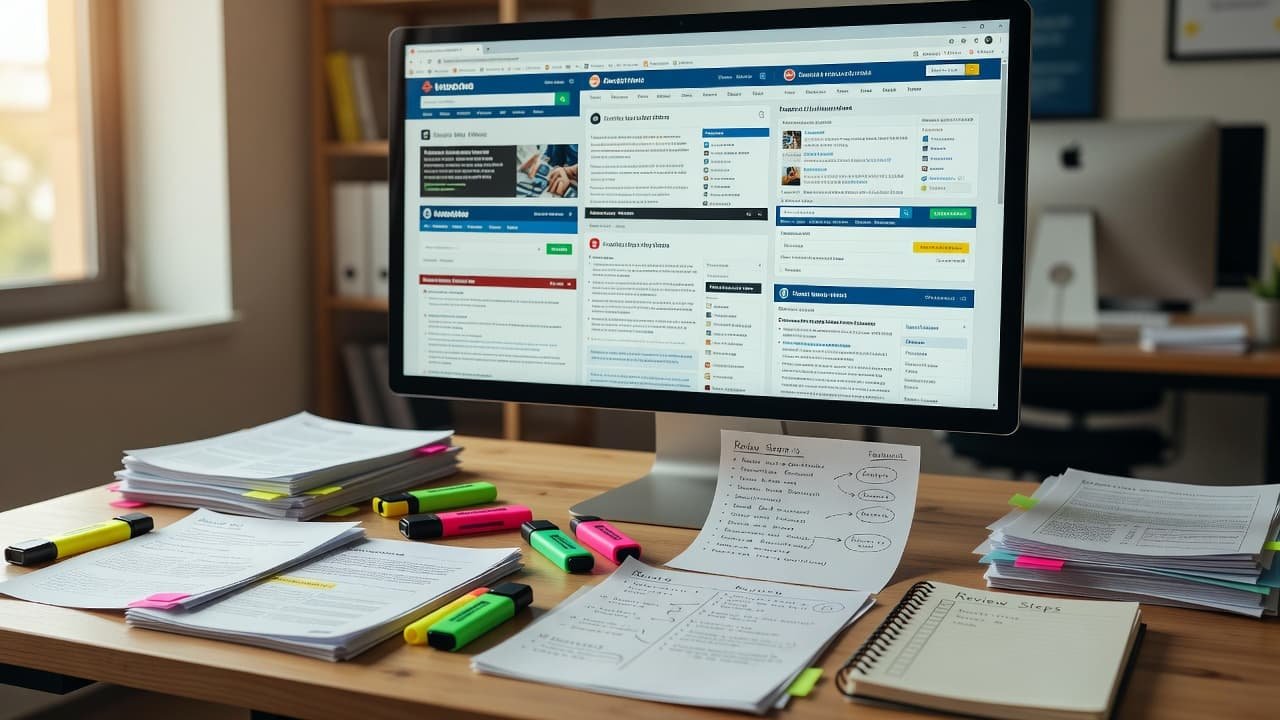
Names and titles are easy to overlook. They are also easy to get wrong. AI will often assign an outdated role to an executive, researcher, or agency head because the older version appeared more often in training data. I verify current titles from the official organization page, not from a copied bio elsewhere. It is important to be precise here, as incorrect data can lead to search engine penalties if content is flagged by algorithms as helpfulness-deficient or low-quality.
Quotes need the hardest check. I search the exact words first. If the quote does not appear in a transcript, interview, filing, speech, or original article, I do not use it. If the source only contains a loose paraphrase, I rewrite it as a paraphrase and cite it honestly.
I also watch for unsupported superlatives. Words like largest, fastest-growing, and most accurate are magnets for weak sourcing. If the benchmark is not defined, the claim goes out.
My rule is blunt: if I cannot verify a line in a few minutes with a credible trail, I either rewrite it into something defensible or remove it.
Facts can be right while the conclusion is wrong
This is the part many teams skip. They verify a few details, see real sources, and assume the draft is solid.
I do not. I still test the logic.
AI often builds a false conclusion out of true fragments. It may cite rising adoption, lower software costs, and better outputs, then jump to the claim that every small business should automate content creation. The facts may be real, but the recommendation may still ignore compliance, brand risk, review cost, or workflow mismatch.
When I review a draft, I ask whether the source actually supports the takeaway written in the article. I also look for missing constraints. Does the study apply to enterprise users only? Is the benchmark based on one model version? Was the pricing claim true only during a promotion?
This matters a lot in software content. Feature lists do not tell me how a tool behaves under real use. That is why I treat product claims with the same skepticism I use in side-by-side AI tool evaluations. Marketing copy may be accurate in isolation and still misleading in practice.
I also scan for bias and framing errors. AI drafts sometimes overstate certainty, flatten trade-offs, or copy a source’s assumptions without signaling them. If a paragraph sounds smoother than the evidence behind it, I slow down.
Relying on AI detectors does not solve this problem. While these tools are common in the industry, they frequently produce false positives and often miss the nuanced logic errors that human editors catch. If an AI detector flags a piece of content, use it as a prompt to inspect the work, but do not consider it proof of inaccuracy. The same goes for AI-free claims from editing tools. Ultimately, human judgment still decides what is credible.
When citations look real but don’t hold up
A citation is not evidence; it is merely a lead. When you are performing a factual review, remember that citations can be misleading. I have seen AI output invent article titles, mix up authors, cite dead URLs, or point to pages that exist but do not contain the stated claim. The result looks sourced until someone actually clicks the link.

My test is simple. Can I trace the claim back to an identifiable original source, and does that source say what the draft says it says? If the answer is no, I do not keep the claim.
While many professionals now rely on an automated fact-checker to speed up their workflow, these tools often struggle with source-chain decay. This occurs when the AI cites a blog, that blog cites a summary, and that summary cites an old report. By the time I reach the end of the chain, the statement has drifted far from the original evidence. Because an automated fact-checker may fail to catch this nuance, manual link-tracing remains essential for maintaining accuracy. When I encounter this decay, I replace the claim with something tighter or remove it entirely.
The fastest fix is often rewriting around what I can prove. Instead of writing that studies show AI always improves productivity, I may write that some teams report productivity gains in narrow workflows, but results depend on task type, review burden, and tool fit. That is less flashy, but it is also more honest.
If your publication uses AI in any visible way, this is where trust is won or lost. Readers will forgive a cautious claim, but they will not forgive a polished fiction.
Raise the bar for high-risk content
Not every draft deserves the same publishing standard.
If the topic touches money, health, law, security, regulated industries, or public company information, I increase the burden of proof. I want primary sources, recent dates, and usually a second human reviewer.
For these topics, I use a simple threshold:
- Green means factual, current, and low-risk
- Yellow means mostly supported but needs rewrite or caveat
- Red means unsupported, outdated, or too risky to publish
Yellow content does not auto-publish. It goes back for revision.
I also avoid letting AI draft anything that sounds like formal advice unless a qualified human is reviewing it line by line. This is especially vital when dealing with tax guidance, contract language, medical suggestions, or security recommendations, as the legal risks of providing inaccurate information in these areas are significant. The cost of getting those wrong is simply too high.
If your team has an AI disclosure policy, apply it consistently. Maintaining academic integrity and professional standards requires full transparency regarding how AI output is used in your workflow. If you used AI for outlining or first-pass drafting, say so internally at a minimum. Hidden processes create sloppy reviews because people assume somebody else already checked the work.
What earns the publish button
When I fact check AI content, I am not trying to prove the model is useless. Instead, I am trying to make the draft safe, accurate, and worthy of a reader’s trust. My primary goal is to ensure that all AI-generated content provides reliable information that adds genuine value to the user experience.
A clean publish decision usually comes down to three things: the important claims map to credible sources, the context still holds up, and the logic does not outrun the evidence. If one of those elements breaks, the AI-generated content is simply not ready for your audience. Once you have successfully verified these components, you can feel confident that you are upholding your editorial standards.
FAQ
What’s the fastest way to verify AI-generated content?
I start by isolating the claims, not editing the prose. Then I check the highest-risk facts first, usually stats, quotes, dates, and product claims. If the first sample shows errors, I widen the review.
Can I trust citations produced by AI tools?
I treat them as leads, not proof. Some citations are correct, some are broken, and some are invented. I always open the source and confirm that it supports the exact claim in the draft, making sure to verify against primary sources rather than relying solely on credible news sources for technical data.
Should I use AI detectors before publishing?
Only as a weak signal. Many AI detectors are now bundled with plagiarism detection software as part of a suite, but these tools do not tell me whether the facts are right. Accuracy still depends on source checks and human editorial judgment.
How much of an AI draft should I manually fact-check?
That depends on risk. For low-stakes content, I may start with a 10 percent spot check and expand if errors appear. For sensitive topics, I verify every material claim and often require a second reviewer.