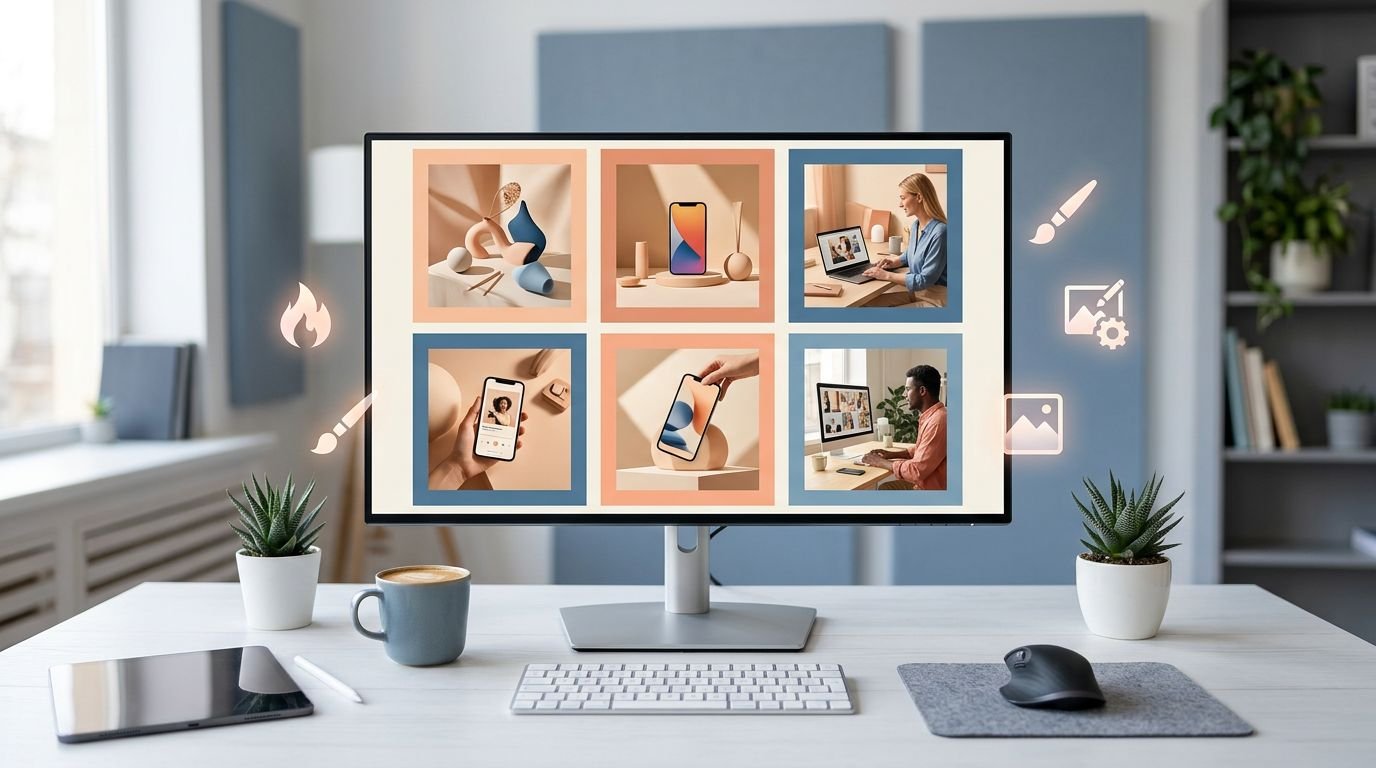
Most AI marketing image tools fail the same test. They look polished once, then drift the moment you ask for six more versions.
If you are building ads, ad creatives, email headers, landing pages, and social media assets, that drift costs time and dilutes your brand identity. I care less about one pretty image than I do about repeatable brand consistency. The tools below are the ones I trust when the brief is not “make something cool,” but “make 40 assets that still look like us.”
That difference is where real production work starts.
Key Takeaways
- Prioritize stability over flair: The true test of an AI image tool is not how impressive the first image looks, but whether it can maintain consistency—keeping lighting, framing, and product proportions identical—across 40+ variations.
- Select based on operational needs: Choose Adobe Firefly for integrated, safe production workflows; Midjourney for high-end creative concepts; Canva for speed and accessibility; and Stable Diffusion or Typeface for complex technical control and enterprise governance.
- Build a repeatable system: Success comes from a rigorous workflow that includes fixed reference packs, prompt discipline, and human review, rather than relying on the AI to maintain brand identity through clever wording alone.
- Adopt a hybrid mindset: Treat AI as a force multiplier for volume and variation, while reserving human oversight for final approvals, brand judgment, and text-based elements to ensure your assets survive legal and platform constraints.
What brand consistency actually means in AI-generated marketing
When I test AI image generators, I do not start with image quality. I start with stability. Can the tool keep the same lighting, framing, product proportions, palette, and visual mood across multiple outputs?
That is the real job.
A solid system for visual branding has a few parts. It needs rules, reference assets, prompt discipline, and a review path. If one of those is missing, the model starts freelancing. You get one image with soft studio light, the next with harsh flash, then a third that suddenly looks like editorial fashion.
One prompt is not a brand system.
I also separate brand style from brand asset fidelity. Style is the feeling. Asset fidelity is whether the bottle, shoe, app screen, or box still looks like your actual product. While artificial intelligence can handle style faster than it handles exact product truth, producing high-quality photorealistic images of physical items remains a challenge, which is why I still prefer edited source photography for many campaigns.
If I need to explain this to a team from scratch, I usually start with how AI image generators work. It helps people understand why outputs drift, and why reference images, seeds, and controlled edits matter more than clever wording.
For US marketing teams, there is another filter. The image does not only need to look right. It also needs to survive legal review, paid platform cropping, retailer specs, and internal approval. Refining your content creation workflow is essential here, as the best tool is rarely the most artistic one. It is the one that keeps your output usable under real constraints.
The best AI marketing image tools at a glance
I keep coming back to five options because they solve different parts of the same problem.
| Tool | Best fit | Why it works for consistency | Customization options and limitations |
|---|---|---|---|
| Adobe Firefly | In-house marketing and design teams | Strong editing workflow, good control over approved assets, easy fit with Adobe apps | Less adventurous image style |
| Midjourney | Premium campaign concepts and hero visuals | Produces high-quality visuals with top-tier aesthetics | Weaker governance and production handoff |
| Canva Magic Studio | Small teams and fast-turn content | Brand kit, templates, resizing, easy collaboration | Images can feel generic fast |
| Stable Diffusion | Technical teams with custom needs | Deep technical control over recurring visual language | Offers extensive customization options but requires high setup and QA load |
| Typeface | Enterprise brand operations | Better fit for managed brand systems and distributed teams | More about process control than raw image artistry |
If you want a broader market scan beyond this brand-consistency lens, AI Flow Review’s look at best tools for AI image creation is a useful baseline.
My short version is simple. Adobe Firefly is the safest production pick. Midjourney still has the strongest taste level for high-quality visuals. Canva Magic Studio wins on speed and accessibility. Stable Diffusion wins on control if you have the staff. Typeface matters when the problem is not one designer, but twenty marketers pulling in different directions.
Adobe Firefly is the safest choice for repeatable brand work
If I had to hand one tool to the average marketing team, I would pick Adobe Firefly first. It is not necessarily because it creates the most impressive images, but because it integrates seamlessly into how teams already manage their daily tasks.
That reliability matters more than most people admit.
Brand consistency usually comes from editing around approved assets, not generating everything from zero. Firefly excels at this middle ground. You can extend backgrounds, swap settings, clean up distractions, and create new variations for your marketing campaigns without throwing away the original visual structure.
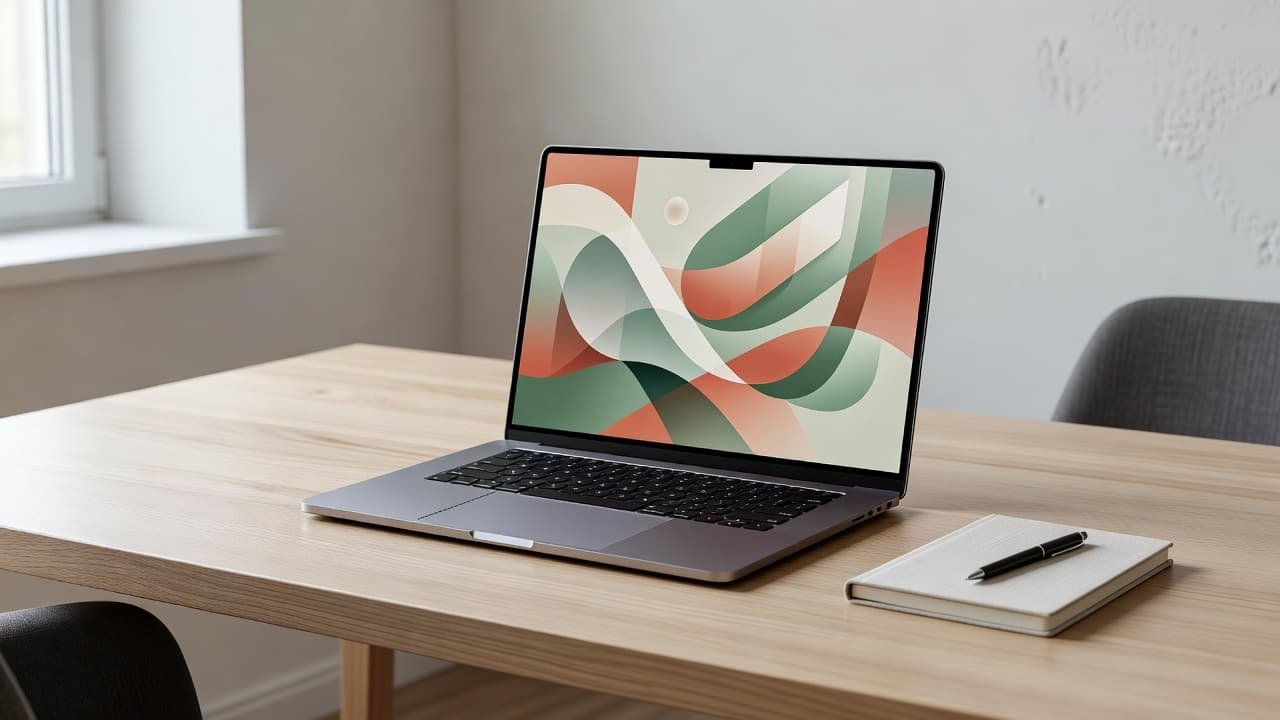
In practice, this is where Firefly saves time. Suppose I have an approved product photography shot of a skincare bottle for a paid social campaign. I do not want the model to invent a new bottle every time. I want it to hold the pack shot steady, then provide seasonal backgrounds, different crops, and environment shifts that still feel on-brand. Firefly is built specifically for this type of production.
It also helps that many US teams already live in Photoshop, Illustrator, or Express. This smooth workflow integration reduces the friction between generation, editing, and export, which makes it far more likely that the system gets used consistently across the department. Ultimately, a good brand process beats a long list of experimental features.
The trade-off is easy to spot. Firefly can feel restrained when the brief calls for strong editorial taste or unusual visual atmosphere. I do not reach for it first when I need a luxury hospitality launch image or a cinematic campaign concept. I reach for it when I need to manage a high volume of marketing assets with total control.
That is a good trade. Most marketing departments need dependable, scalable output more often than they need pure visual drama.
Midjourney still leads on visual taste
Midjourney is where I go when the campaign needs a sharper point of view. It remains a leader in text-to-image technology, producing some of the strongest image aesthetics in the category. In 2026, it continues to be one of the first tools creative teams test when they need something with mood, polish, and edge.
That does not make it the best production platform for every team.
Midjourney is strongest at concept development, hero imagery, moodboards, and premium social creative. If the brand needs a distinctive visual world, rather than just resized ad variants, Midjourney has a clear advantage. It excels at creating high-quality photorealistic images and can hold a style direction more convincingly than many template-first tools.
I get the best results when I treat it like an art direction engine instead of a full campaign management system. I use a reference pack, a prompt skeleton, and a narrow set of visual constraints. By applying disciplined prompt engineering, I ensure the output remains as stable as possible.
If you want a deeper look at its strengths and trade-offs, AI Flow Review’s in-depth Midjourney 2025 review is still worth reading.
The downside is operational. Midjourney is less comfortable when multiple marketers need approvals, asset versions, and standard handoff into broader design workflows. It can also drift more than people expect when they are chasing many close variations. One image looks perfect, then the next three quietly change lens feel, subject proportions, or texture.
I still rate it highly, but I use it only where it fits. For hero campaign visuals, launch concepts, and high-end brand storytelling, it earns its place. For weekly ad production at scale, I usually move from Midjourney into a more controlled editing environment before anything ships.
Canva Magic Studio is the practical pick for small teams
Canva rarely wins on pure image quality. It wins on getting the whole job done.
That distinction matters for startups, local businesses, agencies with thin staffing, and in-house teams that need assets by lunch. Canva’s AI tools sit inside a workflow people already understand, and that reduces friction. Someone can generate an image, drop it into a brand template, resize it for social media ads, email, and display, then hand it off without opening three different apps.
For brand-consistent marketing images, Canva works best when the brand system already exists. The brand kit, templates, color rules, and reusable layouts do most of the heavy lifting. The AI layer adds speed, serving as a support tool for professional graphic design rather than a replacement for art direction.
I think of Canva as a force multiplier for operational marketing. A franchise business creating local promo graphics, a SaaS team making webinar banners, or a DTC brand building weekly social posts can get a lot of value from it. The output is usually good enough, and the workflow is often better than tools with prettier demos.
The limitation is familiar. If you ask Canva to invent a premium visual identity from scratch, the results can flatten out. The images often need stronger references and a tighter template framework to avoid that stock-AI look.
Still, if one marketer needs twenty assets in one afternoon, Canva is hard to beat.
Stable Diffusion and Typeface make sense when the problem is bigger than image generation
Stable Diffusion and Leonardo.ai offer technical control
Stable Diffusion is the tool family I look at when a team wants control that hosted apps cannot offer. Fine-tuning, LoRAs, custom workflows, and structured conditioning can produce a more repeatable visual language than general-purpose tools, especially for brands with recurring subject types. For technical teams seeking a balance between high-end control and ease of use, Leonardo.ai is also a strong alternative worth exploring.
This path makes sense when the image system is strategic rather than experimental. Think of product lines with strict angles, recurring packaging, or a distinctive editorial look the company wants to keep proprietary. Unlike DALL-E 3, which prioritizes ease of use and instant results, these platforms provide the granular adjustments necessary for complex projects.
The catch is obvious. You are no longer choosing a simple tool; you are taking on a system. That means managing data rights, model hosting, quality assurance, prompt versioning, and ensuring someone can maintain the workflow after the initial excitement fades. I recommend these solutions only when the team has technical support and enough image volume to justify the overhead. Without that, it quickly turns into a neglected side project.
Typeface is about governance as much as generation
Typeface sits in a different spot. I do not think of it as the place to chase your most beautiful first image, but rather as a brand operations tool for teams that need consistency across people, markets, and channels.
That is an important distinction.
When multiple stakeholders are producing assets using artificial intelligence, the main risk is not creativity, but rather drift. Different prompts, references, and approval chains can lead to a fragmented brand identity where your output looks like five separate companies instead of one. Platforms built around brand management help reduce that sprawl. Typeface’s view on AI brand management lines up with what I see in practice.
The same goes for the system around the images. MindStudio’s guide on brand guidelines and design systems makes a useful point: the model matters, but the design system matters more.
If I were advising an enterprise team with several departments and a steady approval chain, I would look hard at this category. The value is not only the image itself; the value is keeping your contributors inside the same visual guardrails.
How I choose the right tool for real campaigns
I do not pick AI image generators by asking which one is best. I pick by asking where failure will hurt the most during a campaign.
If exact product truth matters, I start with approved photography and use Firefly for extension, cleanup, and controlled variation. If visual style is the main goal, I test Midjourney first. If the team is small and speed matters more than visual depth, I go with Canva. If the brand needs a proprietary visual system and has technical support, I consider Stable Diffusion. If the organization is large and fragmented, I look at governance-first tools like Typeface, which are built to handle commercial usage rights and internal compliance.
That sounds simple because it is.
I also use the same five checks every time I experiment with a new text-to-image workflow:
- I test the fifth image, not the first one, to evaluate long-term prompt adherence.
- I compare outputs across three aspect ratios.
- I check whether the product, person, or scene still looks like the same campaign.
- I keep a fixed reference pack instead of rewriting prompts from scratch.
- I put a human reviewer at the end of the workflow.
If the fifth variation no longer looks like the same campaign, the tool failed.
One more rule matters. I do not ask AI to handle brand text inside the image unless a designer is ready to fix it. Text rendering has improved, but marketing assets still need review. The same goes for regulated claims, pricing, and product details.
The fastest setup is usually a hybrid one. Use AI for volume and variation. Use humans for approval and brand judgment.
Pick for repeatability, not for the demo
The one beautiful image is easy. The tenth matching image is the test.
That is why I keep coming back to the same shortlist. Adobe Firefly is the safest production choice. Midjourney is the strongest creative spark. Canva is the practical workhorse. Stable Diffusion and Typeface make sense when control or governance is the real brief.
If I were setting this up today, I would optimize for repeatability first. Brands do not win because one asset looked impressive. They win because their marketing campaigns remain cohesive, ensuring that every piece of content delivers high-quality visuals that look like the same company. Ultimately, long-term success relies on leveraging artificial intelligence to build a recognizable identity rather than chasing a single, isolated result.
FAQ: AI tools for consistent marketing images
Which AI tool is best overall for brand-consistent marketing images?
For most teams, I think Adobe Firefly is the safest overall pick because it handles controlled edits well and integrates into existing design workflows. If you need precise prompt adherence for specific layouts, DALL-E 3 is another excellent option to consider. Midjourney remains stronger for premium concept work, while Canva is better for fast, everyday content production.
Can I get consistent AI images without training a custom model?
Yes, in many cases. A solid reference pack, fixed prompt structure, approved color palette, and human QA can go a long way. Custom training is usually only necessary when the brand needs tighter control over recurring products or a proprietary style system that must remain identical across every piece of digital advertising.
How do teams navigate the risk of copyright infringement when using AI?
This is a top concern for creative departments. Tools like Adobe Firefly are built on licensed datasets, which significantly reduces legal exposure. When using other models, ensure you have a clear understanding of the terms of service and ownership rights, and always run outputs through your internal legal review process before commercial distribution.
Should I use AI for hero campaign images or only for variations?
I use it for both, but with different expectations. Midjourney is excellent for hero concepts, while Firefly is often more effective for production-ready variations around approved assets. For exact product accuracy in hero shots, I still prefer traditional editing of real photography.
What’s the biggest mistake teams make with AI-generated marketing images?
They judge the tool based on a single image. That approach hides the real failure mode, which is inconsistency across versions, formats, and reviewers. You should also pay close attention to typography, as AI often struggles with text placement and font rendering, which can break the professional look of your campaign. I want to know how the tool behaves after ten outputs, not after one lucky prompt.
Related reading on AI Flow Review
- Best AI Image Generators in 2025
- What Is an AI Image Generator? How AI Art Tools Work in 2025
- Midjourney Review 2025