Commercial video production has traditionally required a mix of creative planning and production resources. Even a relatively simple advertisement can involve a concept, script, product shots, actors, locations, voiceovers, editing, and multiple versions for different platforms.
AI is changing how teams approach that process. Instead of waiting until production begins to test an idea, marketers can explore concepts, develop visuals, create variations, and produce supporting assets much earlier.
The useful shift is not about asking AI to create every part of a commercial from beginning to end. It is about using the right tools at different stages of the workflow and reducing repetitive production work.
Key Takeaways
- The best AI commercial video tool depends on the type of content you need to produce and how your team works.
- Invideo agent is the broadest option for campaigns that require multiple AI models, project context, and different production tasks.
- Synthesia and Elai are better suited to presenter-led commercials, product explanations, and localized marketing videos.
- Captions is useful for short-form advertisements and creating multiple social variations from existing content.
- Pika works well for quick visual experimentation, product reveals, transitions, and supporting advertising clips.
- Luma AI is a stronger option when a campaign needs cinematic environments or imaginative visual concepts.
- AI can accelerate commercial production, but human creative direction and review remain important for brand accuracy and campaign quality.
What to Look for in an AI Commercial Video Tool
Commercial campaigns rarely consist of one video. A campaign may require a hero advertisement, shorter social versions, vertical edits, product-focused clips, and several creative variations for paid campaigns.
That means video generation quality is only one part of the decision.
The most useful tools can help with one or more of the following:
- Developing and testing creative concepts
- Creating product and campaign visuals
- Generating presenter-led content
- Producing short-form social advertisements
- Creating multiple versions of the same campaign idea
- Working with existing brand and creative materials
- Supporting different formats and aspect ratios
- Reducing repetitive production work
The AI Tools I’d Consider for Commercial Video Production
Invideo agent: Best for broader commercial workflows
Commercial projects often come with a large amount of material before production even begins, including campaign briefs, brand books, product information, reference videos, scripts, and previous creative work.
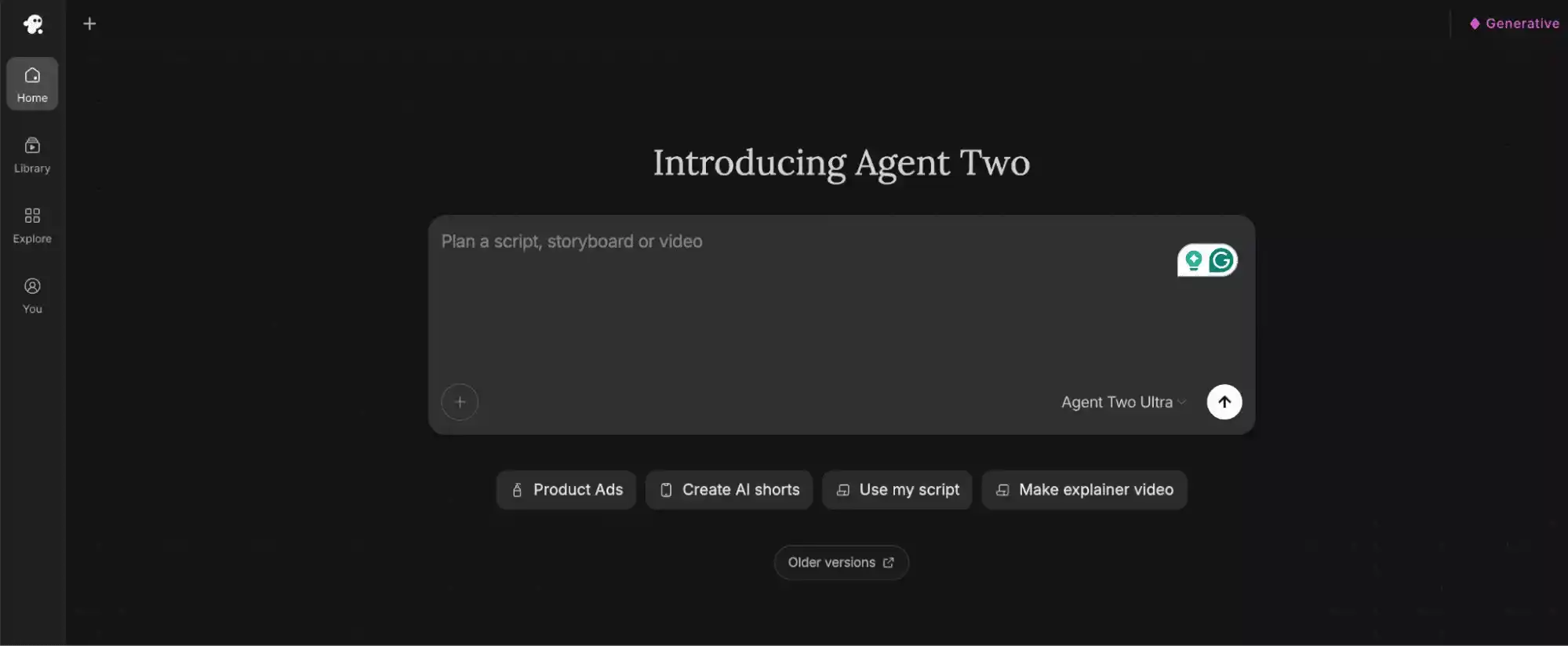
Invideo agent brings these inputs into one workflow and can help turn them into commercial content.
It provides access to 200+ AI models, including Seedance 2.0, Nano Banana, Google Veo 3.1, Sora, and Flux. This allows teams to use different models for different creative requirements instead of depending on a single generation system.
With invideo agent two, project information can remain available throughout the workflow. It can remember creative decisions, characters, visual rules, references, and other project details. It can also read PDFs, brand books, scripts, videos, rough cuts, and uploaded footage.
Teams can create specialist agents for roles such as a DOP, storyboard artist, casting director, or creative producer. These agents can work from the same project context, which can be useful when several creative functions are involved in a campaign.
Pricing: Invideo offers Plus at $17/month, Max at $85/month, and Generative at $170/month.
Synthesia: Best for presenter-led commercials
Synthesia takes a presenter-led approach to commercial video creation.
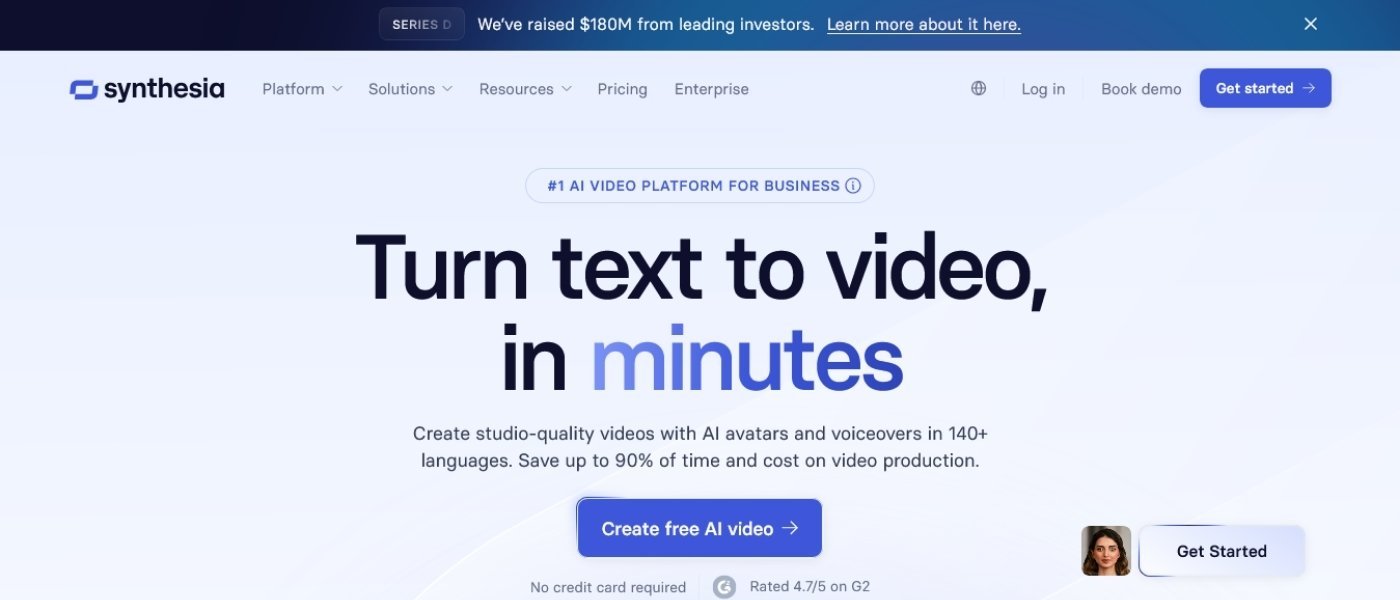
Brands can use AI avatars to explain products, introduce services, or deliver marketing messages without arranging a traditional presenter shoot for every version.
This can be particularly useful when a campaign needs multiple versions of the same message. Teams can adapt scripts for different audiences, markets, or product features without recording every variation from scratch.
Synthesia makes the most sense when the commercial needs someone speaking directly to the viewer rather than relying entirely on cinematic visuals.
Pricing: Synthesia offers Starter at $29/month and Creator at $89/month.
Elai: Best for scalable product and promotional videos
Elai also focuses on AI avatar videos and presenter-led content.
For commercial teams, it can be useful when campaigns require product explanations, promotional messages, or localized versions. Instead of arranging a new presenter shoot for every variation, marketers can work from different scripts and adapt the same campaign idea for different audiences.
This makes Elai particularly relevant to brands producing regular marketing videos where a clear explanation needs to accompany the visual product message.
Pricing: Elai offers Creator at $29/month and Team at $125/month, along with a custom Enterprise plan.
Captions: Best for short-form commercial content
Captions focuses on creating and editing short-form videos, with features designed around social and marketing content.
Commercial teams can use it for talking-head advertisements, product messaging, captions, social promotions, and quick variations of existing footage.
It can be especially useful when one creative concept needs to become several short videos. Rather than treating every social asset as a separate production, teams can work from existing material and create new versions more quickly.
Pricing: Captions offers Max at $24.99/month and Scale at $69.99/month.
Pika: Best for creative experimentation
Pika focuses on quick AI video generation and creative effects.
Commercial teams can use it for product reveals, transitions, visual concepts, and short advertising clips. Its fast workflow can be useful when marketers want to explore several creative directions before deciding which concept deserves more production time.
For example, a team could test different ways of introducing a product or create short visual moments to place between traditionally filmed scenes.
Pika is therefore more useful for experimentation and supporting content than treating every output as a complete commercial.
Pricing: Pika offers Standard at $10/month, Pro at $35/month, and Fancy at $95/month.
Luma AI: Best for cinematic commercial concepts
Luma AI can help teams develop AI-generated visuals and video for commercial concepts.
It can be useful for campaigns that need cinematic environments, imaginative scenes, or visual treatments that might otherwise require locations and extensive production work.
Creative teams can also use Luma AI during concept development to explore how an advertisement might look before committing to a final production approach. This can help identify which visual ideas are worth developing further and which are better left at the concept stage.
Pricing: Luma AI offers Plus at $30/month, Pro at $90/month, and Ultra at $300/month.
Quick Comparison by Commercial Video Workflow
| Tool | Best Fit | Main Strength | Main Trade-Off |
|---|---|---|---|
| Invideo agent | Broad commercial workflows | Multiple models and connected project context | Broader than teams needing simple video creation |
| Synthesia | Presenter-led campaigns | AI avatars and scalable messaging | Less focused on cinematic advertising |
| Elai | Product and promotional videos | Presenter-led and localized content | More specialised around avatar content |
| Captions | Short-form social ads | Fast editing and content variations | Better suited to short-form campaigns |
| Pika | Creative experimentation | Quick generation and visual effects | Not designed to replace a complete production workflow |
| Luma AI | Cinematic concepts | Environments and imaginative visual treatments | Better suited to visual development than full campaign production |
How to Choose the Right AI Commercial Video Tool
There is no single platform that fits every commercial campaign. The right choice depends on what your team needs to produce and where AI can remove the most repetitive work.
Choose Invideo agent for a broader campaign workflow
Invideo agent is the strongest fit when a project involves multiple creative inputs, production stages, and AI models. Its project context can also be useful for campaigns involving several creative roles.
Choose Synthesia or Elai for presenter-led campaigns
If the commercial depends on someone explaining a product or service directly to the audience, AI avatar platforms can reduce the need to arrange a new presenter shoot for every variation.
Choose Captions for social-first advertising
Captions makes more sense when the campaign requires several short-form videos, talking-head advertisements, product messages, or variations of existing footage.
Choose Pika for rapid creative testing
Pika is useful when the goal is to explore several visual directions quickly, test product reveals, or create short effects and supporting clips before committing to a larger production.
Choose Luma AI for cinematic visual development
Luma AI is better suited to campaigns that depend on imaginative scenes, cinematic environments, or visual concepts that would traditionally require more extensive production resources.
What Makes an AI Commercial Video Tool Actually Useful?
The ability to generate a video is only one part of the decision.
Commercial teams also need to consider consistency, editing flexibility, reference handling, production speed, and how easily one concept can become multiple assets.
A tool that creates an impressive five-second clip is not necessarily the best option for a complete campaign. Commercial production often requires connected scenes, brand-specific details, revisions, and different aspect ratios.
This is why workflow can matter as much as generation quality.
One Campaign Can Become Many Video Assets
A commercial rarely exists in just one format today.
A brand may need a 30-second version for YouTube, a 15-second cut for paid social, a vertical version for Reels, shorter clips for testing, and product-specific variations.
AI can help teams create these versions from a shared creative direction instead of treating every asset as a completely new project.
For example, a product launch could begin with one main concept and then branch into a product demonstration, customer-focused version, short social hook, and several paid-ad variations.
This gives marketers more creative options without increasing the production workload at the same rate.
Keep the Creative Direction Human
AI can speed up production, but the campaign still needs a clear creative point of view.
The team should decide what the audience needs to understand, what the product should communicate, which visual language fits the brand, and what action the viewer should take.
This becomes especially important when AI-generated visuals are used for products. Packaging, logos, colours, proportions, and other important details need to remain accurate.
The strongest workflow is usually a combination of AI generation and human review. AI can handle parts of the production process, while creative teams remain responsible for the final story and quality.
FAQ
What is the best AI tool for creating commercial videos?
There is no single best tool for every commercial. Invideo agent is the broadest option for teams that need a connected production workflow, while Synthesia and Elai are better suited to presenter-led campaigns. Captions, Pika, and Luma AI each serve more specific commercial video needs.
Which AI video tool is best for product advertisements?
The best option depends on the type of product advertisement. Synthesia and Elai can work well for presenter-led product explanations, while Pika can help with product reveals and visual experimentation. Luma AI is more suitable when the product needs to be presented within cinematic or imaginative environments.
Can AI create multiple versions of the same commercial?
Yes. AI can help teams adapt a shared campaign concept into different formats, including shorter social videos, vertical edits, product-focused clips, and paid-ad variations. The advantage is that teams can build multiple assets from the same creative direction rather than treating every version as a separate production.
Is AI video generation enough to produce a commercial?
Not necessarily. Commercial production still requires creative direction, editing, brand review, and decisions about what the audience should understand and do. AI is most useful as another layer in the production workflow rather than a complete replacement for creative teams.
What should brands check when using AI-generated product visuals?
Brands should review important details such as packaging, logos, colours, proportions, and other product-specific elements for accuracy. Human review remains important before AI-generated visuals are used in a commercial campaign.
The Best AI Commercial Tool Depends on Your Workflow
AI is giving commercial teams more ways to explore ideas, create visuals, and produce multiple versions of the same campaign.
Invideo agent is the strongest choice when a team needs a broader creative workflow and access to multiple AI models. Synthesia and Elai make more sense for presenter-led content, while Captions is useful for short-form social campaigns. Pika is better for rapid visual experimentation, and Luma AI is a strong option for cinematic concept development.
The right choice ultimately depends on the type of commercial, the team’s workflow, and the volume of content required.
Rather than treating AI as a replacement for commercial production, brands can use it as another layer in the process—helping creative teams test more ideas, produce more variations, and spend more time on the decisions that actually shape the campaign.