
Most content teams don’t have an intent problem. They have a page-type problem.
A keyword gets tagged as informational, a brief goes out, and the page still misses because the searcher wanted a template, a comparison, a tool, or a quick answer. In 2026, AI search intent tools matter because query labels alone no longer carry enough detail.
When I pick a tool for this job, I don’t care whether it looks smart in a demo. I care whether it helps me publish the right page for the actual search task.
Why intent work got harder this year
Classic intent buckets still help, but they break down faster now. “Informational” can mean beginner guide, product comparison, troubleshooting step, statistics roundup, local answer, or expert workflow. Those are different pages with different structures.
AI search made that gap more obvious. Google, AI Overviews, ChatGPT, Perplexity, and other answer engines do better with narrower, cleaner questions. That’s one reason long-tail terms keep pulling more weight than broad vanity phrases, a pattern also discussed in this 2026 analysis of long-tail AI search behavior.
For a content team, that changes the workflow. I don’t want a tool that says “informational” and stops there. I want one that shows whether the winning result is a tutorial, a template page, a list of tools, a pricing explainer, or a product-led comparison. If it can’t do that, I still have to guess.
The other shift is operational. Teams aren’t only tracking blue-link rankings anymore. They’re watching whether their pages show up in AI-generated answers, citation panels, and summary blocks. That has pushed newer products like Profound, AthenaHQ, and Otterly.ai into conversations that used to belong only to SEO suites.
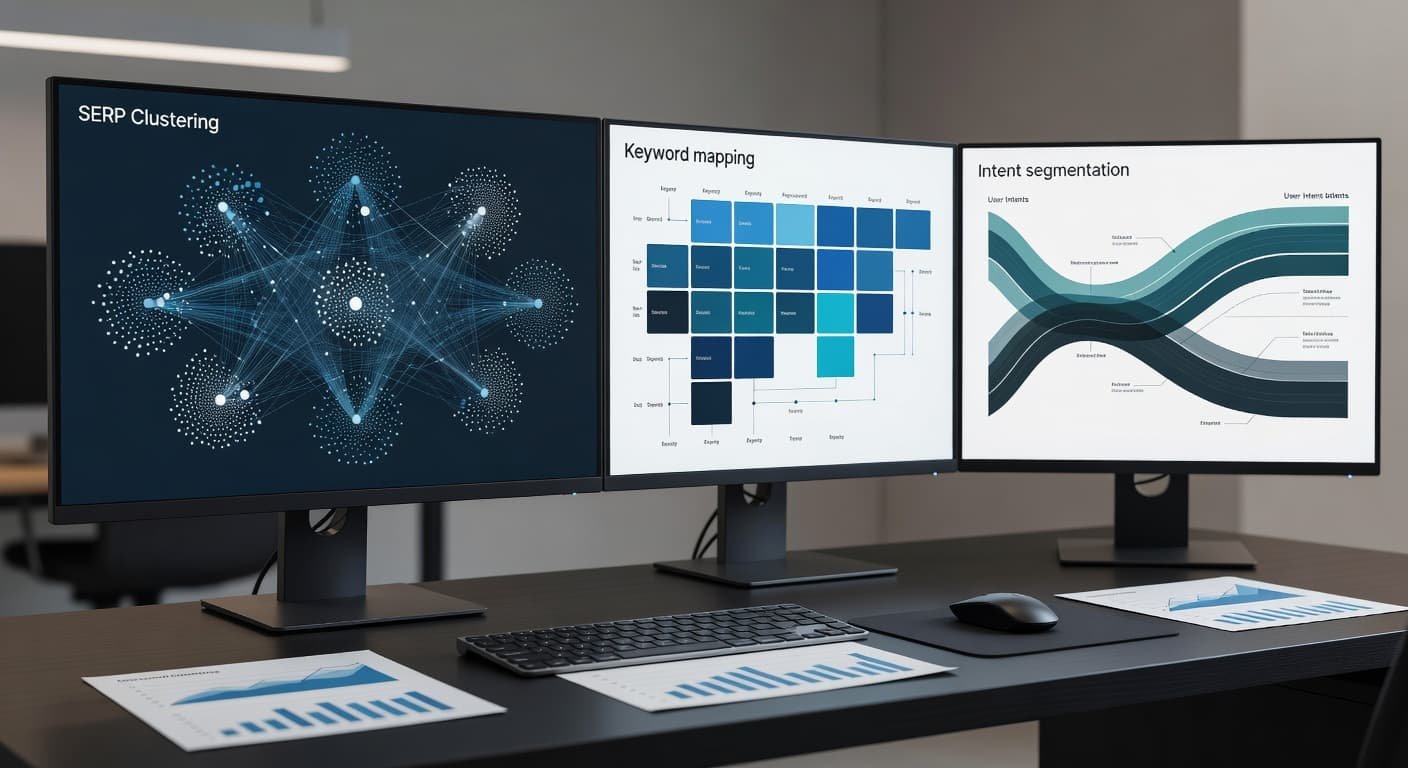
In practice, the best platforms now do three things well: they classify intent with real SERP evidence, they connect that intent to page planning, and they show whether the published page gets surfaced in AI-driven discovery.
What I need from an intent tool before I trust it
I use a simple test. Can the tool help me make a better editorial decision, faster, with fewer false positives? If the answer is no, I don’t care how polished the dashboard looks.
The tools I trust tend to share the same traits:
- They separate keyword families that look similar on paper but produce different result types in US SERPs.
- They show some evidence behind the label, not only a black-box score.
- They connect research to actual page planning, which means outlines, clusters, or content gap views.
- They work at team level, not only solo-research level, so briefs and decisions don’t get trapped in one person’s tab.
- They refresh fast enough that I can spot shifts before a quarter goes by.
If a tool can’t show me why two close queries deserve different pages, I don’t trust its intent label.
I also care about where the tool sits in the stack. Some platforms are strong at discovery. Some are better at briefing. Some are built for AI answer visibility. Most aren’t great at all three, and pretending otherwise leads teams to buy one big platform and then force it into jobs it doesn’t do well.
That’s why I don’t think of this as a one-winner category. I think of it as a workflow category. Research, brief, publish, monitor. If a product only helps with one layer, that’s fine, as long as I know which layer I’m buying.

The tools I’d put in a real content workflow
I wouldn’t buy every tool on this list. I would match them to the bottleneck I actually have.
This quick comparison shows where each one fits best.
| Tool | Best fit | Where it helps most | Main limitation |
|---|---|---|---|
| Semrush | Core research | Query discovery, SERP intent, competitive gaps | Labels can stay too broad |
| NeuronWriter | Briefing and optimization | Intent-based structure and coverage | Can push pages toward sameness |
| ContentShake AI | Fast production | Ideas, draft acceleration, workflow speed | Shallow for deep planning |
| Profound | AI answer monitoring | Citation tracking and visibility reporting | Not a replacement for keyword research |
| AthenaHQ | Emerging AI search ops | New AI-search workflow tracking | Category is still young |
| Otterly.ai | Lightweight AI monitoring | Page and brand citation checks | Narrower scope than full suites |
The takeaway is simple. I use one tool for discovery, another for page construction, and sometimes a third for AI visibility after publishing.
Semrush is still the safest research layer
If a team asks me where to start, I usually start with Semrush. It still gives the best broad view of query discovery, SERP patterns, related phrases, and competitive gaps in one place. For content teams, that matters because intent work doesn’t start with a draft. It starts with separating lookalike topics before they become duplicate articles.
What I like most is speed. I can move from term discovery to page-type judgment quickly. I can also validate whether a term deserves its own page or belongs inside a larger cluster.
The trade-off is that Semrush can stay too coarse on intent labels. A term might be correctly tagged as informational but still hide a product-comparison SERP or a template-heavy result page. So I use it as the research layer, not the final editorial decision-maker.
NeuronWriter is stronger when briefs keep missing
When the problem is not discovery but execution, I look at NeuronWriter. It does a better job than most tools at translating search patterns into usable structure. That’s useful for teams that already know what they want to target but keep publishing pages that feel off-angle or under-scoped.
I like it for outlining, subtopic coverage, and spotting whether a page is missing key sections. It helps junior writers stop guessing. It also gives editors a clearer starting point for revisions.
The limitation is predictable. If I follow the recommendations too literally, pages start to flatten out. They become well-organized, but interchangeable. So I treat NeuronWriter as a briefing assistant, not a substitute for editorial judgment.
ContentShake AI helps when production is the bottleneck
ContentShake AI fits smaller teams better than large editorial operations. If you’re already in the Semrush ecosystem and you need to move from topic idea to workable draft with less friction, it has a real place.
I see it as a throughput tool. It helps when the team knows its target topics but can’t keep pace with weekly production. For solo operators and lean in-house teams, that can be enough to justify it.
I don’t use it for hard strategy work. I use it after strategy is mostly settled. If the brief is wrong, faster drafting only gets me to the wrong page sooner. That’s the line I’d keep in mind.
Profound matters if AI answer visibility is already on your dashboard
Profound isn’t trying to replace a traditional SEO suite. That’s why I find it useful. It solves a newer problem, which is whether your brand and pages show up inside AI-generated answers and citations.
For larger content teams, especially publishers, software companies, and agencies with reporting obligations, that visibility matters. A page can underperform in classic ranking terms and still get cited in AI answers. The reverse also happens. If I only look at old-school rank tracking, I miss part of the picture.
The trade-off is scope. Profound is not where I’d begin a content research workflow. I’d add it when I already have research and briefing handled, and I need to monitor exposure in AI search environments.
AthenaHQ and Otterly.ai are worth watching for newer AI search workflows
I put AthenaHQ and Otterly.ai in the same buying conversation because they address the newer visibility layer. They help teams watch how pages, brands, and topics appear in AI-led results and answer experiences.
Otterly.ai is easier to explain. I think of it as a lightweight monitoring layer. It’s useful when I want to check whether important pages are being cited or surfaced without buying a heavier enterprise product.
AthenaHQ feels more like an emerging operations tool for teams that are actively building around AI search. That’s promising, but it also means the category is younger and less standardized. I expect volatility here. Goodie belongs in the same general bucket, though I still see that corner of the market as earlier-stage than classic research tools.
How I’d match the stack to the team
Most teams don’t need six subscriptions. They need one clean stack that matches the actual bottleneck.
Small team, limited budget
I’d usually start with Semrush if research quality is the problem. If briefs are already decent and the issue is turning them into publishable pages, I’d consider NeuronWriter or ContentShake AI instead.
For a two-to-five person team, I want low friction. One research tool, one content layer, one editor. That’s enough.
In-house growth team
This is where I like a two-tool or three-tool stack. Semrush for research. NeuronWriter for structure. Otterly.ai if AI answer visibility is getting leadership attention.
That setup covers discovery, brief quality, and post-publish monitoring without dragging the team into enterprise complexity too early.
Publisher, agency, or large content operation
This is where separation of duties matters more. Research sits in one system. Briefing and optimization sit in another. AI answer monitoring sits in a third layer, often Profound or AthenaHQ.
At this size, I care less about all-in-one convenience and more about auditability. I need to know why a page was commissioned, how intent was interpreted, and whether visibility improved after publication.

Where teams still get intent wrong
The biggest mistake I see is trusting the label more than the SERP. If a tool says a query is informational but the top results are comparison pages, calculators, or product-led posts, the label is less important than the actual result pattern.
The second mistake is mapping one page to a mixed-intent cluster. Teams often combine adjacent queries because the wording looks close. Then they publish a page that satisfies none of them well. AI search intent tools can help here, but only if someone is willing to split topics when the evidence says split them.
I also see teams use these tools only for new articles. That’s backwards. Some of the best wins come from reclassifying older pages. A page that ranked for a broad educational term in 2024 might now need a tighter angle, a comparison section, or a tool-first structure to stay competitive in 2026.
Last, I don’t let drafting tools make strategic decisions. If draft speed is the issue, AI writers can help after the brief is sound. If the brief is weak, the output will still miss. That’s why I keep research, page planning, and writing as related but separate decisions.
Pick the workflow, not the logo
The best tool in this category is the one that fixes your weakest decision point. For some teams, that’s research. For others, it’s briefing. For larger operations, it’s AI answer monitoring after publication.
What I want from these platforms is not magic. I want faster, cleaner page decisions with fewer misses. If a tool gives me that, it earns a place in the stack.
The real advantage isn’t more automation. It’s better workflow discipline.
FAQ
What are AI search intent tools?
I use that term for software that helps identify what a searcher is trying to accomplish, then connects that signal to content planning or monitoring. The better tools go beyond a simple label and show the likely page type, SERP pattern, or AI-answer visibility.
Which tool is best for a small content team?
If I had to pick one starting point, I’d usually pick Semrush for research breadth. If the team already knows what to write but struggles with briefs and structure, NeuronWriter is often the better first buy.
Do I need a separate tool for AI answer visibility?
Not always. If your team is still fixing basic research and page planning, I wouldn’t buy that layer first. Once leadership starts asking where your brand appears in AI-generated answers, tools like Profound or Otterly.ai become easier to justify.
Can these tools replace an editor or strategist?
No. They speed up pattern recognition and reduce guesswork, but they don’t remove editorial judgment. I still want a human deciding whether a page should exist, how it should be framed, and what trade-offs matter.
How often should I re-check search intent?
For active topics, I like a review cycle every 60 to 90 days. That’s often enough to catch shifts in result types, page expectations, and AI-answer behavior without turning the process into constant churn.
Suggested related reading
If you want to build the rest of the workflow around intent, these are good follow-ups: