If your AI phone agent sounds fine in a demo but falls apart on a real support line, nothing else matters. When I compare Retell AI vs Bland AI for inbound calls, I care less about flashy voice quality and more about whether the system survives interruptions, transfers cleanly, and logs useful data.
Inbound calls are messy. People ramble, change direction, spell names badly, and ask for a human at the worst possible moment. The better platform is the one that fails gracefully, not the one that looks smartest in a product clip.
How I judge an inbound voice platform
I use a short filter before I even look at pricing. If a tool misses here, I stop. That’s the same lens I use in my guide to AI phone answering software 2026, because inbound voice is an operations problem first.
- Can it handle low-latency conversation and barge-in without awkward dead air?
- Can I build routing, escalation, and verification logic without turning every change into an engineering ticket?
- Does it pass clean data into the CRM or help desk?
- What happens when speech recognition, lookup, or transfer logic breaks?
That sounds basic, but it’s where most buyers get burned. A good inbound agent is closer to a front-desk operator than a novelty bot. If it can’t recover from noise, caller interruptions, or a bad lookup, the whole experience starts to feel brittle.
Why Retell looks stronger for inbound work
As of April 2026, Retell has the better public case for inbound. The evidence is broader, and the product fit is clearer.
Published testing and vendor materials repeatedly point to sub-second latency, interruption handling, visual flow building, IVR navigation, and flexible bring-your-own telephony or model setup. Retell also appears to support reusable workflow components, simulation testing, denoising, and high concurrency. For inbound support, that mix matters more than polish.
That shows up in ordinary moments, not edge demos. If a caller corrects an address halfway through, changes an appointment time, or interrupts during verification, dead air kills trust fast. A platform that listens, stops, and recovers cleanly can still contain the interaction.

I also like that Retell can fit into existing stacks instead of forcing a full rebuild. If CRM accuracy matters, I treat the phone layer and the record layer as one system, not two. That’s why I pair this kind of evaluation with voice AI in HubSpot workflows, because bad logging can erase the gain from better call handling.
There is a catch. Retell’s pricing is usage-based, and bring-your-own components can make the bill harder to predict. For a lean team, that matters. Retell’s own official comparison post also makes strong claims about SIP trunking and scale, but I treat vendor-side comparisons as context, not proof.
Where Bland still has a case
Bland AI isn’t out of the conversation. I wouldn’t write it off. I would narrow the use case.
Most current write-ups still frame Bland as stronger for high-volume, scripted, API-heavy calling. That can translate well if your inbound flow is narrow, predictable, and backed by an engineering team. Think appointment confirmations, first-pass qualification, or a simple after-hours intake line.

Where I hesitate is proof. I found far less current inbound benchmarking for Bland than for Retell. That doesn’t mean Bland can’t handle inbound. It means the public record is thinner, and that creates decision risk.
I see the edge case like this: if the caller is expected to answer a few known questions and then route or book, Bland may be enough. If the caller wanders, objects, or mixes questions together, I want stronger inbound evidence.
If inbound calls are the main job, missing proof is part of the product evaluation.
The live-call comparison that matters
Here’s the short version of how I see the trade-offs.
| What I care about | Retell AI | Bland AI |
|---|---|---|
| Inbound conversation flow | Strong public evidence for low latency and barge-in | Less current inbound evidence |
| Builder experience | Visual builder and reusable call logic | More engineering-led setup in many cases |
| Telephony flexibility | Strong BYO telephony and model options | Deep API hooks, but often more build work |
| Best inbound fit | Support, scheduling, routing, intake | Narrow, scripted inbound use cases |
| Budget predictability | Flexible, but costs can stack | Harder to judge from current inbound info |
The biggest gap isn’t raw feature count. It’s confidence. With Retell, I can map the inbound workflow and see a clearer path from phone tree to CRM log. With Bland, I need more internal testing before I trust it on customer-facing lines.
I also care about vendor-neutral benchmarks, and that is still a weak spot in this category overall. A lot of public data comes from vendors or adjacent blogs, so I put more weight on pilot performance than on polished comparison pages.
What I’d pick for real US teams
If I’m deploying for a US service business, a clinic, a law office, a home-services company, or a support desk, I lean Retell for inbound first. Those teams need fast turn-taking, clean transfers, and less setup friction. They usually don’t need a voice agent that shines at giant outbound campaigns.
If I’m working with a developer-led team that already thinks in APIs, runs large call volumes, and can tolerate more build work, Bland becomes more interesting. Even then, I’d still stress-test inbound hard before rollout. I want transcript quality, transfer reliability, and fallback behavior under noise, accents, and impatient callers.
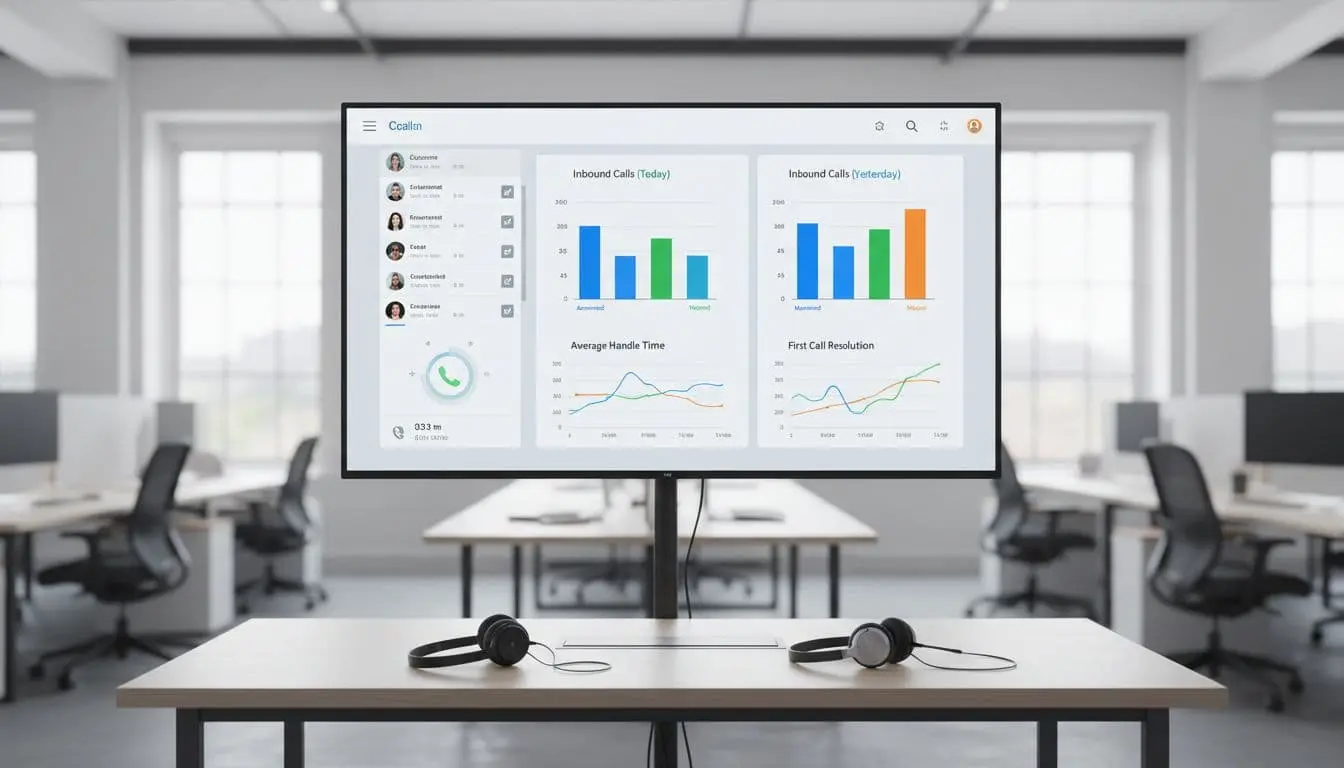
My rollout rule is simple. Start with after-hours coverage or one narrow queue, measure containment rate, transfer success, average handle time, and bad-log rate, then expand. If you’re buying for a smaller team, my notes on AI voice agents for small businesses use that same staged approach.
The call I would make
If the job is inbound calls, I don’t think this is a close decision today. Retell has the stronger public record, the clearer inbound feature set, and fewer question marks around live conversation quality.
Bland may still fit teams that want scripted, API-driven voice automation and don’t mind heavier testing. But if I have to choose one platform for inbound reliability, I pick Retell first and validate from there.
FAQ
Is Retell better than Bland AI for inbound calls?
From what I can verify in April 2026, yes. Retell has stronger public evidence around low-latency conversation, interruption handling, IVR, and inbound workflow design.
Can Bland AI handle inbound support calls?
I think it can in narrower flows. I would keep the scope tight, test heavily, and avoid assuming it will match Retell on complex, messy conversations without proof.
Which platform is easier for non-developers?
Retell looks easier for teams that want a visual builder and faster iteration. Bland makes more sense when engineering is already part of the deployment model.