Most small sales teams don’t have a training problem. They have a manager-time problem. Calls happen, notes land in the CRM, and managers lack the hours to turn them into useful coaching.
That’s where AI sales coaching software can help, but only when it addresses a clear bottleneck. The wrong tool creates another dashboard. The right AI coaching tool gives reps better practice, gives managers usable evidence, and fits the sales process you already run.
Which AI sales coaching software fits small teams?
For a small B2B team, I’d start with the smallest tool that addresses the real problem. Don’t buy a broad sales enablement platform because one rep needs more objection-handling practice.
| Tool | Best fit for | Main limitation |
|---|---|---|
| Avoma | Teams that need call recording, summaries, CRM sync, and coaching in one product | Useful coaching features may require higher plans or add-ons |
| Hyperbound | Teams that need repeatable roleplay and buyer-persona practice | Paid pricing is not fully transparent |
| Gong | Established teams that need deep post-call analysis and deal visibility | Quote-led buying can be hard to justify for a lean team |
Avoma is the most practical starting point for many small teams because it combines meeting intelligence, coaching workflows, and CRM integrations. Its published pricing also makes it easier to compare coaching depth across plans.
Hyperbound is more focused. It works well as sales roleplay software when reps need practice before facing real buyers.
Gong remains a serious product, but I’d treat it as an enterprise-leaning option. A three-person team doesn’t automatically need the same system as a 100-rep organization.
If follow-up, lead routing, and CRM hygiene are bigger issues than coaching, compare these options with other AI sales tools for small teams. Better discovery calls won’t fix a pipeline full of stale records.
The three jobs AI coaching tools can do
Before comparing vendors, decide what work you want the software to do. The categories often appear together in product demos, but they solve different problems.

Sales roleplay software builds practice reps
Sales roleplay software lets reps rehearse discovery, qualification, demos, and objection handling with an AI buyer. The strongest systems let you build buyer personas around your product, market, common objections, and sales methodology. It can also support pitch certification through structured discovery and demo rehearsal.
This is useful when new hires know the script but freeze when a prospect pushes back. Sales roleplay software lets a rep repeat buyer pushback and objection handling scenarios until the answer becomes natural. That is more useful than asking a busy manager to roleplay the same call six times.
Post-call intelligence gives managers game tape
Conversation intelligence software uses call recording and transcription to summarize and analyze real sales calls. Managers can review moments that matter instead of listening to every minute of every recording.
For a small team, the value of post-call conversation intelligence isn’t a giant analytics dashboard. It is finding a missed discovery question, vague next step, or weak response to a pricing objection fast enough to coach it before the next call.
Real-time AI coaching needs restraint
Live call guidance surfaces prompts while a rep is on a call. It can help high-volume phone teams with required disclosures, call flow, or predictable objection patterns.
I’d be cautious with it for small B2B teams. An in-call prompt can distract a seller during a complex conversation. It also won’t repair weak positioning or unclear product knowledge. Use it when live consistency is the problem, not because the feature looks impressive.
Avoma is the sensible all-round option
Avoma is the strongest fit when your team wants more than coaching. It covers part of a broader sales enablement platform use case. It combines call recording and transcription, AI notes, CRM syncing, and coaching tools. Those tools turn recorded calls into post-call conversation intelligence and coaching evidence.
Its public plans and pricing details are a meaningful advantage. Small teams can assess likely spend before sitting through a sales call. That sounds basic, but pricing opacity is still common in this category.
Avoma’s model also suits teams that need crm integrations with HubSpot, Salesforce, Pipedrive, Copper, Zoho, or Zendesk Sell. Calls, notes, follow-up items, and coaching evidence have more value when they reach the CRM without manual copy-paste.
I’d check which plan includes the scorecards, trackers, and conversation intelligence features you need. A low entry price is less relevant if the useful coaching layer sits behind an add-on.
Avoma’s own overview of AI sales assistants is also worth reading before you compare feature lists. Recording a call and coaching a rep are related jobs, but Avoma isn’t a substitute for dedicated sales roleplay software.
Hyperbound is better when practice is the bottleneck
Hyperbound is focused sales roleplay software for practice-heavy teams. Its core value is AI roleplay, where reps practice sales conversations before live calls. Perform supports skill gap analysis by comparing practiced behaviors with live-call execution. Repeated practice may help reduce rep ramp time.

I would shortlist Hyperbound as sales roleplay software if your team has a solid sales motion but uneven execution. Perhaps reps avoid asking budget questions or need stronger objection handling. Perhaps a messaging change needs pitch certification before Monday’s outbound block.
The product’s Practice and Perform pricing model is modular, which suits a small team better than a broad bundle on day one. Repeated practice may help reduce rep ramp time, though results depend on adoption. Its site also offers a permanent free plan, but confirm paid pricing and contract details directly before budgeting.
AI avatars alone aren’t a reason to buy sales roleplay software. Buyer persona simulations are more useful when they mirror a skeptical IT lead, time-poor founder, or price-conscious operations manager. Use custom coaching playbooks to test discovery, objection handling, and the messaging your team actually uses. A repeatable scenario can support pitch certification as a readiness gate, giving you a stronger reason to choose Hyperbound as sales roleplay software.
Gong is powerful, but often too heavy for lean teams
Gong is best known for post-call conversation intelligence, deal intelligence, and revenue analysis. Its conversation intelligence product positions manager review around objection handling, discovery, and closing.
That depth can be worthwhile when several managers need a shared view of call quality and deal risk. It can also make sense when leadership needs to inspect call analysis patterns across a large volume of calls.
For a small team, the question is simpler: will you use enough of the system to justify the contract? Gong does not publish straightforward self-serve pricing in the material I reviewed. That makes it harder to compare against Avoma or a focused roleplay tool.
I wouldn’t rule it out because it is enterprise-oriented. I would rule it out if your manager only needs five better calls to review each week. Buying an expensive revenue intelligence platform to solve a narrow coaching problem is poor economics.
Price the whole coaching workflow, not one seat
The software price is only one part of the decision. A focused coaching purchase may be lighter than a broader sales execution platform, but compare the full cost and administrative burden. Small teams get surprised by add-ons, minimum contracts, recording requirements, CRM work, and the time needed to tune scorecards.
Before you buy, model the full annual cost:
- Paid licenses for reps, managers, and any users who need call access.
- Conversation intelligence, roleplay, or revenue analytics add-ons, plus configuration work for automated call scoring.
- CRM, dialer, video-call, and identity-management requirements.
- Manager time for scorecard calibration and weekly coaching.
- Contract length, cancellation terms, and data-retention rules.
- Pilot budget for the full practice workflow in sales roleplay software, not just a per-seat license.
A free trial can show whether the interface is usable. It cannot prove that the tool will improve sales performance. I’d pilot one workflow with one team lead and a defined success measure, using pitch certification only when relevant.
A platform that produces 100 automated scorecards nobody reviews is not coaching. It is a reporting system with a more expensive label.
The same caution applies to CRM integrations. If your team uses HubSpot, review the HubSpot AI CRM assistant guide before adding another layer of automation. The CRM should remain the source of truth.
Build scorecards around evidence, not vague AI scores
Automated call scoring should never become a verdict on a rep. Models can identify patterns, but they don’t understand every customer relationship, deal cycle, or strategic concession.
Translate MEDDIC or BANT into observable behavior
MEDDIC and BANT can support sales methodology adherence when each scorecard item is concrete. Don’t ask whether a rep “used MEDDIC well.” Ask whether the call captured a measurable business problem, identified the decision process, surfaced a budget signal, and agreed on a dated next step.
The same principle applies to discovery. “Asked good questions” is too subjective. “Confirmed the buyer’s current workflow and named a cost of inaction” gives a manager something to inspect. For objection handling, check whether the rep clarified a pricing concern before defending the price. Use that evidence in custom coaching playbooks for weekly reviews.
Keep a pitch certification rubric separate from the criteria used to grade discovery, demos, renewals, or negotiations. The same evidence-based rubric can guide sales roleplay software and live-call reviews, so practice maps to coaching.
Calibrate before you trust the scores
I’d use manager scorecards to rate 15 to 20 existing calls manually before switching on automation. Compare those judgments with automated call scoring output. Where they disagree, fix the rubric or call samples before presenting scores to reps.
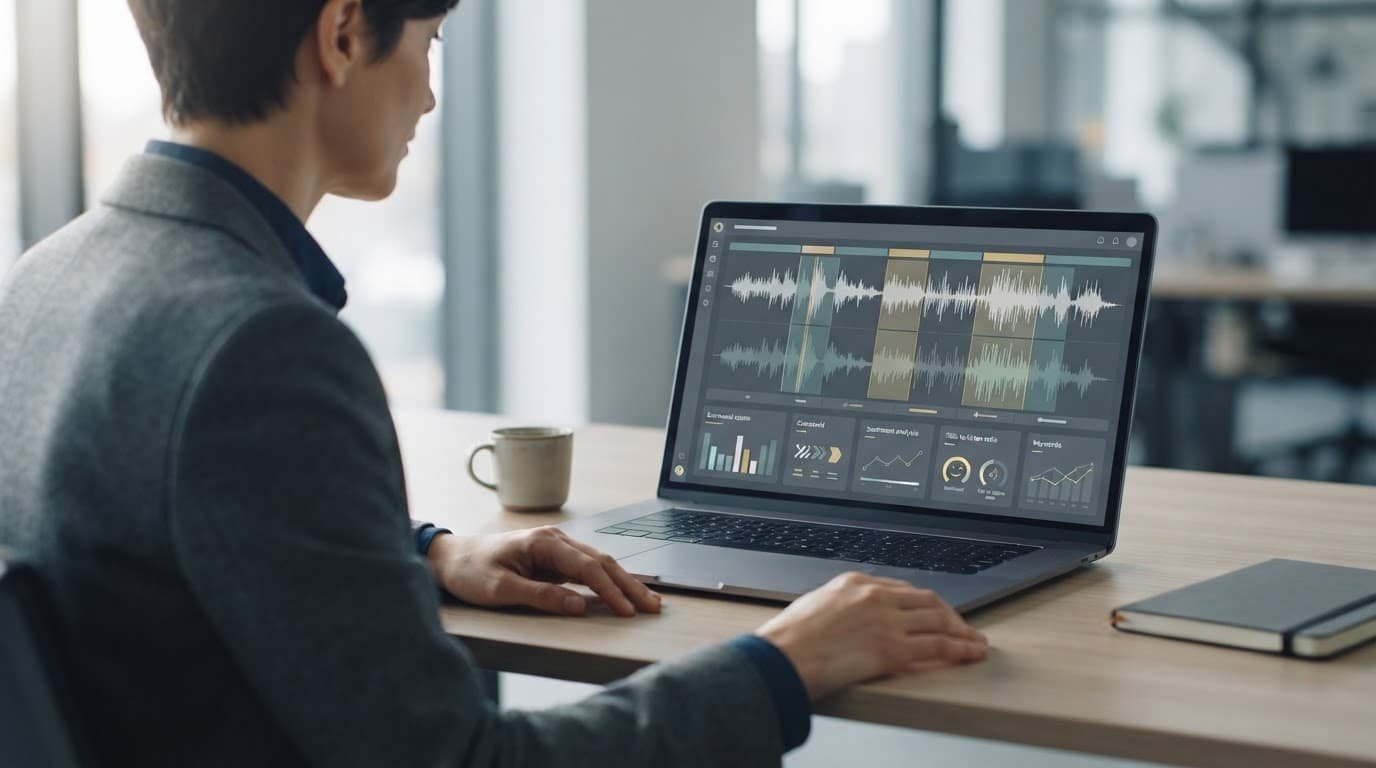
Scorecards also need different rules by call type. A cold call, discovery call, demo, renewal conversation, and late-stage negotiation should not receive the same grading criteria. For example, objection handling on a demo might require confirming the pricing concern, while a renewal rubric might assess risk, timing, and next steps.
Roll out AI coaching without overwhelming reps
The first month should feel boring. That’s a good sign. Use sales training software to build a repeatable coaching habit, not a dramatic technology launch.
Start with one moment that matters
Pick one stage in the sales process. For many teams, discovery is the best starting point for b2b sales training. Bad discovery creates weak demos, poor qualification, and unreliable forecasts.
Build custom coaching playbooks around two or three behaviors, using sales roleplay software only for this narrow practice workflow. Examples include confirming the buyer’s current process, practicing objection handling, and setting a dated next step. Leave everything else alone at first, while keeping the pilot focused enough to support rep ramp time. Add pitch certification later as an optional readiness gate for a new pitch or messaging change.
Keep the manager in the loop
Managers should review a sample of calls using automated call scoring every week. They need to explain why a score matters and show the rep the moment that drove the feedback. Don’t add live call guidance before this basic coaching habit works.
Treat the tool as sales readiness software only when it supports onboarding, practice, and manager feedback. A generic weekly email with an average score rarely changes behavior. A five-minute call review can, and the software should shorten the path to it. Use sales roleplay software to connect practice behavior with live-call review.
Connect actions carefully
Call summaries can create CRM notes, coaching tasks, and follow-up reminders. That saves time, but automatic actions need review when money or customer relationships are involved.
For internal tasks, workflow automation can remove a lot of repetitive admin work. The Zapier AI review covers where agent actions help and where human checks still matter.
If you already run HubSpot, its Breeze AI tools may cover useful CRM assistance. A specialist sales coaching product is still justified when it offers stronger call analysis or structured practice.
Track the metrics that show coaching is working
Automated call scoring alone doesn’t prove anything. For sales performance tracking, I would track sales coaching metrics across adoption, behavior, and business outcomes.
| Metric | What it tells you | What can distort it |
|---|---|---|
| Recorded-call coverage | Whether the tool has enough evidence to analyze | Reps using unrecorded channels |
| Manager review rate | Whether coaching is actually happening | Marking calls reviewed without discussion |
| Discovery-score trend | Whether targeted call behavior is improving | A scorecard that changed mid-quarter |
| Time to first qualified opportunity | Whether ramp time is falling for new reps | Differences in lead quality |
| Stage conversion rate | Whether better conversations improve progression | Small sample sizes and changing markets |
| win rates | Whether the overall sales motion improves | Deal size, segment mix, and long buying cycles |
| quota attainment | A lagging view of whether reps are reaching targets | Territory, lead quality, and rep tenure |
Practice adoption matters too. If reps use sales roleplay software, compare practice adoption with behavior change on live calls. Don’t treat usage alone as proof that coaching is working.
Talk-to-listen ratio can be useful, but it is not a universal target. A technical discovery call may require more explanation. A cold call may need a fast, concise opening. Context matters more than a generic benchmark.
I would also compare coaching themes with CRM outcomes. If calls score well but qualified opportunities don’t move, the model may be rewarding the wrong behavior. That is the moment to revise the playbook, not blame the reps.
Frequently Asked Questions
What is the best AI sales coaching software for a small team?
Avoma is the most practical all-round option when you need call recording, CRM integrations, summaries, and coaching workflows in one product. Hyperbound is a better fit when repeatable sales roleplay and objection-handling practice are the main priorities.
Is AI sales coaching software worth it for a small sales team?
It can be worth the investment when it solves a specific manager-time or rep-practice bottleneck. Start with one workflow and measure adoption, behavior change, and sales outcomes before expanding the rollout.
Should a small team choose roleplay or post-call coaching software?
Choose sales roleplay software when reps need more practice before live calls, especially with discovery or objection handling. Choose post-call conversation intelligence when managers need faster access to evidence from real customer conversations.
How should a team evaluate AI coaching scores?
Build scorecards around observable behaviors, such as confirming a business problem or agreeing on a dated next step. Managers should manually review a sample of calls and calibrate the rubric before using automated scores in rep coaching.
Does a small team need real-time AI coaching?
Usually not, unless live consistency, required disclosures, or predictable objections are the main problem. In-call prompts can distract sellers during complex B2B conversations, so start with practice and post-call review instead.
Final take
The best AI sales coaching software for a small team usually fixes one repeated weakness without creating another operating burden. Avoma is the practical choice for broad call intelligence and CRM-linked coaching. Hyperbound is the better sales roleplay software option when practice and rep ramp time are the priority.
Gong can be worth the cost for a larger, process-heavy organization, but it isn’t an automatic answer for a lean team. Start with a narrow pilot and review real evidence. Don’t default to live call guidance without a clear consistency problem. Keep manager judgment at the center of the process.