AI filmmaking is becoming less about generating a single impressive clip and more about building an entire visual sequence around an idea.
A filmmaker may need to establish characters, develop locations, create multiple shots, experiment with camera movement, and keep the visual style consistent throughout the project. For independent creators and small production teams, doing all of this traditionally can quickly become expensive and time-consuming.
Higgsfield is one option for this type of workflow, but it is far from the only one. Different AI filmmaking platforms take different approaches, from cinematic shot generation and visual experimentation to structured story development, character performance, and motion transfer.
Key Takeaways
- The best Higgsfield alternative depends on the type of film and the part of the production process you need help with.
- Invideo agent is the broadest option for creators who want scripting, planning, generation, editing, and other production tasks in one workflow.
- LTX Studio is a strong fit for filmmakers who want to develop stories, scenes, characters, and visual plans before generating individual shots.
- PixVerse and Haiper are more useful for creators focused on generating and experimenting with individual visual sequences.
- Hedra is particularly suited to character-driven projects, while Viggle focuses more heavily on character movement and performance.
- For larger projects, workflow continuity can matter just as much as the quality of an individual AI-generated clip.
What to Look for in a Higgsfield Alternative
The right alternative depends on what you are actually trying to create. A short cinematic sequence does not have the same requirements as a multi-scene narrative, commercial, music video, or character-led film.
Before choosing a platform, consider whether you need:
- End-to-end production support
- Story and scene development
- Individual shot generation
- Image-to-video creation
- Character performances
- Character movement and motion transfer
- Support for references and existing creative assets
- A workflow that can maintain context across a larger project
The AI Filmmaking Platforms Worth Considering
Invideo Agent
A filmmaking project usually involves much more than the final video. There are scripts, character information, visual references, footage, story ideas, and creative decisions that need to stay connected throughout production.
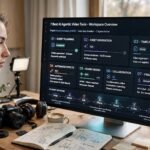
Invideo agent brings these elements into a broader creative workflow. It can help with scripting, story development, visual planning, generation, editing, voiceovers, music, and other production tasks.
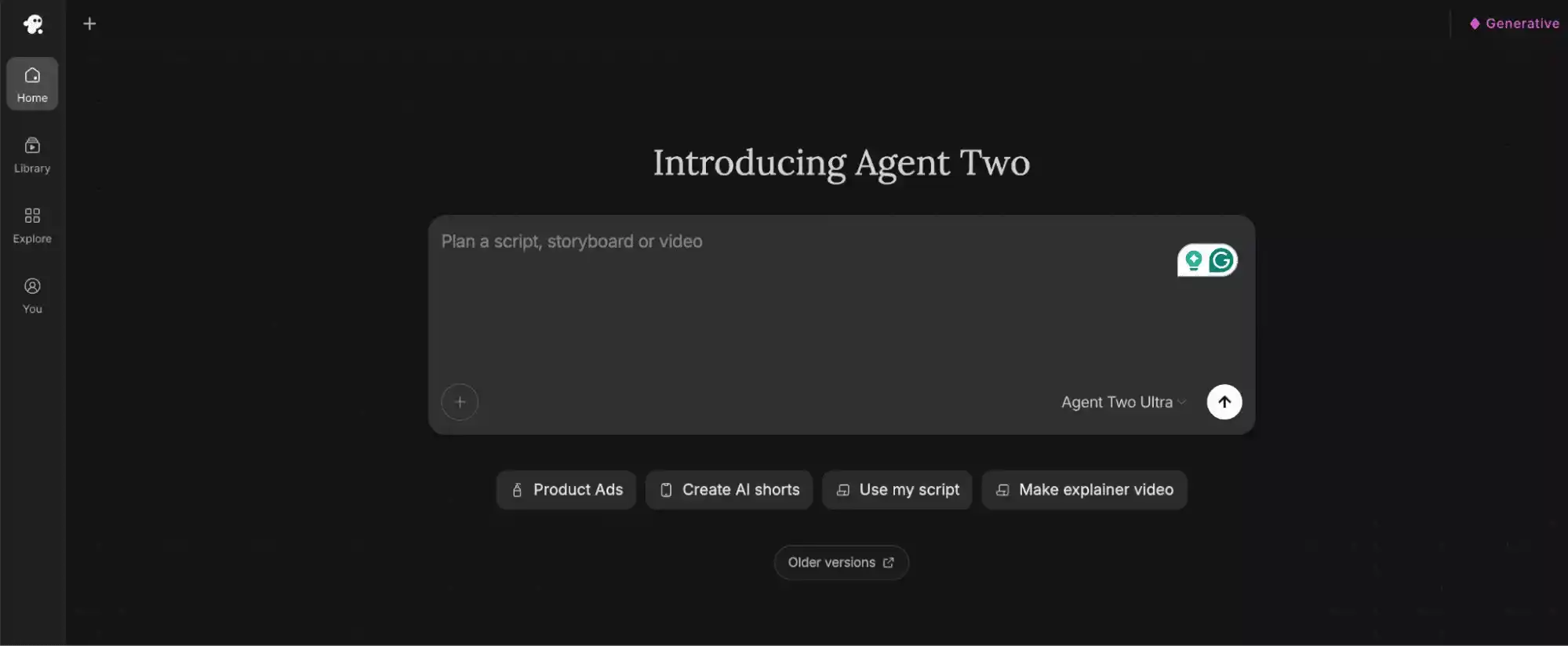
It gives filmmakers access to 200+ AI models, allowing them to choose different generation options for different creative requirements. This can be useful when one project includes a mix of cinematic scenes, character shots, product footage, and AI visual effects without having to rely on one model for the entire production.
With invideo agent two, the workflow also includes persistent project memory. It can retain information about characters, lighting, visual references, and decisions made earlier in the project. Filmmakers can also create specialist agents for roles such as a DOP, storyboard artist, casting director, or VFX artist and have them work from the same project context.
It can read scripts, PDFs, brand books, videos, rough cuts, YouTube links, and uploaded footage, making it possible to build from material that already exists instead of repeatedly starting from a blank prompt.
Pricing: Invideo offers Plus at $17/month, Max at $85/month, and Generative at $170/month.
PixVerse
PixVerse focuses on AI video generation for short-form and cinematic visual creation.
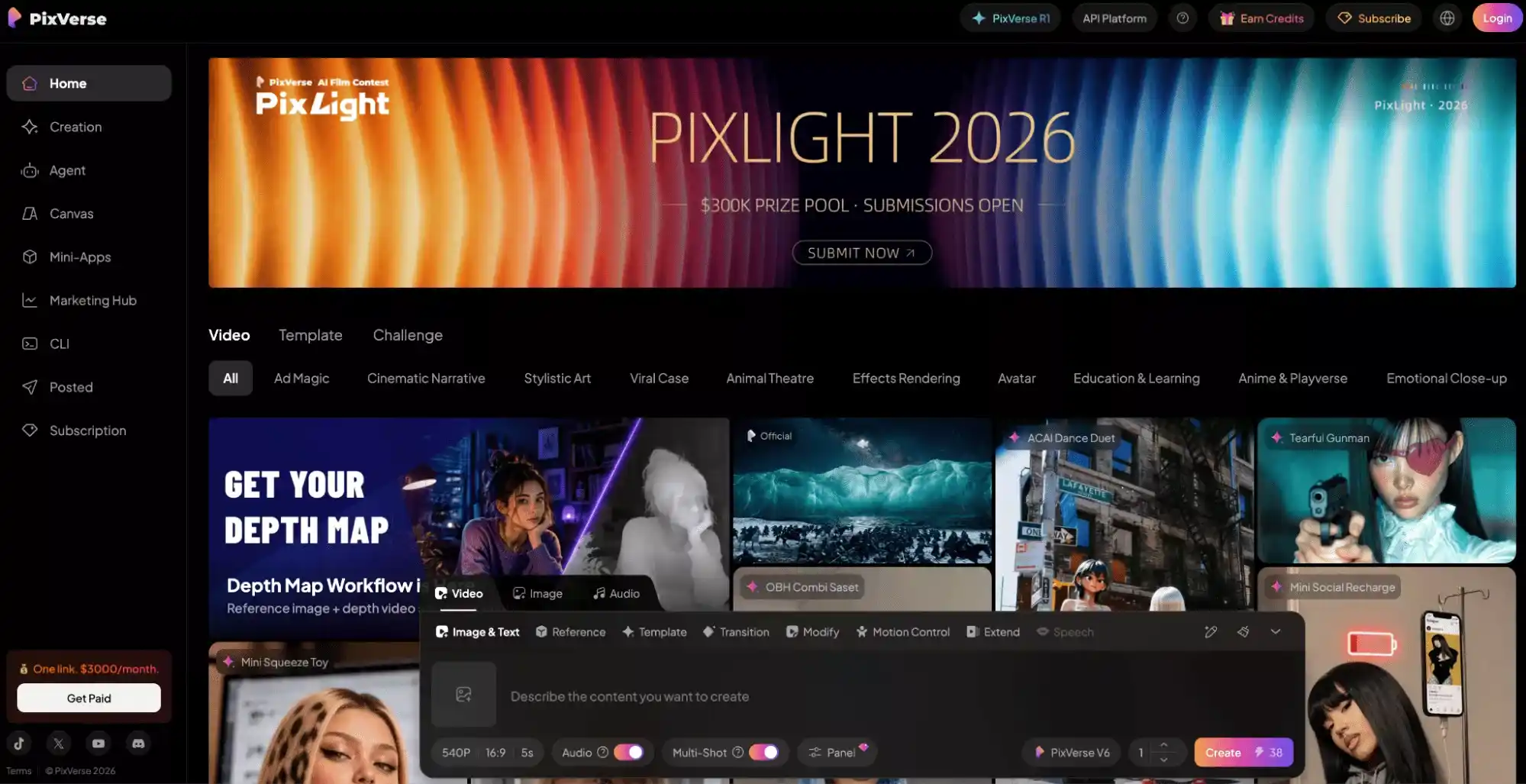
For filmmakers, it can be useful for developing individual shots, testing different visual styles, or turning still images into moving sequences. This makes it particularly useful when you already have concept art, character images, or other visual references.
Its workflow also lends itself to experimentation, allowing creators to test different visual treatments before committing to a particular direction.
Pricing: PixVerse offers Standard at $10/month, Pro at $30/month, and Premium at $60/month.
LTX Studio
LTX Studio approaches AI filmmaking from a more structured production perspective. Rather than focusing only on individual clips, it helps creators move from an initial idea toward scenes and visual planning.
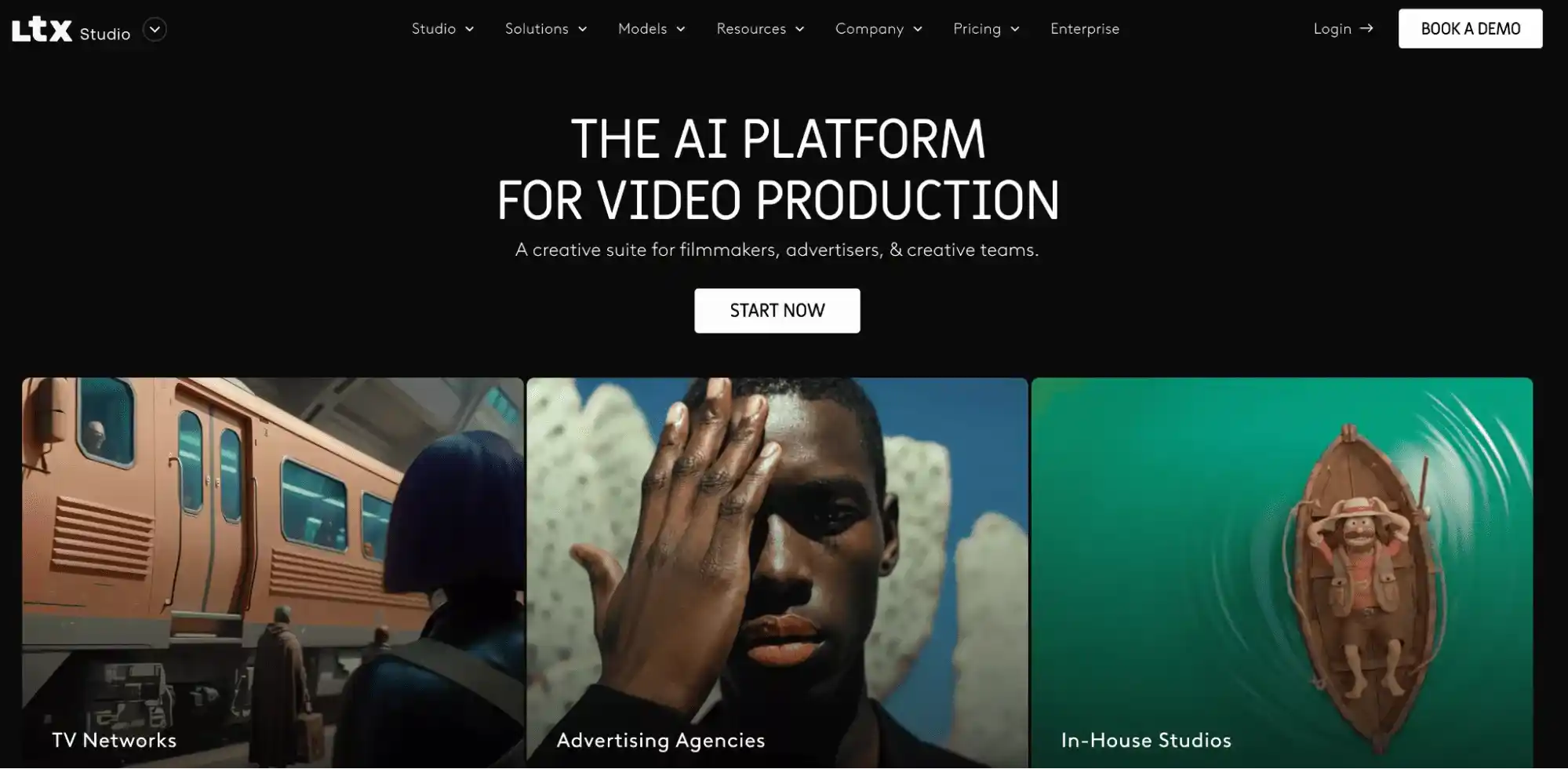
Story structure, characters, scenes, and visual elements can be developed as part of a connected workflow. For independent filmmakers, this can help bridge the gap between developing an idea and visualizing how the finished film could unfold.
Pricing: LTX Studio offers Lite at $15/month, Standard at $35/month, and Pro at $125/month.
Hedra
Hedra is particularly relevant when characters and performances are central to the project.
It can help creators develop animated characters and talking performances from images and other inputs, opening up possibilities for dialogue scenes, digital characters, narrative experiments, and presenter-led sequences.
It can also be useful when a project revolves around a recurring digital character and requires different performances or scenes around that character.
Pricing: Hedra offers Creator at $30/month and Professional at $75/month.
Haiper
Haiper focuses on AI-generated video and image-to-video creation.
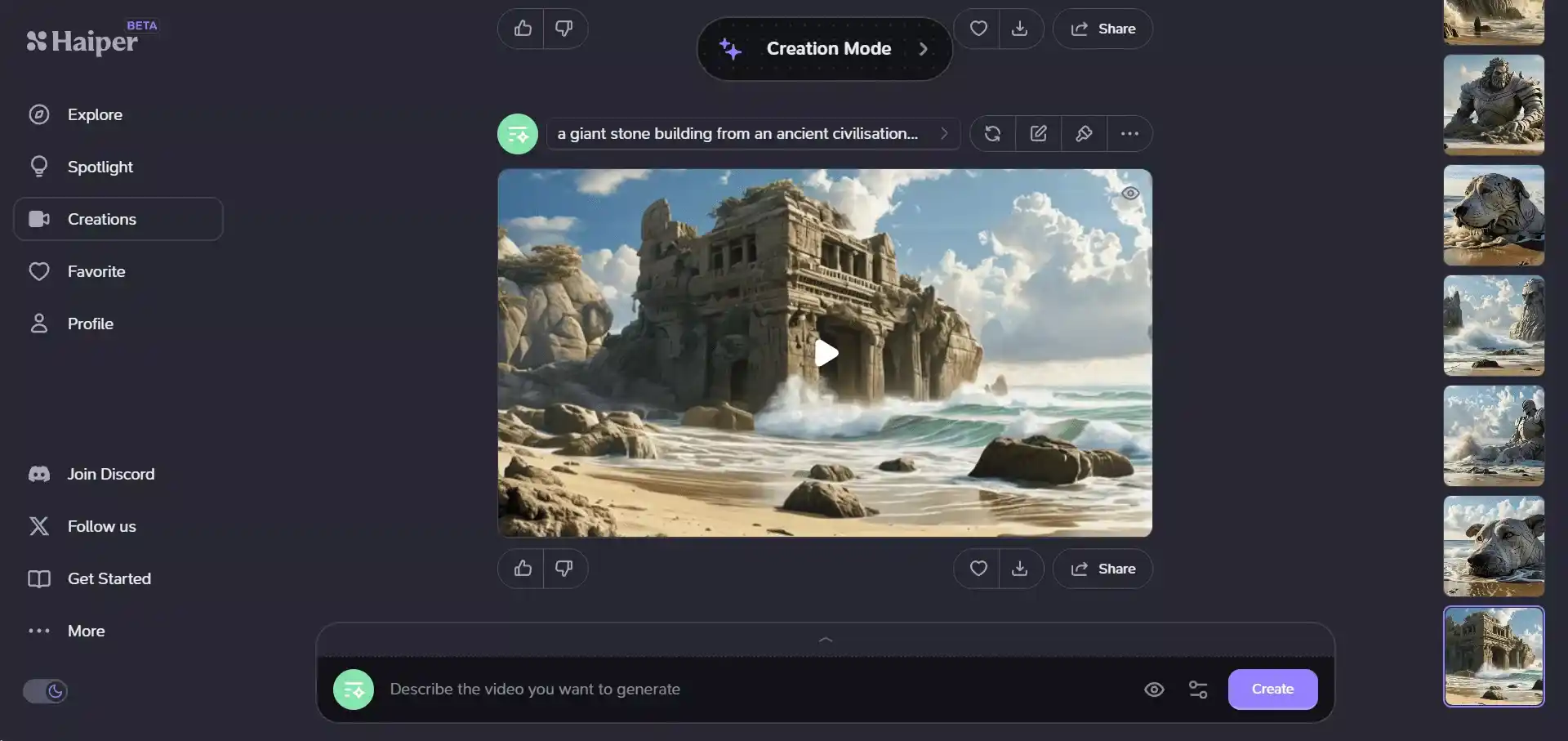
For filmmakers, it can be useful for experimenting with movement, environments, and short visual sequences. The image-to-video workflow is particularly useful when a creator already has a specific frame or visual concept and wants to explore how it could translate into motion.
This makes Haiper useful during visual development, storyboarding, and scene experimentation.
Pricing: Haiper offers free and paid options depending on usage and available features.
Viggle
Viggle takes a more specialised approach by focusing heavily on character movement and motion transfer.
For filmmaking, this can be useful when performance is an important part of the scene, including dance sequences, action moments, physical comedy, or stylised performances.
Creators can work with characters and movement references to gain more control over how a character moves rather than relying entirely on generated motion.
Pricing: Viggle offers Live at $20/month for daily creators and $80/month for power users.
Quick Comparison by Filmmaking Workflow
| Platform | Best For | Main Strength | Main Trade-Off |
|---|---|---|---|
| Invideo agent | Broader production workflows | Multiple models and connected project context | More than needed for simple shot generation |
| PixVerse | Visual experimentation | Cinematic shots and image-to-video creation | More focused on individual visual creation |
| LTX Studio | Structured film development | Story, scenes, and visual planning | Less specialised for character movement |
| Hedra | Character-led projects | Digital characters and performances | More specialised than broader platforms |
| Haiper | Visual development | Image-to-video and motion experimentation | Better suited to shorter visual work |
| Viggle | Movement-focused projects | Character motion and transfer | Narrower focus than full filmmaking platforms |
Choosing the Right Alternative
Not every AI filmmaking project needs the same type of platform.
If the project requires a broader production workflow, Invideo agent offers access to multiple models and project-level context. LTX Studio is more suited to structured visual development, while PixVerse and Haiper can work well for generating and experimenting with individual shots.
For character-focused projects, Hedra and Viggle provide more specialised options. Hedra can be useful for character performances and dialogue, while Viggle is more focused on movement.
The right choice therefore depends on where the biggest production challenge sits.
A filmmaker who struggles with story development may benefit from a structured platform. Someone who already has a finished storyboard may care more about shot generation. Another creator may simply need a better way to animate a character or transfer a performance.
Don’t Judge an AI Filmmaking Tool by One Great Clip
One of the easiest mistakes when evaluating AI filmmaking platforms is focusing only on the best-looking generation.
A film is built from connected shots. Characters need to remain recognisable, locations need to make sense, and the visual language needs to remain coherent from one scene to another.
That means the generation quality of a single clip is only part of the decision.
Consider how well the platform handles:
- Visual references
- Revisions
- Character consistency
- Scene continuity
- Maintaining the original creative direction
- Combining outputs with footage from other tools
These considerations become increasingly important as the project gets longer.
FAQ
What is the best Higgsfield alternative for AI filmmaking?
There is no single best alternative for every filmmaker. Invideo agent is the broadest option for production workflows, LTX Studio is better suited to structured story and scene development, and PixVerse or Haiper can be useful for individual visual generation and experimentation. Hedra and Viggle are more specialised toward characters and movement.
Which Higgsfield alternative is best for cinematic shots?
PixVerse and Haiper are useful options when the main goal is experimenting with individual cinematic shots, visual styles, movement, or image-to-video sequences.
Which AI filmmaking platform is best for character-focused projects?
Hedra is particularly suited to character performances and dialogue-driven sequences, while Viggle is more focused on character movement and motion transfer.
Is one AI filmmaking platform enough to create a full film?
For a short experiment, one platform may be enough. Larger projects can benefit from combining several tools, especially when different stages of production require different capabilities.
What should I consider besides AI video quality?
Look at the entire workflow. Reference handling, character consistency, scene continuity, revisions, creative control, and the ability to combine outputs with other tools can become more important than the quality of a single generated clip.
The Best Alternative Depends on Your Filmmaking Workflow
Higgsfield is only one option in an increasingly broad AI filmmaking landscape.
Invideo agent is the strongest choice when you want a broader creative workflow and access to multiple models. LTX Studio takes a more structured approach to story and visual development, while PixVerse and Haiper are useful for visual generation and experimentation. Hedra and Viggle are better suited to specialised character and movement workflows.
The right choice ultimately depends on where AI needs to fit into your filmmaking process.
For short experiments, one specialised platform may be enough. For larger projects, combining several tools may make more sense. The goal is not simply to generate impressive clips, but to use AI to develop ideas, test scenes, and build a more connected filmmaking workflow.