Small SaaS teams rarely need more pull request comments. They need fewer bad comments, faster.
When I evaluate AI code review tools, I don’t start with model claims or flashy demos. I start with reviewer time, merge friction, and the kind of mistakes that slip through when everyone is busy. That’s where the right tool helps, and where the wrong one becomes another notification people learn to ignore.
What changed for AI code review tools in 2026
The category shifted this year. A lot of tools no longer act like simple diff checkers. They try to read the repo, infer intent, spot risky interactions, and suggest fixes in context.
That sounds good, but it creates a new buying problem. Small teams now have more choices, more overlap, and more marketing noise. A GitHub-native reviewer, a repo-aware review agent, and an IDE assistant can all claim to “speed up code review” while solving different problems.
I’ve also seen buyer confusion rise because review tools now overlap with test generation, documentation help, and security scanning. If you only compare feature lists, everything starts to look the same. A broader market overview from SitePoint shows how crowded the space has become, but a small SaaS team still has to evaluate tools by workflow fit, not category labels.
The strongest trend is context. Better tools now inspect more than the changed lines. They look at nearby files, conventions, test structure, and sometimes past patterns in the repo. The weaker ones still produce generic comments that read well but don’t change decisions.
If a tool can’t reason about your codebase, it’s not reviewing your code. It’s summarizing a diff.
What a small SaaS team should solve first
Before I compare vendors, I define the failure I want to remove. That sounds obvious, but teams skip it all the time.
Find the real bottleneck
Some teams think reviews are slow. The real issue is that senior engineers are spending time on low-value comments. Other teams think quality is slipping. The real issue is that no one notices edge cases in service boundaries, auth flows, or tests.
I usually reduce it to one of four problems:
- PRs wait too long for first feedback.
- Review comments are shallow and repetitive.
- Bugs slip through because humans miss context.
- Developers merge too cautiously because review quality is inconsistent.
If you don’t name the bottleneck, you won’t buy well. You’ll end up paying for broad capability when what you needed was one reliable intervention.

Map where review work actually happens
I also map the existing workflow before I shortlist anything. Does most feedback happen inside GitHub? Does the team live in GitLab? Are developers already leaning on IDE assistants before a PR exists? Do security checks already run elsewhere?
This matters because the best AI review tool is often the one that removes one extra click, one extra tab, or one extra queue. Small teams don’t have spare process tolerance.
For a US SaaS company, I also check who touches customer-sensitive code, which repos are public or private, and whether the team will need auditability later for enterprise sales. A tool that feels fine at five engineers can become a procurement problem at fifteen.
The criteria I use before I buy
I treat these tools like operational systems, not novelty purchases. Here are the filters I use first.
Repo context beats clever comments
The first thing I test is whether the tool understands the codebase beyond the PR. Can it spot that a harmless-looking change breaks an implicit contract in another file? Can it tell the difference between a one-off hack and a repeated pattern?
This is where the market split got real in 2026. Stronger tools index more of the repo and reason across files. Weaker ones still overreact to single lines. A public stress test from Augment Code is useful here because it shows how quickly shallow reviewers fall apart on a large monorepo.
When I want an example of what fuller pull request analysis looks like in practice, I often point people to this Qodo AI review. Not because every team should buy it, but because it illustrates the difference between comment generation and repo-aware review.
Workflow fit matters more than model hype
A great reviewer in the wrong place is a bad purchase.
If my team reviews inside GitHub all day, I want low-friction comments, clean summaries, and predictable triggers. If the team catches most issues before the PR, then an editor-first assistant may do more than a PR bot ever will. If I work across GitHub, GitLab, and Bitbucket, multi-platform support stops being a nice extra and becomes table stakes.
That overlap is why I keep reminding teams to separate “review help” from “coding help.” If your real need starts earlier in the workflow, this piece on what AI coding assistants do for developers is a better companion than another PR bot comparison.
Noise is expensive
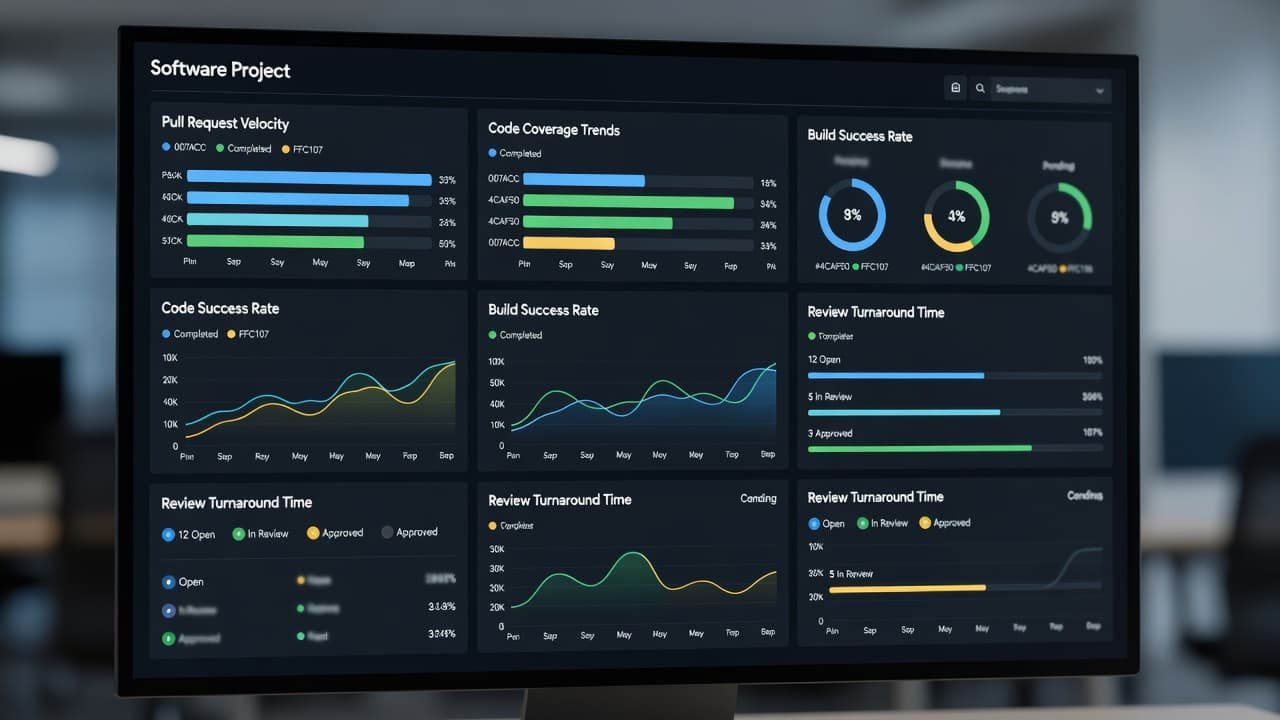
False positives are not a minor annoyance. They train engineers to stop reading.
I score tools on comment quality, not comment volume. I want to see severity ranking, duplicate suppression, rule tuning, and some ability to learn from accepted or dismissed feedback. If every PR gets twelve comments and ten are weak, the tool is burning reviewer attention.
In practice, small teams feel this more than large ones. They don’t have dedicated platform staff to babysit rules or clean up noisy automation. A noisy reviewer isn’t neutral. It makes human review worse.
Security and privacy can’t be a footnote
Most small SaaS buyers start relaxed here, then regret it later.
I check basic questions first. Is code retained? Can the vendor use code for model training? Is there SSO, role control, and audit history? Are there private deployment options if the company moves upmarket? Can the tool respect repo boundaries for contractors or limited-access teams?
I don’t need enterprise theater. I do need straight answers. If privacy is already part of your buying criteria, this Tabnine features and privacy analysis is worth reading because it frames the trade-off well for teams that care about deployment control.
Fix suggestions should be reviewable
A good tool doesn’t only say “this looks risky.” It explains why, proposes a fix, and makes that fix easy to inspect.
I want patch suggestions that are narrow, reversible, and easy to compare against team conventions. I do not want vague “consider refactoring” advice or giant automated rewrites that no one trusts. The best suggestions reduce reviewer effort without hiding decision-making.
Pricing has to match PR volume
Small teams often buy on seat price and stop there. That’s incomplete.
Some tools price by seat. Some charge by usage, tokens, or PR activity. I care more about cost per merged PR and cost per reviewer hour saved. A cheap plan can become expensive fast if the useful features sit behind stricter caps or if the team avoids the tool because it feels noisy.
I don’t buy on monthly seat price alone. I buy on reviewer minutes saved and defects avoided.
Which kind of tool fits your team
This is the comparison I use before I start demos.
| Tool type | Best when | Main upside | Common downside |
|---|---|---|---|
| GitHub-native reviewer | Most work happens in GitHub and the team wants fast adoption | Low friction, simple rollout, quick PR summaries | Can stay shallow if repo context is limited |
| Repo-aware review agent | The codebase is growing across services or shared libraries | Better cross-file reasoning, stronger risk detection | Setup and tuning can take more effort |
| IDE assistant with review features | Developers catch issues before opening PRs | Problems get fixed earlier, less PR churn | PR-level visibility may be weaker |
| Security-first reviewer | The team ships regulated or high-risk code | Stronger policy checks, dependency and risk focus | Can miss broader maintainability feedback |
The takeaway is simple. Don’t buy a category. Buy the behavior you need most often.
I see one mistake all the time: a team buys a dedicated reviewer when the larger win would come from better coding assistance before review starts. If you’re in that camp, it helps to compare your options against a broader guide to choosing the right AI coding tool, not only PR review products.
A second mistake is buying for the most senior engineer’s preferences. That’s backwards. I want the tool that improves the median PR, not the one that impresses the best reviewer for a week.
Red flags I don’t ignore
Some problems show up fast if you test for them.
- The tool leaves polished comments that don’t reference project conventions, tests, or nearby files.
- It can’t explain why an issue matters, only that “there may be a problem.”
- Setup takes days, but the output still feels generic.
- Privacy answers are vague, sales-led, or full of exceptions.
- Suggested fixes are too broad to trust in a real branch.
- Review latency is slow enough that developers merge before feedback lands.
- The team starts muting notifications during the trial.
None of these are edge cases. They are normal failure modes.
If I hit two or three of them in a pilot, I stop. Small teams don’t have time to rehabilitate a tool that doesn’t fit. The best case for a bad purchase is wasted budget. The worse case is process damage, because people lose trust in automation that might have helped in a better implementation.
My shortlist process for a 5 to 20 person engineering team
I keep the pilot simple. Fancy evaluations usually collapse under time pressure.

- Pick 20 recent PRs across normal work, bug fixes, and one risky change.
- Run two tools, or one tool against your current process, on the same sample.
- Score each review on relevance, noise, speed, and whether it changed a merge decision.
- Ask developers one blunt question: “Would you keep this on next month if it were your budget?”
- Check privacy, access control, and pricing only after the workflow test passes.
I also track one metric most teams miss: accepted suggestion rate. If comments look smart but developers rarely act on them, the value isn’t real.
For editor-heavy teams, I also compare PR review tools against the daily environment. A lot of SaaS developers live in VS Code, so it can help to review the current top AI coding assistants for VS Code before you commit to another layer in the stack.
Don’t sign an annual contract off a polished demo. Run a two-week trial, then review the merged PRs. That’s where the truth sits.
The buying mistake that costs the most
The most expensive mistake is buying for features instead of friction.
A small SaaS team wins when review quality becomes more consistent and less demanding on senior engineers. That usually comes from better context, lower noise, and tighter workflow fit, not from the longest feature list.
If the tool helps your team trust reviews more, merge faster, and catch the mistakes humans miss under pressure, it’s earning its keep. If it mostly adds comments, it’s not.
FAQ
Are AI code review tools worth it for a team under 10 engineers?
Yes, if review delay or review quality is already a visible problem. For a very small team, the tool has to save time fast. If setup, tuning, or noise outweigh the gain, I pass.
Can an AI reviewer replace human code review?
No. It can reduce the volume of routine checking and catch patterns humans miss. It still can’t own business logic, product intent, or risky trade-offs the way an experienced reviewer can.
What’s the difference between an AI coding assistant and an AI reviewer?
A coding assistant helps before or during implementation. An AI reviewer evaluates changes around the PR stage, often with more emphasis on risk, tests, conventions, and merge decisions. Some tools blur the line, but the workflow stage still matters.
Should a small SaaS team pick a GitHub-native tool or a standalone platform?
I start with the native option if the team is GitHub-centered and wants low-friction adoption. I look at standalone platforms when the team needs deeper repo context, broader integrations, or stronger policy control.
Related reading
- Best AI coding assistants of 2025
- Top AI coding assistants for VS Code
- Qodo AI Review 2025