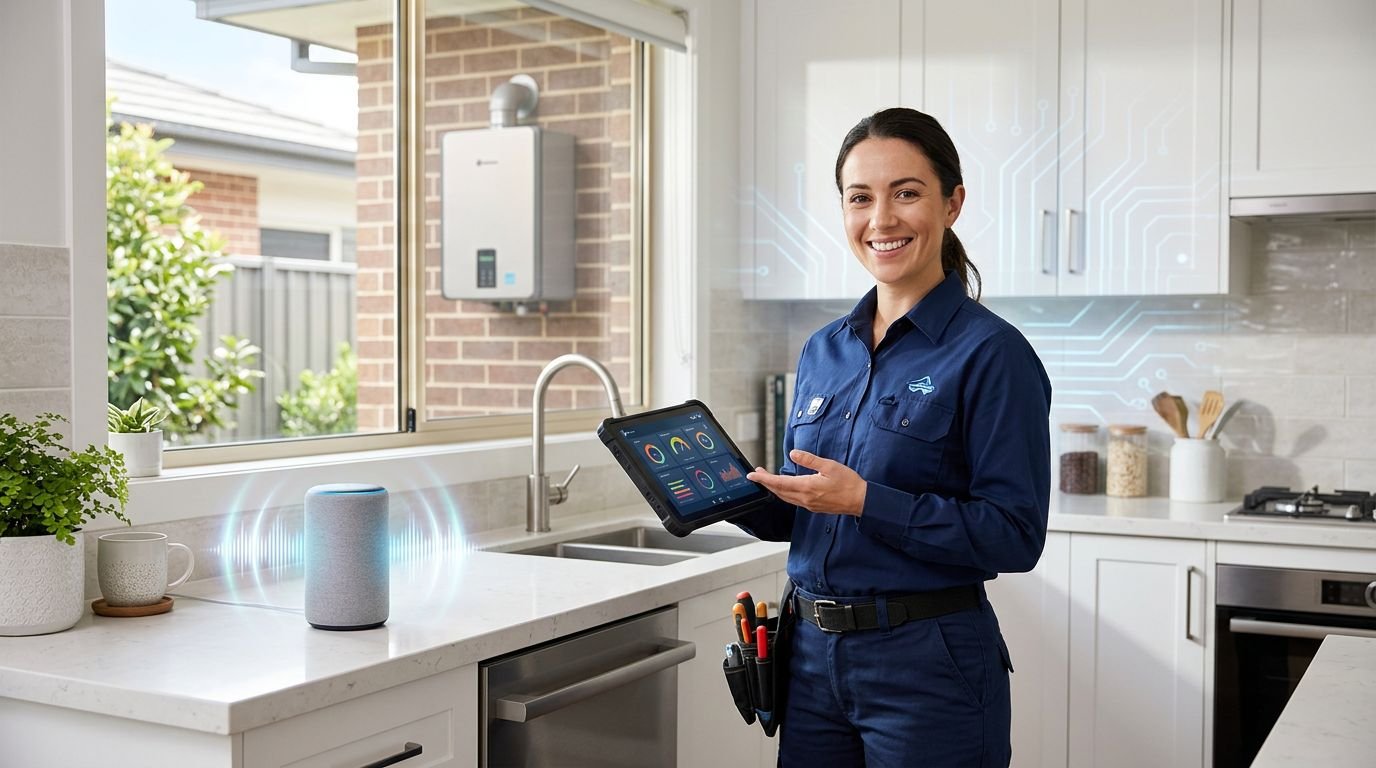
Dealing with missed calls from a homeowner with a leaking water heater is never a minor service issue. It is often a lost job, a lost repeat customer, and a lead handed to the company that answered first, resulting in significant lost revenue for home service businesses.
I look for home service voice agents that do more than pick up the phone. By implementing AI voice agents, you can ensure your system identifies the job, asks the right questions, recognizes urgency, captures service-area details, and moves qualified callers into a real booking workflow. A friendly voice alone does not protect your bottom line.
The right choice depends on your field-service platform, call volume, after-hours demand, and how much control you need over the conversation.
Key Takeaways
- The strongest home-service voice agents provide lead qualification, book jobs, and route emergencies without forcing callers through a rigid phone tree.
- Specialized tools like the Jobber AI Receptionist and Housecall Pro CSR AI are ideal for companies that want integrated home-service workflows with less custom development.
- Goodcall and Smith.ai work well for smaller operators that need dependable call coverage and straightforward qualification.
- PolyAI, Retell AI, and Bland AI fit larger teams or developers that need custom scripts, integrations, and reporting.
- I would not deploy any voice agent without clear emergency escalation protocols for urgent service needs, pricing disputes, and callers who ask for a person.
What Lead Qualification Should Look Like on a Service Call
A home-service call isn’t a generic support conversation. The caller may be standing in a flooded basement, sitting in a house with no heat, or trying to arrange an estimate during a work break.
The agent needs to keep the call moving without sounding rushed. That requires practical qualification, not a long questionnaire.
For most contractors in the HVAC and plumbing fields, as well as those in electrical, roofing, pest control, cleaning, and restoration businesses, the first call should establish five things:
- The service category. Is this repair, maintenance, installation, replacement, estimate work, or an existing-job question?
- The urgency level. A gas smell, active flood, sparking panel, or no-heat situation needs different handling than a tune-up request.
- The property details. The agent should confirm residential or commercial status, zip code, address, and basic equipment or issue details.
- The caller’s intent. Some callers want a same-day appointment. Others want an estimate, a price range, or a person who can explain options.
- The next operational action. A qualified call should become a booked appointment, a routed dispatch request, a callback task, or a clean handoff. Maintaining 24/7 availability ensures no lead is ignored, even outside of standard business hours.
I treat that final step as the real test. A voice agent can sound natural and still fail if the dispatcher receives incomplete information or the booking lands outside the service area.
A qualified lead is not merely a completed conversation. It is a caller whose job details, urgency, and next step are usable by the service team.
The agent also needs permission to say “I don’t know.” Overconfident answers create problems fast. If a homeowner asks whether a cracked heat exchanger is safe, the correct response is escalation, not a guessed diagnosis.
A Practical Comparison of Leading Voice Agent Options
The tools below solve different parts of the home-service call problem. I would not treat this as a universal ranking. A two-truck plumbing company has different requirements than a multi-location HVAC operation with a staffed call center.
| Voice Agent | Best Fit | Qualification Strength | Main Trade-Off |
|---|---|---|---|
| Avoca AI | Home-service businesses using field-service software | Home-service call flows, booking and job intake | Platform fit matters more than general flexibility |
| Jobber AI Receptionist | Jobber customers | Lower-friction booking and lead capture | Best value stays inside the Jobber workflow |
| Housecall Pro CSR AI | Housecall Pro customers | Call handling tied to operational workflows | Less attractive for teams outside Housecall Pro |
| Goodcall | Small and midsize service businesses | Quick deployment, routine lead intake, call routing | Complex service logic can require careful setup |
| Smith.ai | Teams wanting AI plus human coverage | Lead screening, receptionist coverage, escalation | Not built only for field-service dispatch |
| PolyAI | Larger service brands and call centers | Natural conversations and custom enterprise flows | Higher implementation effort and likely cost |
| Retell AI | Developers and technical operations teams | Custom voice logic, integrations, and testing | Requires technical ownership |
| Bland AI | Teams building a tailored calling system | Flexible automation and inbound or outbound calling | Guardrails and monitoring are your responsibility |
The central distinction is simple. Some products are operational tools built around field service software. Others are voice infrastructure that lets you build almost any flow, provided your team can design and maintain it. In this context, reliable CRM sync becomes a vital differentiator for ensuring your lead data is actionable.
That difference changes the buying decision. If I already run scheduling, dispatch, and customer records in Jobber or Housecall Pro, I start with the native option provided by those platforms. If I need a custom lead-routing system across multiple CRMs, markets, or franchises, I look at a platform such as Retell AI or PolyAI.

Tools Built Around Home-Service Operations
Avoca AI for dedicated home-service call handling
Avoca AI is one of the more focused options for home-service companies. That focus matters because the hard part of these calls is not basic speech recognition. It is knowing what information the office needs before a technician can be scheduled. Contractors find immense value in how the platform uses advanced speech recognition specifically tuned for the nuances of their trade.
A useful home-service agent should ask whether the caller is an existing customer, verify the address, identify the relevant trade, and determine whether the issue is urgent. It should also recognize when the customer is asking for an estimate rather than immediate repair.
I would consider Avoca AI when phone calls are a meaningful lead source and the team wants an agent that speaks the language of service work. HVAC businesses, plumbers, electricians, and restoration companies often have repeatable intake patterns. Those patterns are well-suited to an AI agent, as long as the handoff rules are strict.
The limitation is that specialized workflows can be less flexible when your company has unusual processes. For example, a commercial refrigeration contractor may need to capture store location numbers, equipment models, landlord approvals, and after-hours authorization. Test those cases before committing.
Jobber AI Receptionist for Jobber users
For companies already running Jobber, an AI receptionist can be the practical choice because it reduces the number of systems involved. By acting as an answering service built directly into the app, it saves your team from switching between platforms. The value is not novelty; it is reducing the gap between a caller’s request and the job record your team uses every day.
I would prioritize testing three workflows:
- New residential leads that need a service visit.
- Existing customers calling about an open job.
- After-hours callers with urgent issues.
The agent should collect enough information to create a usable request without duplicating the caller’s effort later. If the office still needs to call back and repeat every question, the automation is only answering the phone, not qualifying the lead.
Jobber’s approach makes the most sense for businesses that want fast adoption and already trust their core platform for scheduling and customer records. Companies that use a different CRM or dispatch system should confirm data flow before they make it part of their call process.
Housecall Pro CSR AI for dispatch-heavy teams
Housecall Pro’s CSR AI is aimed at a familiar operational issue: office staff cannot answer every call while they are dispatching technicians, updating jobs, and dealing with customers already on the schedule.
That is where an AI voice agent can help. It gives the business a consistent front door during overflow periods and after-hours calls. A heating company can receive a burst of no-heat calls during the first cold week of winter, and a human-only office often falls behind at exactly the wrong time.
I would still keep a clear route to a person. Dispatch-heavy calls often contain details that do not fit a standard script. An existing customer may be locked out of a house, a property manager may need documentation, or a technician may already be on site but need a customer approval handled.
The agent should absorb routine intake, not become a barrier between the caller and the person who can resolve a complicated issue.
General-Purpose Agents With Useful Receptionist Features
Goodcall for straightforward inbound lead capture
Goodcall is a reasonable option for smaller service businesses that need an AI agent without a lengthy implementation project. It acts as an efficient answering service that prevents missed calls for companies that want inbound inquiries handled, common questions addressed, appointments routed, and basic lead details captured.
Its strength is speed. A local pest-control operator or cleaning business may not need a deeply customized phone system. Instead, it may simply need coverage after office hours and a reliable way to collect the service address, request type, and preferred appointment time.
I would not assume the default conversation is ready for production. Home-service qualification needs precise wording. “Do you need a quote?” is not enough for roofing, where the agent may need to ask about roof type, visible damage, insurance involvement, and whether the property is owner-occupied.
Build the script around real calls. Pull 30 to 50 recent recordings, remove personal data, and identify the questions your best office staff ask before they book a job.
Smith.ai when human backup matters
Smith.ai is worth considering when the company wants AI coverage but does not want every edge case handled by software. The hybrid model can make sense for businesses with high-value leads, varied job types, or a strong preference for live escalation. Because this service maintains high voice quality even during human handoffs, it is an excellent choice for businesses that need a seamless transition from bot to representative.
This is useful for remodeling, legal-adjacent restoration work, premium HVAC replacement, and commercial services. These calls often need more judgment than a standard repair booking.
I like a hybrid setup when missed calls are expensive and the office has limited staffing. The AI can identify the basic request and collect contact details. A trained receptionist can step in when the caller is upset, uncertain, or asking questions that could affect the sale.
The trade-off is cost and process discipline. A human escalation path only helps if receptionists can see the collected information and know what action to take next.
PolyAI for larger call volumes and complex conversations
PolyAI is a better fit for larger service organizations with enough call volume to justify a custom conversational system. It is built for complex, natural language processing that allows for a truly human-like conversation, which is critical when callers explain messy, emotional, or technical problems. By focusing on these sophisticated interactions, PolyAI significantly improves the overall customer experience.
A multi-market plumbing or HVAC brand may need different service areas, pricing policies, emergency rules, languages, and scheduling pools. It may also need reporting that shows where calls fail, where callers abandon, and which intents create the most transfers.
That level of design takes work. I would not choose an enterprise platform simply because the demo sounds smooth. I would require a pilot with real calls, live QA reviews, and clear success metrics.
Build-Your-Own Options for Technical Teams
Retell AI and Bland AI are not plug-and-play home-service receptionists. Instead, they serve as robust platforms for contractors with in-house developers who want to build custom AI voice agents capable of handling complex tasks like outbound calling.
This approach is often the right route for a franchisor, a large multi-location operator, or a software team building a differentiated intake process. You can connect the agent to scheduling APIs, CRM records, price-book rules, service-area maps, and internal routing systems.
The flexibility is real. So is the operational burden.
I would only take this route if someone owns the conversation design, testing, error monitoring, prompt changes, and API failures. A custom agent that cannot see live availability should not promise appointment times. An agent that cannot verify a customer record should not claim that a warranty is active.

The strongest custom implementations keep the agent’s authority narrow. It can collect details, check approved information, offer verified openings, and transfer exceptions. It should not improvise policy, diagnosis, or price commitments.
How I Would Choose a Voice Agent
The selection process should begin with operational facts, not a vendor demo. Start by reviewing call recordings and identifying where the current process breaks.
I use five questions.
Can it handle the calls you actually receive?
Pull a sample that includes new leads, repeat customers, after-hours requests, pricing questions, emergencies, spam, missed appointments, and angry callers. A tool that handles only simple new-lead calls will look better than it performs.
Pay attention to regional language and accents. Accurate speech recognition is vital because homeowners may say AC, air conditioner, furnace, heat pump, unit, or system for related issues. The agent needs to ask clarifying questions without sounding confused.
Does it connect to the source of truth?
A voice agent should read from and write to the systems your staff uses. That may be Jobber, Housecall Pro, ServiceTitan integration, HubSpot, Salesforce, Google Calendar, or a custom dispatch platform.
If staff must manually re-enter every result, the agent creates a new queue instead of removing one. The operational record should include the call summary, caller details, job type, urgency, appointment outcome, and call recording where permitted.
Can it recognize a dangerous situation?
Emergency escalation procedures deserve their own test plan. Gas leaks, carbon monoxide concerns, electrical arcing, active flooding, sewage backups, and loss of heat during freezing weather require clear instructions.
The voice agent should never diagnose. It should follow approved safety language, route the caller according to company policy, and document the issue for the team.
Recording and consent rules also vary by state. If you record calls or use AI-generated summaries, confirm your disclosure language with counsel and keep it consistent across locations.
Will the handoff feel competent?
A caller should not have to repeat their story after asking for a person. The transfer screen or CRM record should show the issue, address, preferred callback number, urgency, and any appointment already discussed.
This is where many deployments lose trust. The voice agent may be acceptable, but the human handoff feels careless. Test it under real conditions with dispatchers, not only with the marketing team.
Can you measure business results?
I track more than answered-call rate. The useful metrics are booking rate, qualified-lead rate, transfer rate, abandoned-call rate, callback completion, appointment show rate, and customer complaints. Monitoring these metrics is essential for maintaining a positive customer experience.
Compare performance by call type and time of day. After-hours leads may convert differently than weekday calls. A good agent should improve coverage without filling the schedule with poor-fit work.
Set Up the Agent Before You Turn It Loose
An AI phone agent needs a defined operating boundary. Contractors should start with a written call policy that the office manager, dispatcher, and owner can all approve before any deployment begins.
The policy should state which services the company offers, which zip codes it serves, emergency categories, business hours, financing language, price-discussion limits, cancellation rules, and escalation contacts.
Then I build the conversation in layers. The first layer identifies the caller and intent. The second collects job details. The third decides whether to book, transfer, create a callback task, or decline politely.
A plumbing company might use a short flow like this:
- Confirm the caller’s name, phone number, and service address.
- Ask whether water is actively leaking, sewage is backing up, or the water supply is off.
- Confirm whether the property is within the service area.
- Offer only automated scheduling options that the software verifies.
- Transfer urgent or unclear cases to the on-call process.
That sounds basic because it should be. The more complicated the script becomes, the more likely callers are to get trapped in irrelevant questions.

Run a limited pilot before broad deployment. Start with after-hours calls, a single service line, or overflow coverage. Review recordings daily during the first week. Listen for wrong assumptions, awkward interruptions, duplicate questions, and failed transfers.
I would not judge the system by a single successful call. The important evidence comes from the calls that go wrong. By testing 24/7 availability during off-hours, you can measure how effectively your system improves your speed to lead before scaling the tool across your entire operation.
Failure Modes That Cost Home-Service Businesses Money
The most common failure is overbooking. An agent sees an open slot but misses technician skill requirements, drive-time limits, or job duration. The schedule fills, but the field team cannot deliver.
Another problem is false confidence. Some agents exhibit high voice quality that sounds persuasive while giving incomplete answers about pricing, warranties, or availability. That can create a difficult call for the office later.
Poor escalation also damages the customer experience. If a caller says my basement is flooding three times and the agent keeps asking for an email address, the company looks unavailable.
I also watch for lead-quality drift. AI voice agents can sometimes result in lost revenue if they book out-of-area contractors or renters who need landlord approval. If the system accepts requests for services the company does not provide, booked volume can rise while profitable work does not.
The fix is ongoing review. Update the knowledge source, refine intent rules, and listen to failed calls every week. Voice agents improve through operational feedback, not wishful thinking.
Frequently Asked Questions
What is an AI voice agent for home services?
AI voice agents are automated systems that answer business calls using advanced speech recognition and conversational AI. For home-service companies, these tools collect lead details, qualify the request, book appointments, route emergencies, and transfer calls to staff.
Can an AI voice agent book HVAC or plumbing jobs?
Yes, provided it connects to a verified system and follows specific booking rules. By utilizing automated scheduling, you can limit early deployments to approved job types and ensure the software only selects available appointment windows.
Will callers know they are talking to AI?
Often, yes. The agent should disclose its role when required and avoid pretending to be human. Most callers care more about getting useful help than about the technology behind the call.
Which voice agent is best for a small home-service business?
Goodcall, Smith.ai, and integrated tools like Jobber or Housecall Pro are practical starting points. For businesses already using these platforms, they are far more effective than a generic answering service because they sync directly with your existing customer data. I would choose the option that reduces manual work for the office rather than the one with the longest feature list.
Can AI handle emergency service calls?
It can identify and route emergency calls, providing 24/7 availability for urgent customer needs. However, it should not diagnose dangerous conditions or provide unsupported safety advice. Human escalation rules must be clear before the agent goes live.
Put the Phone Back to Work
The right AI voice agents do not replace a skilled dispatcher or service coordinator. Instead, they support home service businesses by protecting their time, handling routine intake, and filtering calls that require human judgment.
By offering 24/7 availability for every customer inquiry, these tools ensure that consistent lead qualification happens behind the scenes. This proactive approach reduces the number of missed calls and ensures your team remains focused on high-value conversations. I would start with a narrow use case, measure booked and qualified leads, and expand only after the handoffs hold up. Reliable qualification matters more than a voice that sounds impressive for two minutes.