Most teams don’t have a summary problem. They have a distribution problem.
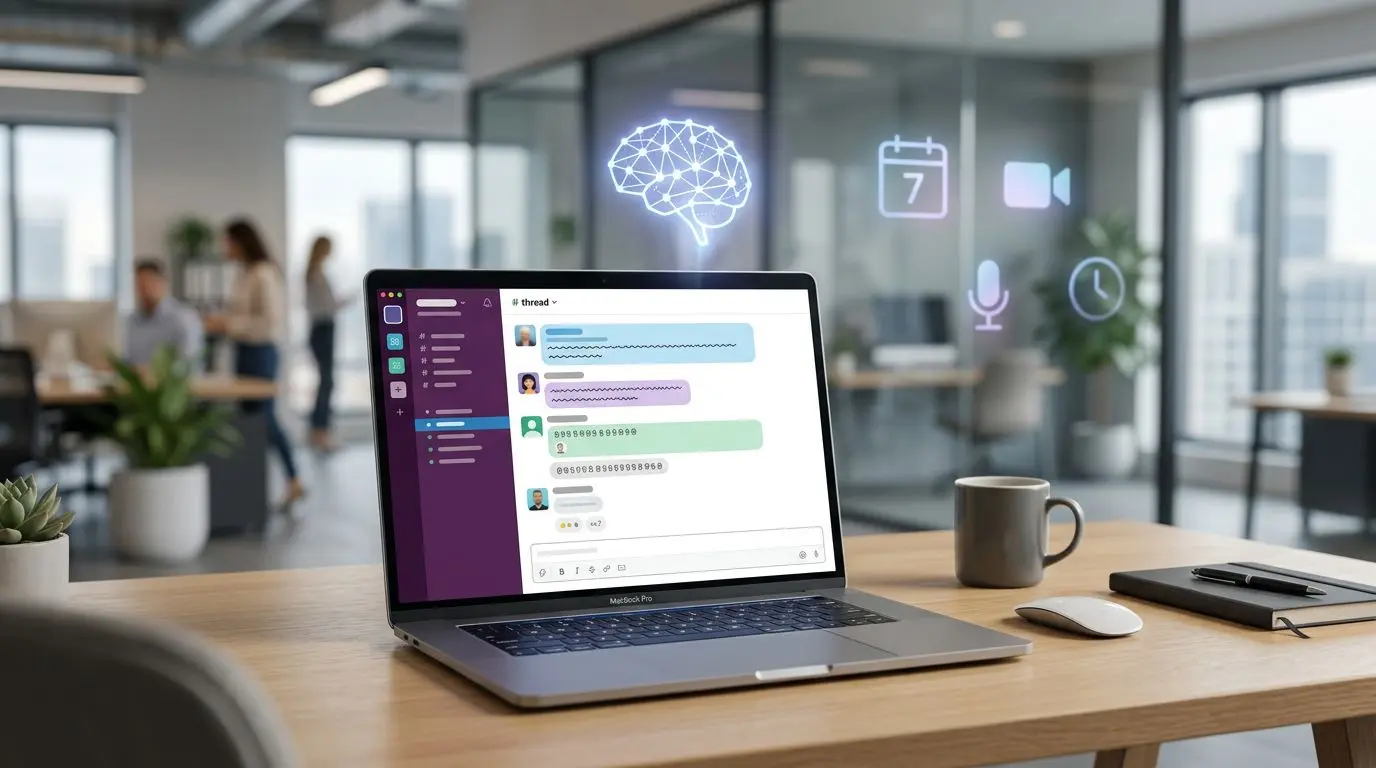
A recap buried inside a meeting app doesn’t help the person who has to ship the follow-up, answer the client, or fix the bug. When I share AI meeting summaries in Slack, I treat Slack as the action layer, not the archive.
That changes the workflow. I don’t ask, “Can this tool summarize?” I ask, “Can it post the right summary, to the right place, with the right owner attached?”
What a good Slack share actually needs
I use one simple test. If someone reads the Slack post in 20 seconds, can they tell what changed?
A useful meeting summary in Slack should answer four things:
- what was decided
- what still needs a decision
- who owns the next step
- where the full notes live
Anything beyond that is optional. Full transcripts usually belong in the source tool, not in the channel.
This matters because Slack is already crowded. If every call dumps a wall of text into #team-updates, people stop reading. The workflow may look automated, but it isn’t working.
If every meeting posts a full transcript to Slack, the setup failed. Slack should carry the signal, not the raw feed.
I also separate sharing from storage. The meeting app keeps the record. Slack gets the short operational version. That split keeps the channel readable and makes follow-up faster.
Pick the source before you automate
The tool choice shapes the Slack experience more than most teams expect. In 2026, the short list I keep seeing is Otter.ai, Fireflies.ai, and Granola. They differ less on transcription and more on how cleanly they turn a meeting into something a team can act on.

Here’s the quick comparison I use before wiring anything into Slack:
| Tool | Best fit | Slack sharing style | Main trade-off |
|---|---|---|---|
| Otter.ai | recurring team meetings | strong recap sharing and searchable notes | speaker labels can slip in messy audio |
| Fireflies.ai | cross-team history and follow-ups | good for summaries plus action items | auto-posting can get noisy fast |
| Granola | individual or hybrid note-taking | quick shares with lighter overhead | less built for strict team governance |
I don’t pick based on summary quality alone. I look at control points. Can I choose the channel? Can I post only after review? Can I send action items without sending every sentence?
Cost matters too once the whole team needs access. I already broke down AI meeting notes pricing for small teams because seat-based plans get expensive faster than most teams expect.
If most of your meetings happen as Slack huddles, I also check Slack’s own AI notes for huddles documentation. In that case, native notes may be enough. I wouldn’t add a second tool unless I need better search, better CRM handoff, or stronger meeting history.
How I post meeting summaries into Slack without clutter
I keep the workflow boring on purpose. Complex routing sounds smart, then breaks the first time a meeting title changes.

My default setup looks like this:
- The AI tool creates the summary after the call.
- I send the short recap to a specific channel or thread.
- I keep action items in a separate block.
- I link back to the full notes for anyone who needs detail.
That sounds basic, but it solves the real problem. People in Slack rarely want the whole meeting. They want the handoff.
For example, a sales call recap can go to #account-handoffs with three lines: customer goal, risk, next owner. A product sync can post to a thread under the meeting agenda, not to the whole channel. An engineering incident review may belong in a private channel with only the decisions and remediation tasks.
I also prefer post-after-review over fully automatic posting for leadership meetings, client calls, and anything sensitive. AI summaries are useful, but they still miss context. One wrong owner name in Slack creates friction that spreads faster than the meeting itself.
Format the summary for the channel, not the meeting app
This is where most setups go wrong. Teams export the summary as-is, then wonder why nobody reacts.

I rewrite the structure around the reader. In practice, that means:
- one-line context at the top
- two to four bullets for decisions or key points
- a short action-items block with owners
- one source link for the full record
I don’t post paragraphs if a channel runs fast. I don’t post ten bullets if only two matter. Slack rewards compression.
A simple format works well:
“Customer renewal call. Main risk is onboarding delay. Pricing unchanged. Sarah owns revised rollout plan by Friday. Full notes in the meeting record.”
That’s enough for most teams.
If I’m buying a tool for this workflow, I care more about action-item extraction and routing than flashy summaries. My own shortlist and criteria are in this AI meeting assistant buyer’s guide.
Common mistakes that break trust
The first mistake is over-sharing. Not every summary belongs in a shared channel.
The second is under-editing. AI can capture content, but it can’t always judge what the team needs next. I review anything high-stakes.
The third is treating Slack as the archive. Slack is where work moves. The archive should stay in the meeting tool, where search, speaker context, and full transcripts live.
I also watch for edge cases. Cross-talk hurts speaker attribution. Sales calls with heavy acronyms can confuse task extraction. Fast internal brainstorms often produce vague action items with no owner. If your summaries regularly miss owners, the problem is not formatting. It’s source quality.
Make Slack the handoff point
The best AI meeting summary workflow in Slack is the one people keep using after the first week.
For me, that means short posts, clear ownership, and a link back to the full notes. When the summary lands in the right channel and answers “what changed, who owns it, what’s next,” the meeting keeps moving without another status call.
FAQ
Should I auto-post every AI meeting summary to Slack?
No. I auto-post low-risk internal meetings. I review summaries first for client calls, leadership meetings, and anything sensitive.
Is a channel better than a thread for meeting summaries?
A thread is usually better when the meeting already has context in the channel. A dedicated channel works better for recurring operational updates or handoffs.
What should an AI meeting summary in Slack include?
I want context, decisions, action items, and owners. A link to the full notes helps, but the Slack post should stand on its own.