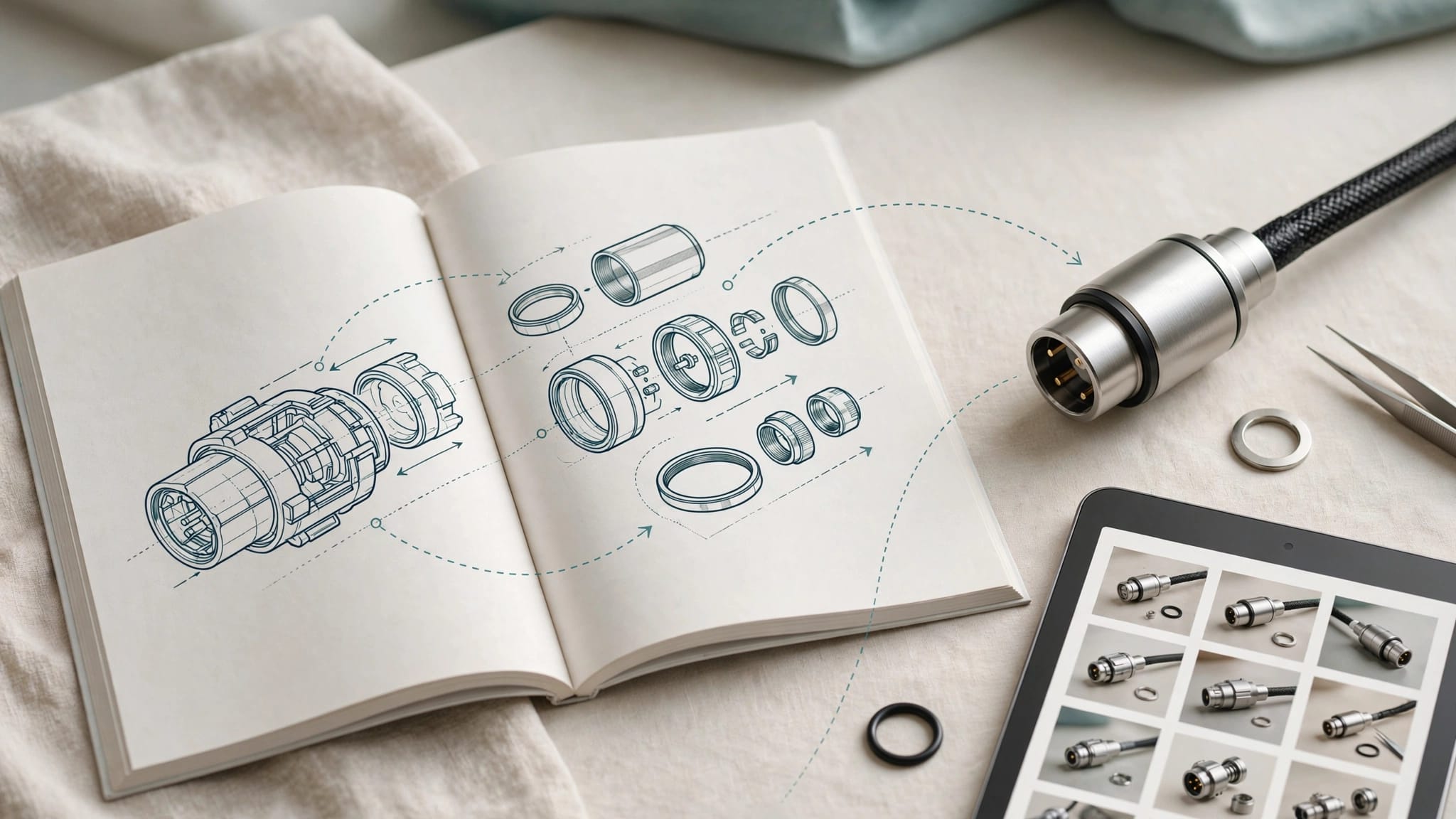
Multimodal RAG lets a manual-search system retrieve diagrams alongside written instructions, then use both as evidence for an answer. For technical documentation, that matters when a component’s location, a connector relationship, or an assembly sequence appears only in a figure.
I would add visual retrieval where text search misses necessary evidence, rather than treating it as a default upgrade. The practical starting point is preserving context: every diagram needs its manual version, page location, and related instructions.
Key Takeaways
- Keep diagrams connected to captions, surrounding instructions, page references, and document revisions.
- Combine keyword and semantic retrieval with visual retrieval when diagrams contain information that extracted text misses.
- Evaluate retrieved evidence separately from generated answers, and require the system to abstain when the source is unclear.
What Multimodal RAG Adds to Manual Search
Diagrams Carry Information That Text Extraction Loses
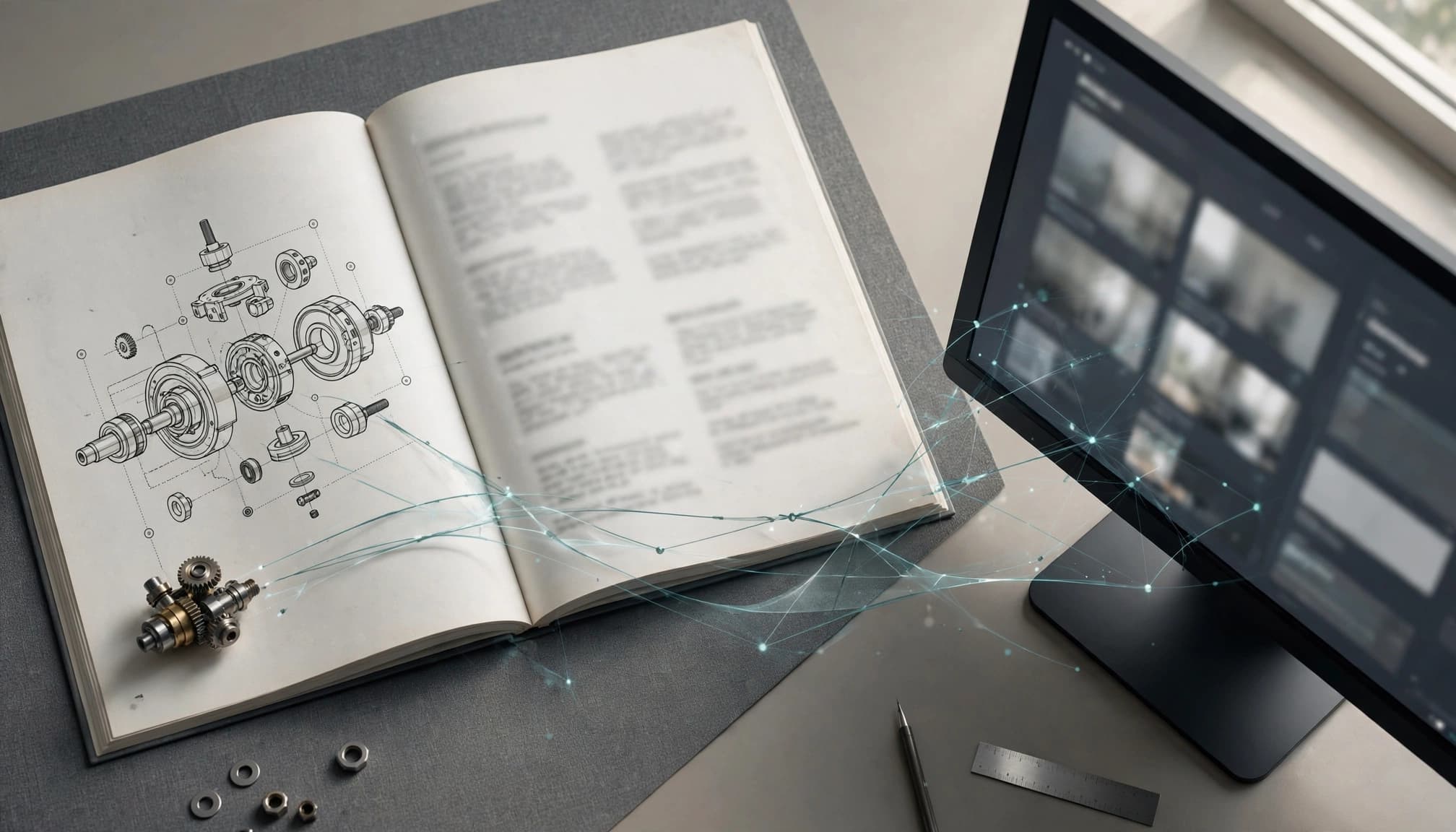
Conventional RAG retrieves text passages before a language model generates an answer. That works when the manual states the answer in words.
Manuals also communicate through spatial relationships, callout lines, cross-sections, and exploded views. OCR might capture component labels while losing the relationships between them.
The ColPali research paper addresses visual document retrieval, a relevant research direction for documents whose useful evidence extends beyond extracted words. It doesn’t establish that every diagram-heavy collection needs the same retrieval architecture.
Retrieval and Interpretation Are Separate Problems
Finding the correct diagram doesn’t mean a model will interpret it correctly. A relevant page can still contain ambiguous symbols, tiny labels, or instructions continued elsewhere.
I separate two questions: did retrieval find the required evidence, and did generation describe that evidence accurately? Combining those questions into one answer-quality score makes failures harder to diagnose.
Choose How Images Become Searchable
There are several ways to make diagrams retrievable. The choice affects information loss, infrastructure, and debugging.
| Approach | What Gets Indexed | Main Trade-Off |
|---|---|---|
| Image verbalization | Generated descriptions of figures | Search depends on what the description preserves |
| Direct multimodal embeddings | Representations of text and images | Requires compatible models and indexing |
| Separate text and visual indexes | Written passages and visual evidence through distinct paths | More retrieval and result-fusion work |
Image verbalization can fit an existing text-search pipeline. However, a description may omit the connection or spatial detail a later question needs. Keep the original image available for answer generation.
Direct multimodal embeddings provide another route. Google’s documentation says Gemini Embedding 2 accepts multimodal inputs, including text, images, and documents. Supported input types don’t establish retrieval quality on dense engineering drawings.
I would choose based on representative manual questions, not modality count. Our guide to embedding models for RAG covers broader selection trade-offs.
Keep model compatibility explicit. Vectors produced by unrelated embedding models don’t become comparable because they share a dimension count.
Build the Manual Ingestion Pipeline
Extract Structure Before Creating Chunks
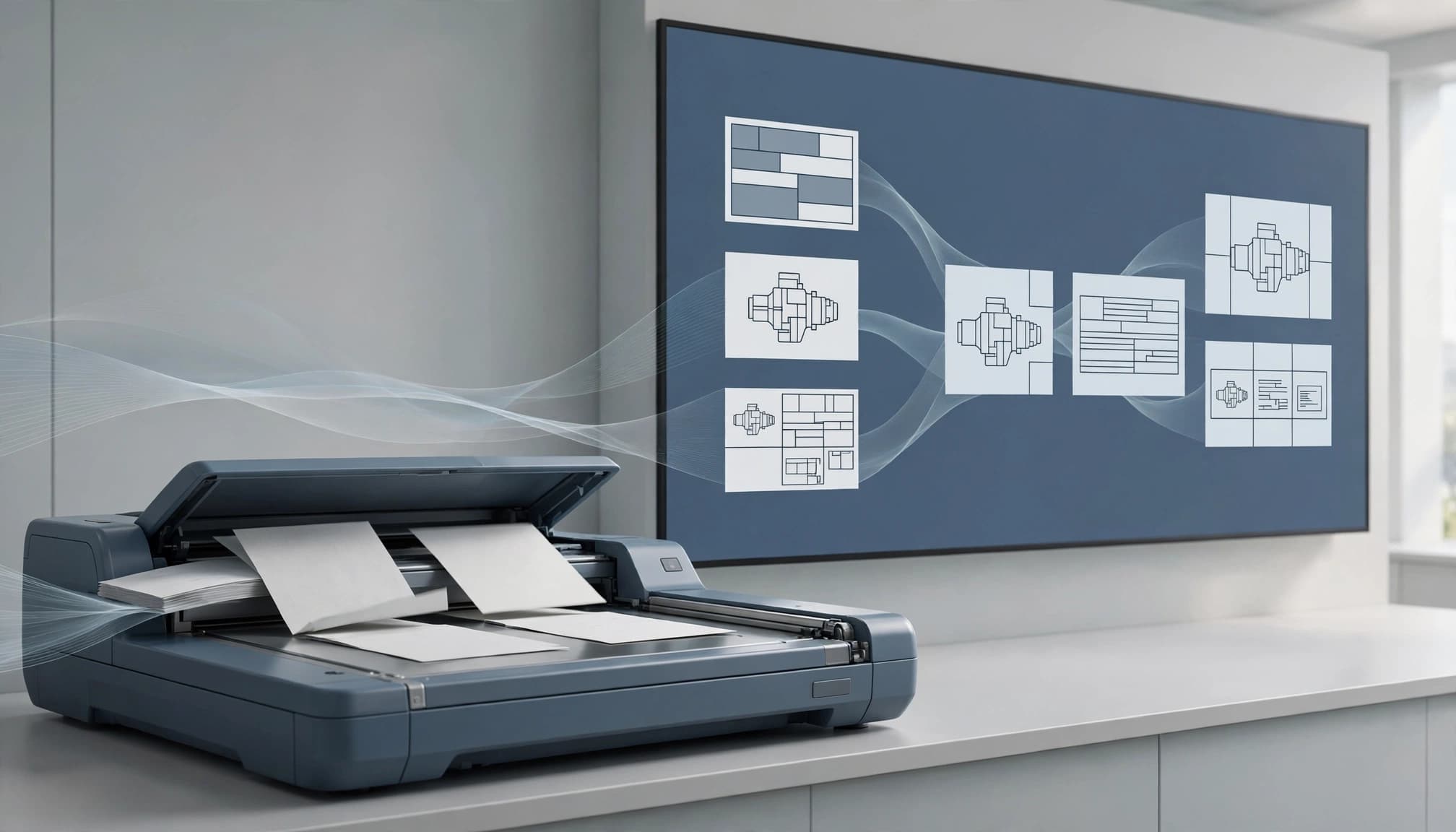
Start with approved manuals and record their product, revision, language, and access rules. Extract native PDF text where available; use OCR when text exists only as pixels.
Preserve headings, numbered procedures, tables, figure captions, and page boundaries. Inspect whether reading order survives extraction, especially in multicolumn layouts.
Microsoft’s multimodal chunking and embedding tutorial provides a concrete Azure AI Search implementation reference. Extraction, chunking, and embedding remain separate stages that need inspection. Better embeddings won’t repair reversed procedure steps or disconnected figure references.
Keep Figures Attached to Their Context
Store stable document and figure identifiers, page numbers, image locations, captions, and neighboring text. Include bounding coordinates when the extraction system provides them.
Distinguish the PDF page index from the manual’s printed page label. Front matter and chapter-based numbering can make them different.
Don’t crop figures so tightly that legends or warnings disappear. Retain the full page as fallback evidence, and preserve links to instructions continued on adjacent pages.
This extends the core RAG architecture: searchable chunks still need provenance, permissions, and reliable source references.
Retrieve Text and Diagrams Together
Filter Before Retrieving Candidates
Apply authorization, product, revision, and language constraints before retrieving candidates. A diagram for a different equipment revision can look relevant while showing a different configuration.
Propagate those restrictions to text indexes, image storage, caches, and source previews. A protected manual’s thumbnail shouldn’t become accessible through a less restrictive image endpoint.
I would also preserve exact identifiers in searchable text. Component references and model numbers deserve keyword matching, even when visual retrieval handles the broader question.
Fuse Results Without Losing Evidence
Use semantic retrieval for paraphrased questions and keyword retrieval for literal identifiers. Our guide to hybrid search for RAG explains why those paths complement each other.
Add visual candidates, then combine ranked results. Reciprocal Rank Fusion is a practical starting point when score scales differ across retrieval methods.
Deduplicate results that point to the same page or figure. Retrieve related instructions through stored relationships rather than hoping similarity search finds them independently.
A text-only reranker can’t inspect diagram geometry. If visual evidence determines relevance, the ranking stage needs access to that evidence or a suitable representation.
Ground Answers in Page Evidence
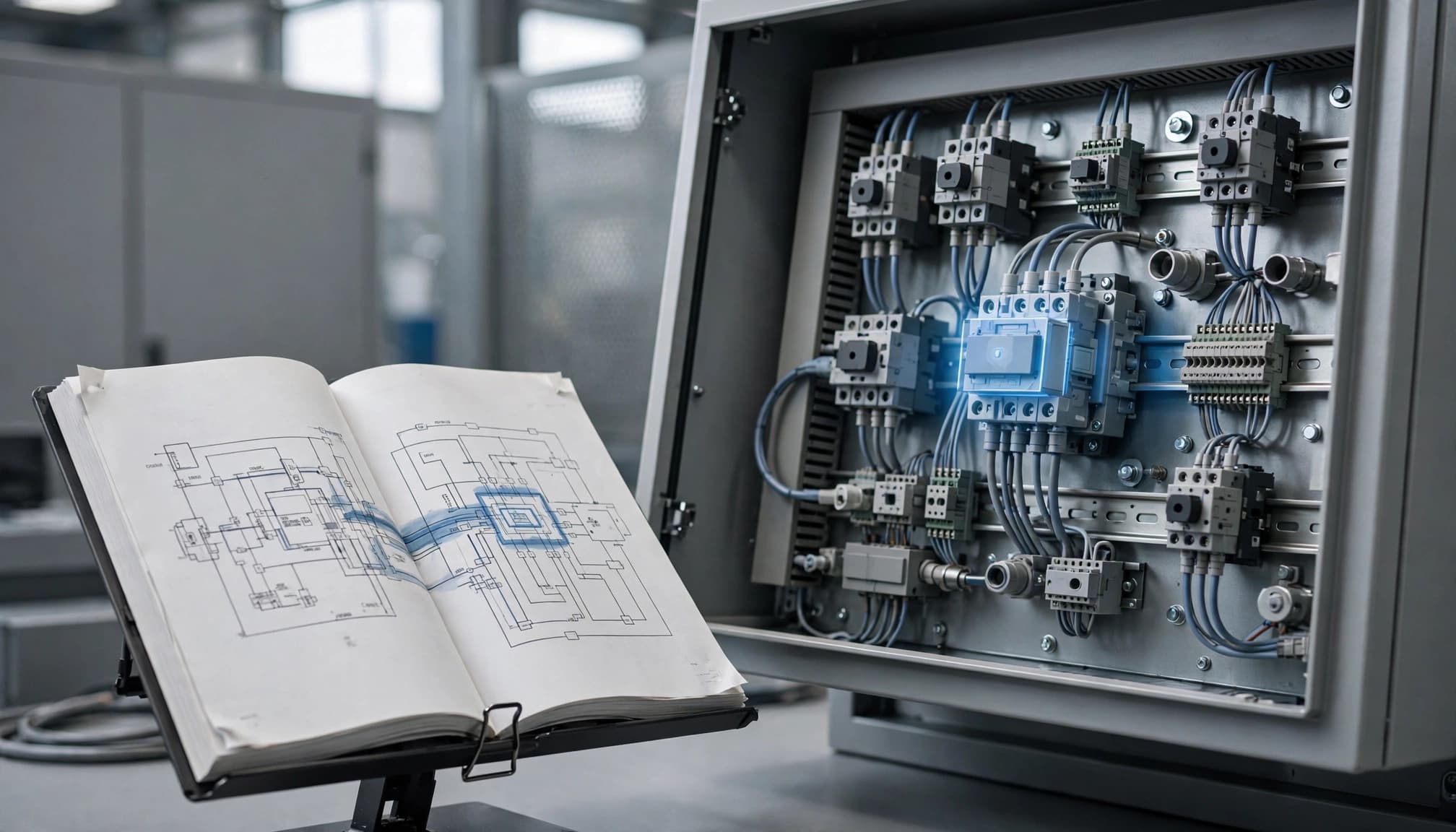
Pass selected passages and source images to a generation model that supports the required inputs. A caption-only context limits the answer to what the caption contains.
Require answers to distinguish explicit instructions from visual interpretations. Cite the manual revision, page, and figure identifier where available. Make citations open the supporting evidence, not merely the document’s first page.
A citation to the right manual is insufficient when the claimed instruction isn’t supported by the cited page.
I would restrict citation choices to retrieved source identifiers and resolve those identifiers in application code. The model shouldn’t invent document names or source locations.
When labels are unreadable or sources conflict, return the available evidence and state the limitation. Don’t let the system complete a missing procedure through general knowledge.
For safety-sensitive maintenance, generated summaries must not override approved warnings or qualified professional judgment.
Evaluate Quality and Operating Cost
A convincing answer can conceal a retrieval miss. Build an evaluation set using actual user questions and source-reviewed answers.
Cover text-only questions, diagram-only questions, questions requiring both, revision-sensitive queries, and cases with no supported answer. Include difficult scans and visually similar equipment variants.
For each question, label the pages, figures, and passages needed to answer it. Measure whether those items appear in the retrieved candidates before evaluating the generated response.
Track evidence coverage, citation support, incorrect revision selection, unsupported claims, and appropriate abstentions. Trace failures through parsing, filtering, retrieval, ranking, and generation. Our guide to debugging RAG retrieval covers that diagnostic approach.
Compare against a text-only baseline. If visual retrieval adds little useful coverage, its extra complexity may be unnecessary.
Cost includes document rendering, extraction, image storage, embedding, retrieval, and image inputs during generation. Qdrant’s documentation offers an implementation reference for PDF retrieval with ColPali and ColQwen, but an available integration doesn’t establish an acceptable operating cost.
Version ingestion jobs and retire superseded records across every index. Update image references and caches alongside text records, or the system can retrieve inconsistent revisions.
Further Topics to Explore
- Compare page-level and region-level retrieval for dense engineering drawings.
- Design version-aware document pipelines that retire obsolete manuals without breaking historical citations.
- Build evaluation datasets for questions that require both diagrams and written instructions.
FAQ
Does Multimodal RAG Replace OCR?
Not necessarily. OCR remains useful for labels, identifiers, and keyword retrieval. Visual retrieval can complement extracted text when layout or diagram relationships carry information. I wouldn’t remove OCR solely because a model accepts images.
Can Users Search With a Photograph?
Only if the complete retrieval path supports image queries. Document-image indexing alone doesn’t establish that capability. Query encoding, the index’s embedding space, and the application interface must support the workflow. Matching field photographs to manual diagrams also requires separate evaluation.
When Is Text-Only RAG Enough?
Text-only retrieval is sufficient when written passages contain the required answers and figures add little necessary evidence. Start there when it meets your question set. Add multimodal retrieval to address demonstrated coverage gaps, rather than assuming every PDF needs visual indexing.
Build Around Traceable Evidence
Multimodal RAG is useful when diagrams supply information that text retrieval cannot recover. Its value depends on preserving document structure and retrieving the correct version.
I would prioritize traceable evidence over a more elaborate search stack. Keep figures connected to instructions, separate retrieval evaluation from answer evaluation, and make unsupported answers an explicit failure condition.
A manual assistant earns trust by showing where its answer came from and recognizing when the available evidence is insufficient.