

If you saw the claim that Nvidia’s next AI platform could consume 9% of global SSD supply, your first reaction was probably, “Wait, how is that even possible?”
The short version is this: recent analyst reporting (including Citi estimates) suggests Nvidia’s upcoming Rubin-class systems could drive a massive, sudden need for NAND flash, the memory chips inside SSDs. Citi’s projection points to about 30,000 servers in 2026 (around 2.8% of global NAND supply) and 100,000 servers in 2027 (around 9.3%).
To keep this grounded, I’m going to explain what’s being counted, why Nvidia would design a platform that needs so much flash, what “Inference Context Memory Storage (ICMS)” means, and who might feel the squeeze first as 2026 turns into 2027.
What “9% of global SSD supply” really means for Rubin-class AI

When people say “SSD supply,” they often picture finished drives sitting in warehouses. The tighter constraint is usually NAND flash, the raw storage media that gets packaged into SSDs (along with controllers, firmware, and a lot of testing).
So the scary part of “9%” is not that Nvidia is buying some niche enterprise SSD. It’s that a single platform could compete for the same NAND pool that also feeds:
- data center SSDs
- consumer SSDs for laptops and desktops
- phones, tablets, and other devices that use NAND-based storage
Citi’s estimate hinges on a specific design choice: Rubin NVL72 class servers are expected to include a dedicated flash layer for Nvidia’s ICMS, and the number attached to that is big. The reporting suggests about 1,152 TB of SSD NAND per NVL72 server allocated to ICMS.
That number alone changes the vibe. “A little extra local storage” becomes “a meaningful slice of global output.”
For context on what Nvidia has publicly said about the Rubin platform and its system components, their own announcement is a good baseline: NVIDIA’s Rubin platform overview.
The quick math behind the shortage talk
Here’s the back-of-the-napkin logic analysts are using, in plain words.
If one NVL72 server needs roughly 1,152 TB of NAND-based SSD capacity for ICMS, then scaling server shipments multiplies that fast:
YearProjected Rubin-class servers (Citi)NAND per server for ICMSTotal NAND demand (TB)Estimated share of global NAND202630,0001,152 TB34.6 million TB~2.8%2027100,0001,152 TB115.2 million TB~9.3%
This is still a forecast, not a guarantee. But forecasts move markets because procurement starts early. Big buyers reserve supply, suppliers plan allocation, and lead times can stretch before the first public “shortage” headline hits.
If you want to see how this story has been framed in mainstream hardware reporting, this write-up is a useful snapshot (even if you don’t agree with every implication): coverage of Rubin-era NAND demand estimates.
Why this is different from past GPU launches
I’ve watched a lot of GPU cycles, and most of the drama is simple: “More accelerators show up, hyperscalers buy them, everyone else waits.”
This time, the platform story looks broader. It’s not only “more GPUs.” It’s “more GPUs plus a lot more local flash,” baked into a system architecture meant to keep inference fast under heavy context.
That matters because AI buildouts already strain multiple supply chains at once:
- compute (GPU capacity)
- memory (HBM)
- networking (NICs, switches, optics)
- power and cooling
- and now, in a bigger way, SSD NAND
Once the bottleneck shifts beyond GPUs, the ripple effects hit buyers who don’t even care about Nvidia.
Why Nvidia wants so much flash storage inside the platform
Let me explain the “why” without getting lost in acronyms.
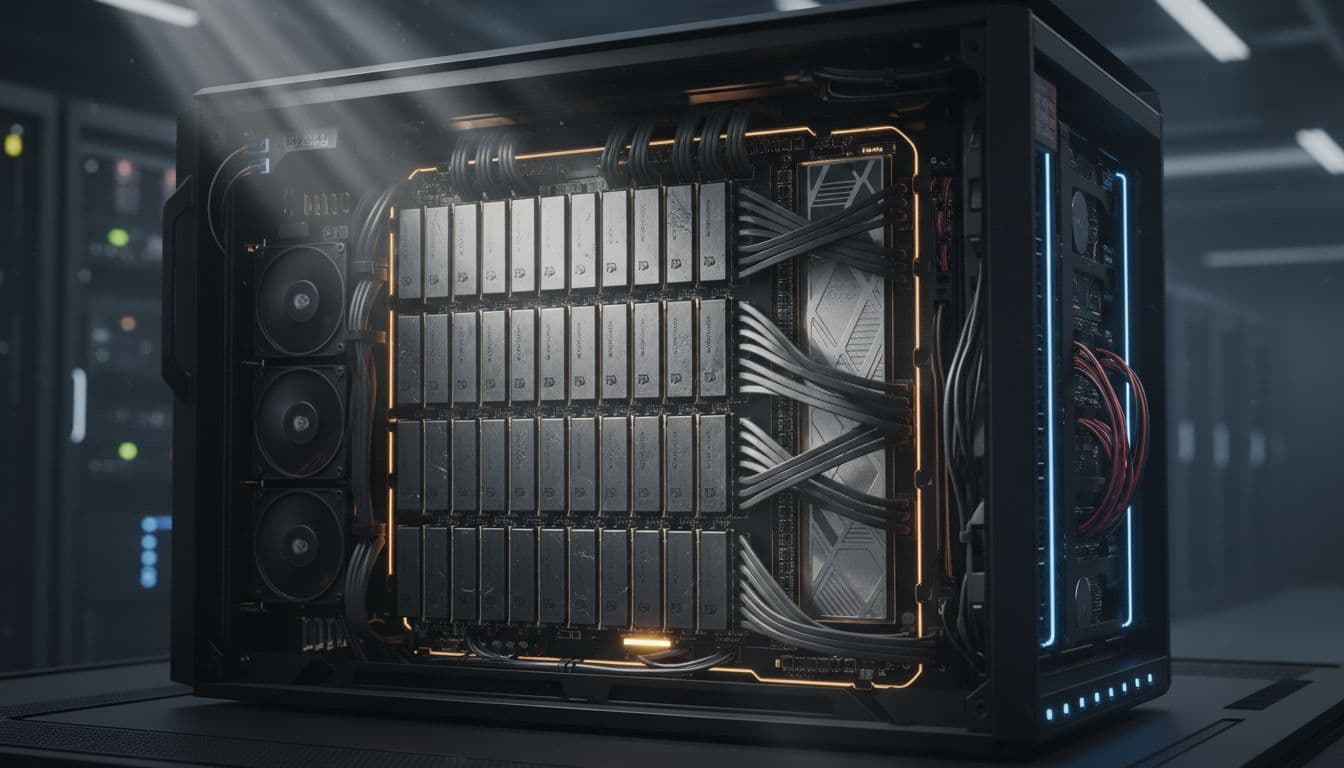 Modern AI isn’t only about raw math. It’s about feeding the model with a lot of text, documents, tool outputs, and intermediate state, then doing it again and again without stalling.
Think of it like a kitchen during a dinner rush:
- HBM (GPU memory) is the chef’s hands and cutting board, super fast, but limited space.
- ICMS flash storage is a nearby shelf stocked with ingredients you’ll need in the next minute.
- farther storage (networked storage, object storage) is the pantry down the hall.
If the chef has to run down the hall every 20 seconds, dinner service collapses. AI inference can behave the same way when context gets huge.
That’s why Nvidia’s system design increasingly treats storage and data movement as first-class performance concerns, not “somebody else’s problem.” A more official, product-level view of Rubin’s platform goals (training and inference efficiency) is summarized well in industry coverage like this: Rubin platform positioning and cost claims.
ICMS in plain English, a fast “context shelf” for inference
“Inference” is when the model is answering a prompt, not training on a giant dataset.
Inference has changed a lot in the last year. It’s not only short Q and A chats anymore. It’s long conversations, long documents, tool use, multi-step reasoning, and “agent” flows that keep state across steps.
All of that adds context the system needs to access quickly, such as:
- conversation history and system instructions
- retrieved documents (RAG chunks)
- tool outputs (search results, database queries, code execution logs)
- model side data like key-value cache style state (implementation varies, but the idea is persistent working context)
ICMS, as described in the reporting, is meant to keep terabytes of “nearby” context so GPUs don’t sit idle waiting for data. The goals are straightforward:
- lower delay when context is large
- higher throughput (more tokens per second at the system level)
- more stable performance when workloads get spiky
Even if the exact implementation details evolve, the direction is clear: Nvidia is treating “context” as something worth dedicating real hardware to, not just squeezing into whatever storage the customer already has.
Where BlueField-4 fits in and why it matters
Moving data around a giant AI server isn’t free. It burns CPU cycles, it burns PCIe and network bandwidth, and it adds jitter that shows up as ugly tail latency.
That’s where a DPU concept like BlueField-4 comes in (at a high level). A DPU acts like a specialist that handles networking and data movement tasks so the main CPUs and GPUs can stay focused.
I don’t think the takeaway is “BlueField makes it faster” in a simplistic way. The real takeaway is system balance. When you build something this dense, every subsystem becomes someone’s job. Nvidia is trying to control more of the stack so inference performance doesn’t collapse under real-world, long-context use.
Who feels the ripple effects if Rubin drives NAND demand
If Rubin-class systems really ramp the way Citi projects, the impact won’t be limited to AI labs with eight-figure budgets.
Here’s how I expect the ripples to travel.
- Hyperscalers and frontier labs
They’ll be first in line, signing long supply agreements and setting allocation priorities. - SSD vendors and NAND fabs
They’ll steer output to higher-margin enterprise demand, often on contract terms that can crowd out smaller buyers. - Enterprises building private AI
If you’re planning an on-prem cluster for inference, you might face longer lead times, stricter qualification lists, and more “talk to your rep” pricing. - Everyday buyers
Consumer SSD pricing doesn’t always move 1:1 with enterprise demand, but broad NAND tightness can still show up as fewer discounts, less availability at top capacities, or slower price drops.
For a market-focused recap that frames why investors are paying attention to this, this overview is a decent starting point: Rubin launch and market implications.
What it could mean for SSD pricing, lead times, and drive availability
I’m careful with predictions here because storage markets are cyclical. NAND makers can add capacity, and demand forecasts can overshoot.
Still, a single buyer ecosystem pulling on the supply chain at this scale tends to create a familiar pattern:
- Big contracts get priority: Large cloud customers lock in allocation.
- Lead times stretch: Smaller orders wait longer, even if pricing hasn’t jumped yet.
- High-capacity drives get tight first: It’s easier to feel pain at the top end.
- Endurance and qualification matter more: For heavy inference workloads, buyers may prefer higher-endurance enterprise SSDs, which narrows the pool.
If I were tracking early signs, I’d keep a simple watchlist:
- NAND spot pricing trends (direction matters more than the daily number)
- enterprise SSD average selling prices (ASPs) in vendor guidance
- quoted lead times from major OEM channels
- whether memory makers talk about “allocation” on earnings calls
The winners and losers across the supply chain
This kind of demand shock doesn’t hit evenly.
Likely winners
- NAND manufacturers that can sell more bits at better pricing
- SSD vendors with strong enterprise portfolios and qualification pipelines
- system builders and integrators that can assemble and validate racks at scale
Likely losers
- smaller OEMs that don’t get first pick on allocation
- price-sensitive consumers who rely on constant price drops
- IT teams that assumed storage upgrades would be cheap and easy
One nuance I don’t want to gloss over: capacity isn’t the only constraint. Controllers, packaging, firmware validation, and test capacity can become bottlenecks too. You can’t just “pour more NAND” into the market overnight and call it solved.
What I’m watching next, and how teams can prepare
The part that matters to most readers is not the headline number. It’s avoiding surprise downtime, blown budgets, or delayed rollouts.
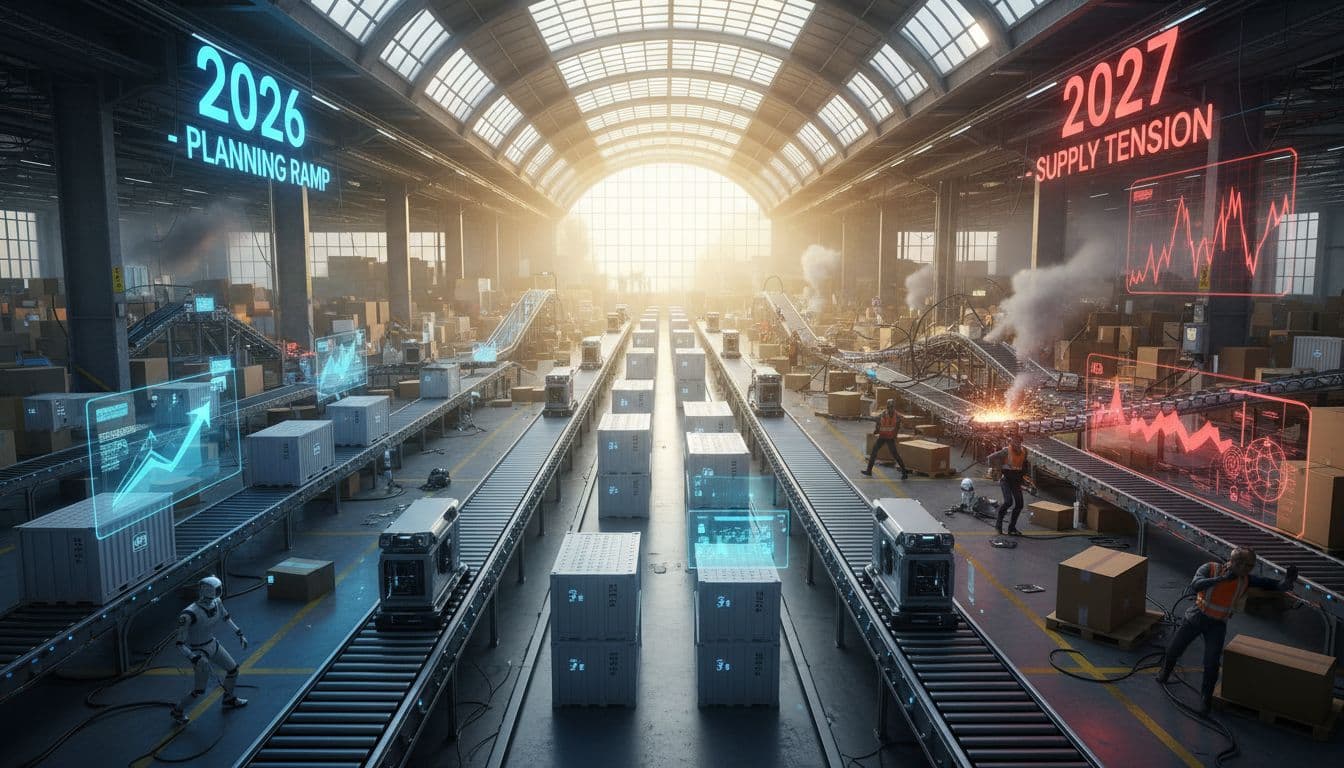 I’m treating 2026 as the planning ramp and 2027 as the year where any supply tension becomes hard to ignore. If you’re building inference-heavy systems, you don’t want to discover storage constraints after your GPUs arrive.
The phrase I keep coming back to is simple: don’t design your AI stack assuming flash is infinite. If vera rubin ai ramps the way analysts expect, “just add more SSDs later” may become an expensive sentence.
Planning tips for AI infrastructure buyers
- Lock in supply early: If you’ll need high-capacity SSDs, ask vendors about allocation policies now, not after a surge starts.
- Validate endurance and sustained write needs: ICMS-style workloads can stress drives in ways basic benchmarks won’t show.
- Model total cost with spares: Include failure rates, extra inventory, and replacement lead times in your plan.
- Test long-context workloads: Run worst-case prompts and agent flows, then measure storage latency and queue depth, not only tokens per second.
I also like asking one blunt question during procurement: “If demand spikes, who gets served first?” The answer tells you how real your timeline is.
Ways to reduce flash pressure without killing performance
Not every workload needs “terabytes close to the GPUs.” A lot of teams can reduce flash demand with smarter system design.
A few practical levers that actually work:
Right-size context: Many apps carry more history than they need. Trimming and summarizing can cut storage churn.
Tune retrieval: Better chunking and retrieval filtering can reduce how much data you pull into the hot path.
Caching policies: Keep the truly hot data close, and expire aggressively when it’s not paying for itself.
Compression and quantization (where safe): Some intermediate data can be compressed without breaking quality, but you need tests, not hope.
Tiering: Put hot context on fast local SSD, warm data on networked storage, cold data in object storage. Even small changes can save a lot of expensive capacity.
That said, I don’t think flash-heavy designs are “wrong.” They’re a response to real inference behavior. The point is to pick the right level of local storage for your app, not to copy a hyperscaler blueprint by default.
Where I land on the 9% claim
The “9% of global SSD supply” headline sounds wild, but the logic behind it is pretty concrete: add a large, purpose-built flash layer to each high-end inference server, then scale shipments to tens of thousands of servers per year.
Forecasts can change, and markets can respond. Still, I’m planning as if NAND tightness is a real risk through 2026 and 2027. If you’re budgeting for AI infrastructure, this is a great time to sanity-check storage assumptions. If you’re seeing SSD lead times or pricing shifts already, I’d love to hear what you’re noticing.