
When a dashboard slows down, I don’t blame the database first. I blame my SQL. The best AI tools for SQL query optimization in 2026 find the traps for you: one extra join, a missing index, or a filter in the wrong place can turn a fast query into a traffic jam.
That’s why the AI query optimizer trend feels so practical in January 2026. I’m not looking for magic. I want an advisor that reads a query the way a good DBA would, spots the obvious traps, and tells me what to change without guesswork.
In this review, I’ll break down what these tools do well for PostgreSQL and MySQL, where they still fall short, and how I’d choose one based on how you work.
What an AI query optimizer should actually do
PostgreSQL and MySQL already have query planners. They can reorder joins, pick indexes, and estimate costs. The problem is that planners can’t fix what they can’t see, like missing indexes, stale stats, or a query written in a way that blocks good plans.
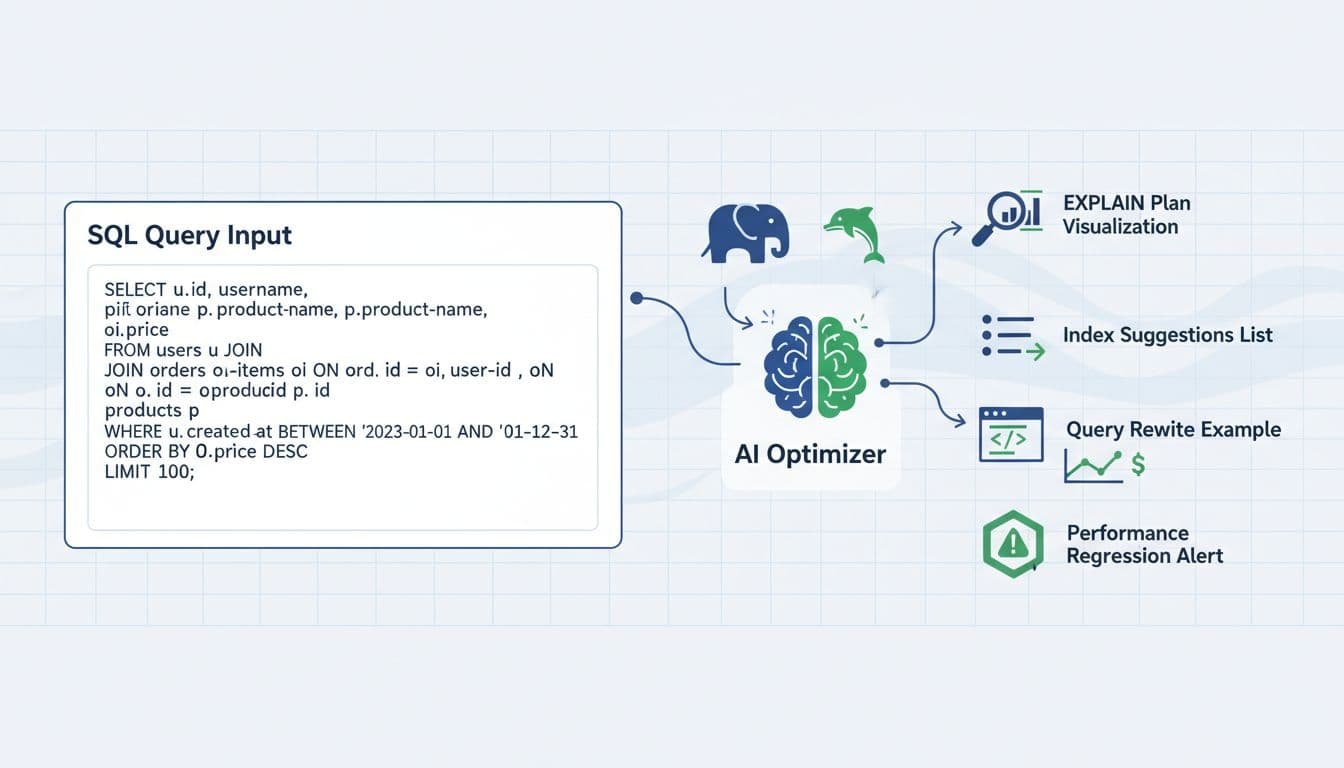
A solid AI query optimizer (or advisor) usually helps in a few concrete ways:
- Explain the plan in plain language, not just show an EXPLAIN tree.
- Suggest indexes that match your filters, joins, and sort patterns.
- Recommend safe rewrites, like changing a subquery into a join, or removing wasteful casts.
- Flag performance regressions, so a deploy doesn’t quietly double query time.
- Teach while it fixes, so you learn patterns and stop repeating the same mistakes.
If a tool can’t connect suggestions to the actual plan (or to your schema and row counts), I treat it like a spell checker. Useful, but not trustworthy enough to ship changes blindly.
AI DBA assistants vs query-only advisors (they’re not the same)
In 2026, I see two clear categories:
1) Always-on “AI DBA” assistants
These watch a real database over time. They’re better at patterns, regressions, and ongoing tuning.
2) Query-by-query optimizers
These are for the moment when you paste in a slow query and want targeted advice.
Here’s a quick way I keep them straight:
Tool styleBest forPostgreSQL + MySQL supportPricing pattern (what I see in 2026)AI DBA assistantContinuous tuning and alertsOften yesAdd-on, higher tiers, quote-basedQuery-only advisorFixing one slow query fastOften yesFree tier, then paid “deep analysis”AI SQL copilotWriting and improving SQL dailyOften yesPer-seat SaaS plansText-to-SQL analyticsSelf-serve BI with guardrailsMixedTeam plans, higher spend
If you’re on call for production, the always-on type matters more. If you’re building features and tuning as you go, query-level advice is usually enough.
My pick for always-on tuning: Aiven AI Database Optimiser
If I had to name one tool that fits the “AI DBA for Postgres and MySQL” idea, it’s Aiven’s approach. Aiven positions its optimizer as something that monitors and improves performance across queries, indexes, and configuration, not just a single pasted query. That’s the right scope if your problem is “the system feels slower lately,” not “this one query is bad.”
A practical starting point is their free web-based optimizer, which lets you submit SQL and get suggestions for PostgreSQL and MySQL: Aiven’s free SQL optimizer for PostgreSQL and MySQL.
What I like about this direction:
- It matches how performance work happens in real life, over weeks, not minutes.
- It pushes you toward evidence (plans, costs, recurring slow queries), not opinions.
- It’s a better fit for teams that don’t want every tuning task to require a senior DBA.
The trade-off is cost clarity. Public info in 2026 still points to this being an add-on tied to managed service tiers, with pricing often handled by quote for serious usage. That’s normal for “always-on” database tooling, but it can be a blocker for small teams.
When I just need help with one slow query
Most days, my needs are simpler: “This endpoint is slow, and I need a fix before lunch.” That’s where a focused AI query optimizer shines, as long as it stays grounded in database reality.
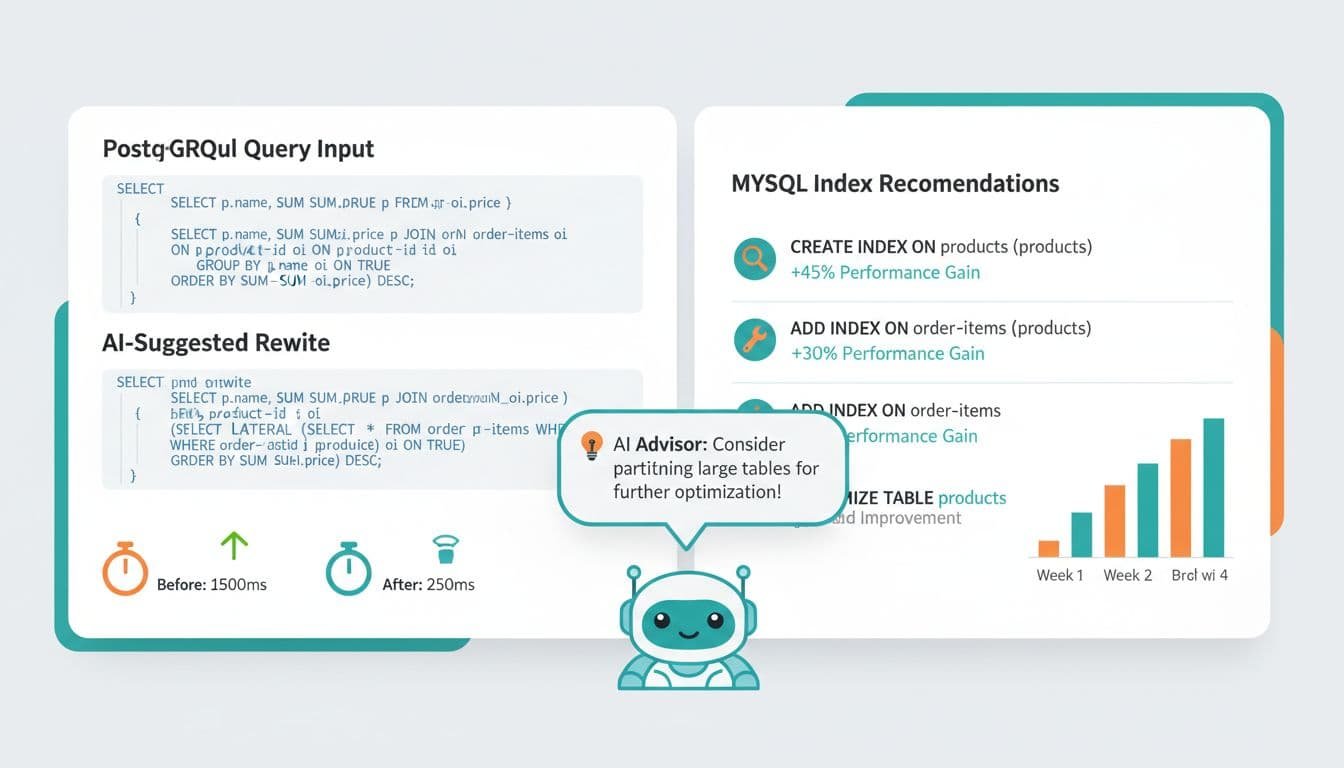
One example I found useful as a model for this category is described here: a purpose-built SQL query optimization tool (DEV article). The workflow is straightforward: paste query, pick engine (PostgreSQL or MySQL), get suggestions and a rewrite. The article also talks about a deeper mode that uses schema details and EXPLAIN-style context, which is exactly what I want when a query is more than “add an index.”
In my own work, I treat query-level tools like a strong second opinion. They help me:
- spot missing composite indexes I didn’t think about,
- notice when a filter prevents index use (like a function on a column),
- consider rewrites that reduce row scans before joins happen.
But I still validate everything with EXPLAIN (and real timings), because LLM-style tools can sound confident even when they’re guessing.
Copilots and text-to-SQL tools: helpful, but keep your guard up
Not every tool in this space is trying to be a pure optimizer. Many are SQL copilots that generate queries, explain them, and sometimes offer basic tuning tips. The upside is speed. The downside is that “correct SQL” is not the same as “fast SQL.”
A decent roundup of tools that sit in the SQL assistant and optimization orbit is here: AI tools for SQL generation and query optimization. I use lists like this to find candidates, then I filter hard based on whether they support Postgres and MySQL well and whether they can use my schema context.
On the analytics side, some platforms focus more on governed text-to-SQL than low-level tuning. Querio is a clear example of that, and it’s also one of the few that publishes a concrete starting price point in public comparisons (around $14,000 per year): Querio’s 2026 text-to-SQL tools comparison. That’s not “optimizer pricing,” it’s “platform pricing,” and it’s aimed at teams.
My rule: if a tool’s main job is to turn English into SQL, I expect it to help with clarity and consistency first. Any performance wins are a bonus unless it proves it can reason from plans and stats.
My quick checklist before I ship an AI-suggested change
I like AI suggestions best when they reduce my search time, not when they replace my judgment. Before I push an index or rewrite to production, I run a quick sanity check:
- Reproduce the issue with the same parameters, not a toy example.
- Compare plans (before and after), not just query text.
- Watch for write costs, since new indexes can slow inserts and updates.
- Check selectivity, because an index on a low-cardinality column can disappoint.
- Look for lock risk, especially on large tables during index builds.
- Confirm results match, because some rewrites change semantics in edge cases.
- Plan a rollback, so I can revert quickly if latency spikes.
This is where an AI query optimizer becomes a real teammate. It speeds up the idea phase, then I verify with the database itself.
Where I landed for 2026
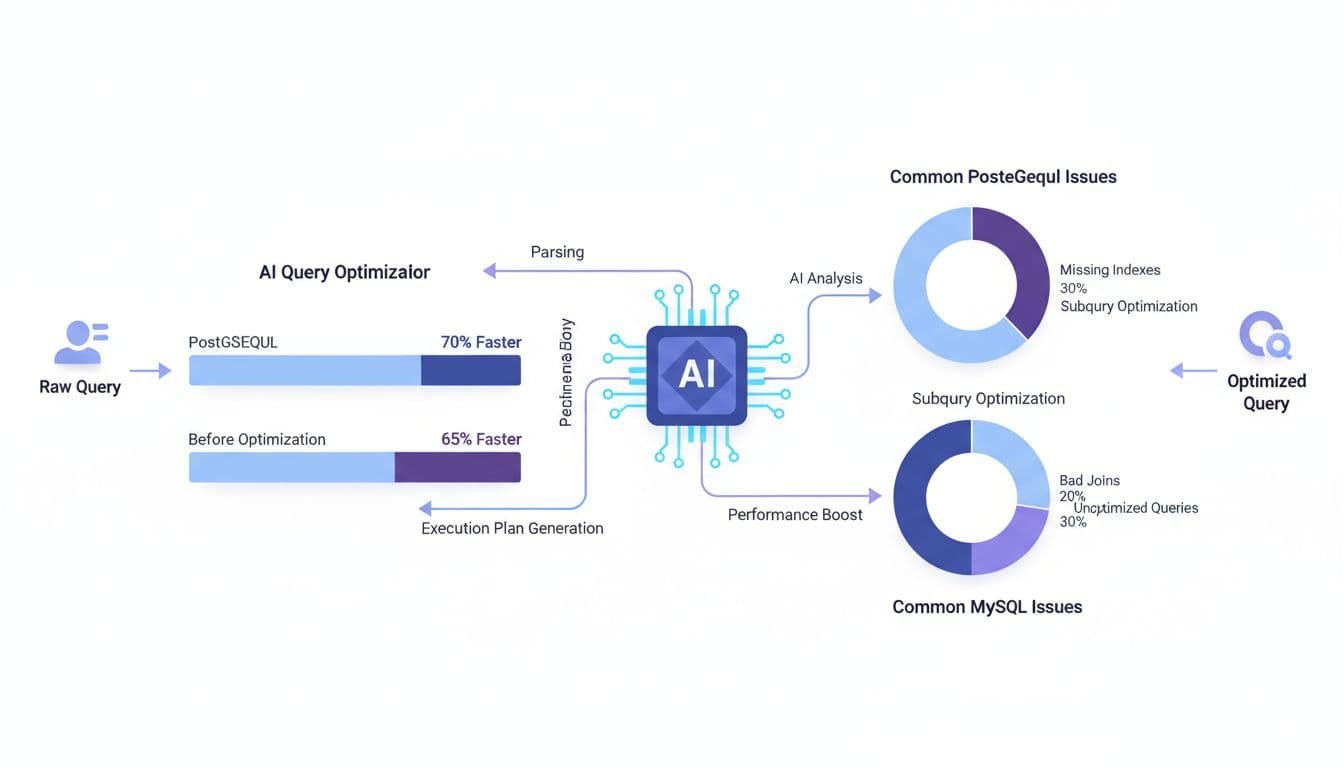
If you run PostgreSQL or MySQL in production and performance is business-critical, I’d start by deciding whether you need continuous monitoring or just query help. For always-on tuning, Aiven’s optimizer path makes sense. For day-to-day fixes, a focused AI query optimizer that uses EXPLAIN context is often the fastest win.
If you’re testing tools this month, pick one slow query you know well, run the suggestions, and measure the change. If the advice is clear, testable, and doesn’t hide behind vague wording, you’re on the right track.