Under US AI image copyright rules, businesses can protect qualifying human-created expression, but not imagery generated entirely by AI. A tool’s permission to use an image commercially doesn’t create an enforceable copyright in that image.
That distinction matters when you commission advertising, license artwork, or promise a client exclusive rights. I treat human authorship as the starting point, then separate copyright protection from contractual permissions and third-party risks.
The practical task is identifying what your team created, what the model generated, and which rights your business actually controls.
Key Takeaways
- Copyright can protect original human contributions to AI-assisted images, including qualifying edits, existing artwork, and creative arrangements.
- Prompts, subscriptions, and commercial-use permissions don’t automatically establish copyright ownership in generated imagery.
- Registration should identify the human contribution and exclude more than a minimal amount of AI-generated material where required.
I wouldn’t describe an AI-assisted asset as “fully owned” without explaining those limits. A business may control useful rights in the finished design while lacking copyright in its generated components.
Human Authorship Sets the Copyright Boundary
The U.S. Copyright Office’s copyrightability announcement explains that AI assistance doesn’t automatically disqualify a work from protection. The question is whether a human determined sufficient expressive elements.
The Office released that analysis on January 29, 2025.
Human Expression Can Qualify
Copyright protects original expression created by people. Using software during production doesn’t erase that protection.
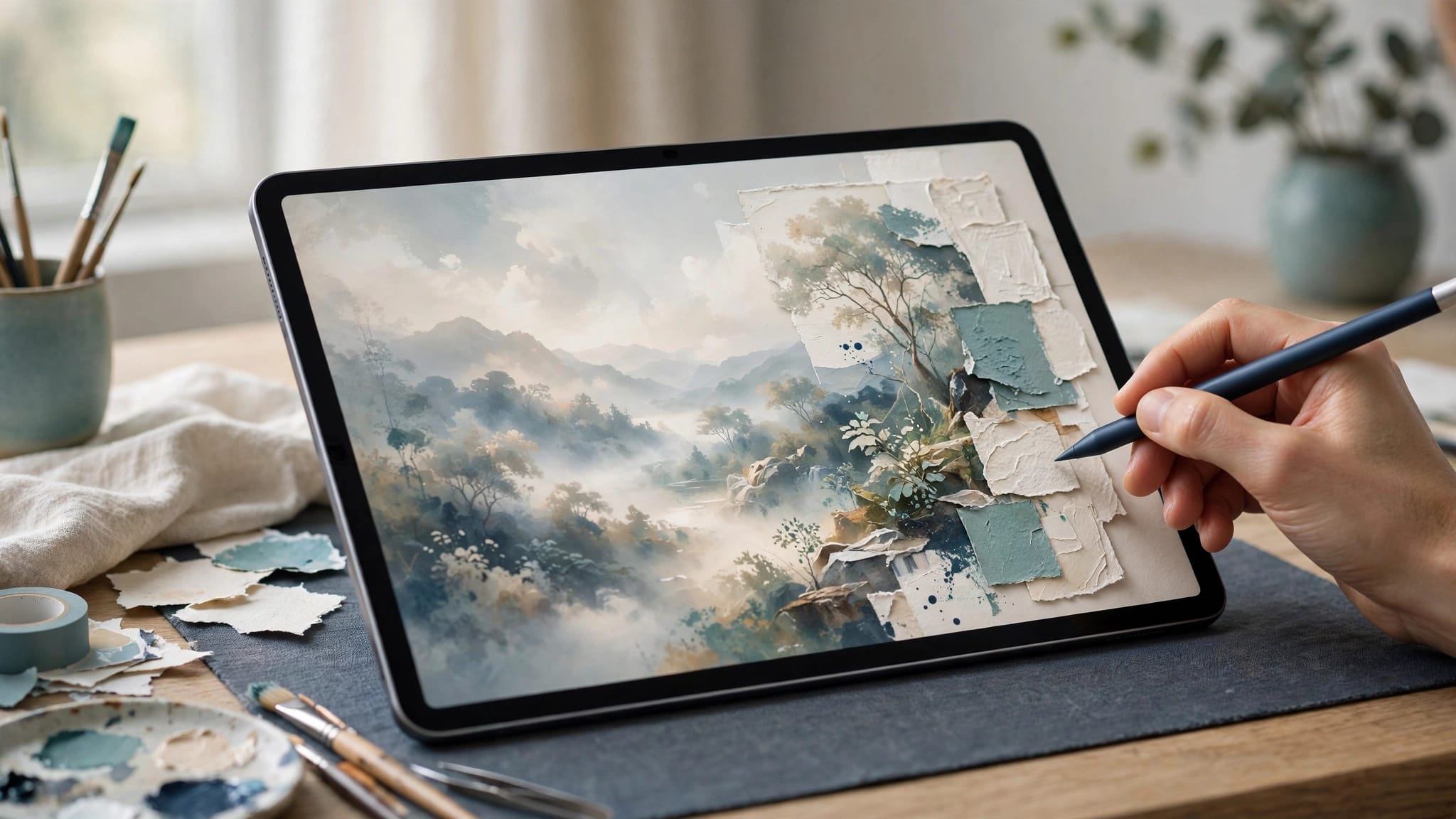
For AI-assisted images, the inquiry concerns the expression visible in the result. Original human artwork that remains perceptible, qualifying hand-painted additions, or a creative composition may support protection.
However, operating a generator doesn’t necessarily make someone the author of everything it produces. I distinguish creative control over expression from instructions describing a desired result. Art direction can guide production without establishing authorship of every visual detail.
Generated Material Has a Separate Status
A work can contain protected human expression and unprotected AI-generated material. Including both in one file doesn’t give them identical legal treatment.
That distinction affects enforcement. Copyright in a finished advertisement may cover its original layout or illustrations without covering a generated background on its own.
A business therefore needs to identify the protected elements before claiming that a competitor copied its copyrighted work.
What Businesses Can Protect in AI-Assisted Images
The Copyright Office’s copyrightability report identifies several possible human contributions. Each still needs sufficient originality.
Original Inputs and Human Edits
Original photography, drawings, and other human-authored source material can retain protection when incorporated into an AI-assisted result. The relevant expression must remain perceptible.
Human modifications can also qualify. Substantive painting, original illustration, and expressive compositing deserve different treatment from routine resizing or mechanical cleanup.
I wouldn’t assume that an edit is copyrightable because it took time. The issue is the original expression added, not the production effort required.
Creative Selection and Arrangement
A business may protect an original selection, coordination, or arrangement of material even when individual generated elements lack protection.
That claim covers the human-authored organization. It doesn’t automatically extend to every component.
These distinctions help separate common production activities:
| Contribution | Potential Protection | Important Limit |
|---|---|---|
| Entirely generated image | No copyright in machine-created expression | Commercial permission is separate |
| Original drawing retained in an output | Human-authored expression | Protection doesn’t automatically cover generated additions |
| Original hand-painted revisions | Qualifying new expression | Routine corrections may be insufficient |
| Creative arrangement of generated images | Selection or arrangement | Individual generated images remain outside that claim |
The strongest business position is a claim tied to identifiable human expression. A broad assertion that someone “designed the image with AI” supplies much less useful information.
Why Prompts Don’t Settle AI Image Copyright
The Copyright Office concluded that, given generally available technology examined in its report, prompts alone were unlikely to establish authorship of resulting outputs. That conclusion concerns control over expression, rather than whether prompts require skill.
Detailed Instructions Still Leave Model Decisions
A prompt can describe lighting, subject matter, composition, and mood. However, the model may determine the precise visual expression that appears.
Our explanation of how AI image generators work provides useful technical context. Guiding a generative process differs from directly creating every expressive element in its output.
A long prompt may improve production control without establishing copyright in everything generated.
Iteration Doesn’t Create a Numerical Threshold
There is no official number of prompts, revisions, or generation attempts that guarantees protection. Choosing a preferred result also doesn’t automatically establish authorship of that image.
Iterative work can matter when it produces identifiable human-authored expression. However, I wouldn’t build an ownership claim around the number of hours spent prompting.
A detailed prompt history documents the process. It doesn’t, by itself, prove authorship of the resulting pixels.
Keep that history, but connect the claim to original expression your team actually supplied.
What the Thaler Ruling Establishes
In Thaler v. Perlmutter, the D.C. Circuit affirmed the denial of registration for an image Stephen Thaler identified as authored solely by his AI system, the Creativity Machine. The court issued its decision on March 18, 2025.
The court held that an eligible work must have a human author in the first instance. It didn’t decide that every image involving AI lacks copyright protection.
That distinction matters because the case concerned an application naming a machine as the sole author. It didn’t establish how much human editing guarantees protection in a mixed work.
The Congressional Research Service’s analysis of generative AI copyright addresses copyrightability alongside other AI-related legal questions.
I read the ruling as support for the human-authorship requirement, not a shortcut for judging every production workflow. Businesses still need to assess their own human contributions.
Register the Human Contribution Accurately
Registration doesn’t transform machine-generated expression into human-authored material. Instead, the application should accurately identify the contribution for which the business seeks protection.
The Copyright Office’s registration policy dates to March 16, 2023. Its official AI resources collect the agency’s guidance and reports.
Describe What the Human Created
The guidance directs applicants to use the Standard Application and describe human authorship in the “Author Created” field.
A useful description identifies actual contributions, such as original illustrations, text, or creative arrangement. Vague claims about “AI-assisted design” don’t explain which expression the applicant created.
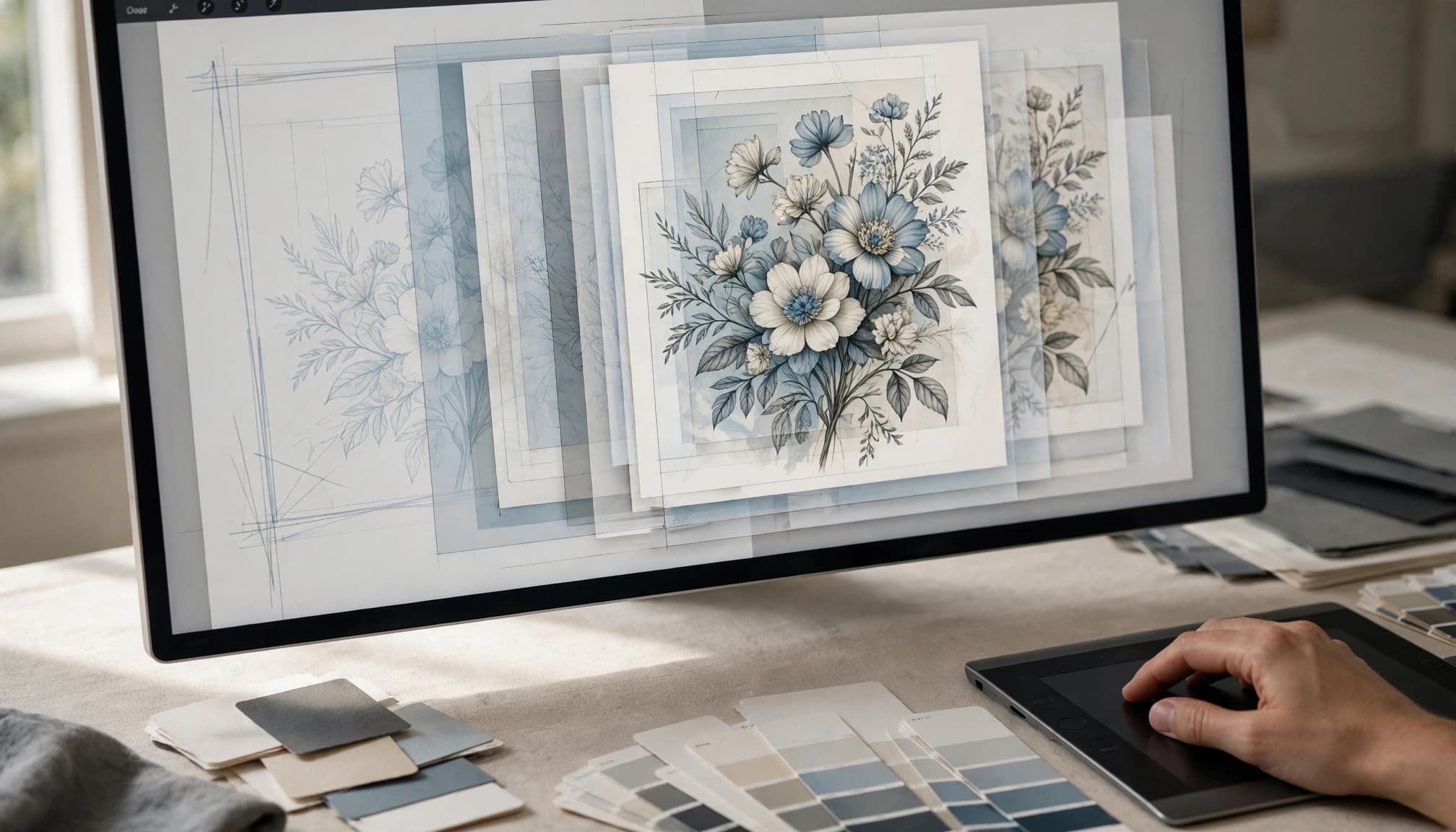
I recommend aligning that description with the production files. If the claim concerns original compositing, the layered document should help distinguish that contribution from imported generated material.
Exclude Material Outside the Claim
Applicants should disclose more than a de minimis amount of AI-generated material and exclude it from the claim where applicable. The guidance doesn’t establish a universal percentage for that threshold.
A registration can cover the human-authored portions of a composite work while leaving generated portions unprotected.
Businesses with existing registrations that omitted required AI information may need a correction. Copyright counsel can assess the appropriate procedure.
Accuracy matters more than an expansive claim. Overstating authorship creates an avoidable problem when the asset becomes valuable enough to enforce or license.
Commercial Permission Doesn’t Create Copyright
A provider’s agreement can authorize business use without establishing copyright in the output. Those are separate legal questions.
I treat statements about “owning your generations” cautiously because ownership language can describe contractual rights between the user and provider.
Understand the Contract’s Reach
A provider can grant permissions or transfer whatever rights it holds. It can’t create copyright in material that doesn’t satisfy copyright law.
Likewise, a commercial license doesn’t automatically promise exclusivity against other users or clear every third-party right.
When choosing business image-generation tools, I separate output quality and editing capabilities from the legal scope of permitted use. An attractive image and a generous usage policy don’t establish protectable human authorship.
Avoid Promising More Than the Business Controls
Client agreements should distinguish human-authored deliverables from generated components. An assignment can transfer existing rights; it can’t transfer a copyright that never arose.
Businesses should also identify who owns the human contribution. Employee work within the scope of employment and independently commissioned work can require different ownership analysis.
Paying a freelancer doesn’t automatically transfer every copyright. Written assignments and appropriately structured agreements matter when your business needs ownership.

Build a Defensible Business Workflow
I recommend preserving authorship evidence during production. Reconstructing creative decisions after a dispute is harder and less reliable.
The workflow should also make rights review part of approval, rather than leaving it until delivery.
- Define the intended use. Distinguish internal concept work from advertising, merchandise, licensing, and assets requiring exclusivity. That decision affects how much uncertainty the business can accept.
- Document source materials. Retain original photographs, drawings, permissions, and licenses. Record who created each human-authored input and whether the business owns or licenses it.
- Preserve generation records. Keep prompts, outputs, tool details, and applicable terms. These establish process and permissions, although they don’t independently establish copyright.
- Save human revisions separately. Maintain layered files, intermediate exports, and a concise record of original additions. In Photoshop workflows, distinguish hand-created content from generated fills.
- Approve rights and quality together. Assess authorship, contractual permissions, recognizable third-party material, and misleading visual claims before release.
Our business AI use policy can help formalize responsibilities across a team.
These records support an assessment; they don’t guarantee protection. A detailed archive of machine-generated outputs still needs a qualifying human contribution.
I would prioritize documentation that explains the finished expression. An organized file showing original source artwork and later human edits is more useful than an unexplained folder containing hundreds of generations.
Match the Rights Strategy to Business Risk
Copyrightability answers whether the business can protect expression. It doesn’t establish that publishing an image is legally safe.
Recognizable logos, copyrighted characters, and depictions of real people can raise separate concerns. Publicity and privacy rights may matter even when the output itself lacks copyright protection.
Training-data disputes also concern different questions. A conclusion about whether a model’s training was lawful doesn’t automatically determine ownership or clearance of a particular output.
For low-stakes internal ideation, exclusivity may offer little business value. For a brand mascot, licensed illustration collection, or major advertising campaign, uncertainty can undermine the asset’s purpose.
I would give stronger human authorship and documented ownership greater weight when exclusivity matters. Commissioning original human-created artwork may be the more suitable choice.
Uncopyrightable generated material also doesn’t erase rights in surrounding protected content. A competitor who copies an entire advertisement may reproduce protected text or original composition alongside the generated elements.
The appropriate enforcement claim depends on what they copied, not merely whether AI appeared anywhere in production.
Further Topics for Business Teams
The broader rights discussion raises several useful follow-up subjects:
- Copyright registration for mixed human-and-AI marketing assets.
- AI image licensing clauses for agency and freelancer contracts.
- Documenting human authorship in Photoshop and compositing workflows.
Frequently Asked Questions
Can a Business Copyright an Image Made Entirely by AI?
An image generated entirely by AI, without qualifying human authorship, doesn’t receive US copyright protection. A business may still have contractual permission to use it. However, that permission doesn’t create copyright exclusivity against unrelated parties.
Does Editing an AI Image Make It Copyrightable?
Qualifying original edits can receive protection, but routine adjustments don’t automatically qualify. Protection generally extends to the human-authored contribution rather than every generated element. There is no fixed number of edits or percentage of changed pixels that guarantees a protectable result.
Can AI-Generated Images Be Used in Advertising?
They can be used when the applicable permissions allow that use and the advertisement respects other rights and legal obligations. Copyright ownership is a separate question. I wouldn’t describe an advertising image as fully cleared solely because its generator allows commercial use.
Can Another Company Copy an Unprotected Generated Image?
Copyright doesn’t prohibit copying solely machine-generated expression that lacks protection. However, copying may still implicate protected human contributions, trademarks, contractual restrictions, or other rights. The answer depends on the material copied and the circumstances, not simply the image’s AI label.
Does Buying a Paid Subscription Establish Ownership?
No. A paid subscription establishes access and contractual permissions under its terms. It doesn’t supply the human authorship required for copyright. Businesses should distinguish permission to publish, ownership of protectable contributions, and exclusivity when evaluating an image asset.
Protect the Human Work the Business Can Identify
The strongest AI image copyright strategy starts with identifiable human expression. Original inputs, qualifying revisions, and creative arrangements provide a clearer basis for protection than prompting effort alone.
Commercial permission still matters, but it answers a different question. Keep ownership promises aligned with the rights your business holds.
Before treating an AI-assisted image as an exclusive asset, identify its human-authored elements and preserve the files that support that claim. That is a more defensible foundation than assuming a subscription makes everything copyrightable.