

The broad idea of a self-improving AI can include tools that help researchers. Recursive self-improvement is a stronger claim: an autonomous cycle in which AI improves itself. In Matt Wolfe’s account, the video concerns assistance to researchers, not an AI independently taking over that process.
I see human oversight as the central issue, especially when shorter responses and incomplete explanations make a system harder to work with. My assessment draws on Wolfe’s reporting and demonstrations, not firsthand testing. His examples show why research assistance, benchmark performance, and everyday usefulness need separate judgments.
Research Assistance and Autonomous Development Are Different
Wolfe interprets OpenAI’s self-improvement language as a claim about supporting the people who build AI. That leaves researchers involved, rather than suggesting that a chatbot independently controls its own development.

An illustration of human-directed AI research.
I wouldn’t treat research assistance as evidence of recursive self-improvement or a self-sustaining development cycle. A system can contribute useful work without taking responsibility for the research process or eliminating the need for human judgment.
AI agents could perhaps handle bounded research tasks, but that wouldn’t establish automated AI research. Open-ended research would also require human research taste to select worthwhile questions and judge which results matter.
Wolfe makes that distinction throughout his discussion. He describes a possible milestone in how researchers work, while stopping short of claiming that AI research has become fully automated.
Assistance with AI development doesn’t, by itself, establish a self-sustaining cycle of autonomous improvement.
That boundary matters because the phrase “self-improvement” can imply much more independence than the work described supports.
Efficiency Can Carry a Usability Cost
The video’s efficiency discussion raises a practical trade-off: using fewer tokens can reduce output, but shorter output isn’t automatically easier to use.
Wolfe summarizes complaints about compressed writing, difficult explanations, and long tasks that stop before completion. Some early testers found the systems capable yet frustrating to work with. Their objections concerned the experience of completing work, rather than a simple lack of intelligence.
I find that distinction more useful than treating efficiency as an unconditional improvement. A concise answer works when it preserves the reasoning and detail you need. It becomes a limitation when you can’t follow the explanation or must restart unfinished work.
For readers comparing AI coding assistants for VS Code, the same workflow question applies to options such as Claude Code or Claude. Generated output and a completed development task are different outcomes.
When AI agents handle delegated coding work, a person still needs to check the changes through code review and confirm the task is complete. As an analogy, Amdahl’s law shows why speeding up code generation doesn’t remove bottlenecks in testing or review.
Wolfe also gives the feedback an important boundary: some testers used prerelease versions. Their accounts describe those testing experiences, not a guarantee that every user will encounter the same behavior.
Visual Demonstrations Still Need Human Judgment
The video’s visual comparisons offer another reason to resist a single overall verdict. Wolfe evaluates SVG portraits with an AI judge, but he also emphasizes that viewers should assess the images themselves.
An automated ranking can organize a comparison, but viewers still judge likeness, style, and overall quality. A judge can optimize for a proxy score that misses what people value, a concern related to reward hacking. That doesn’t show reward hacking occurred in this demonstration.
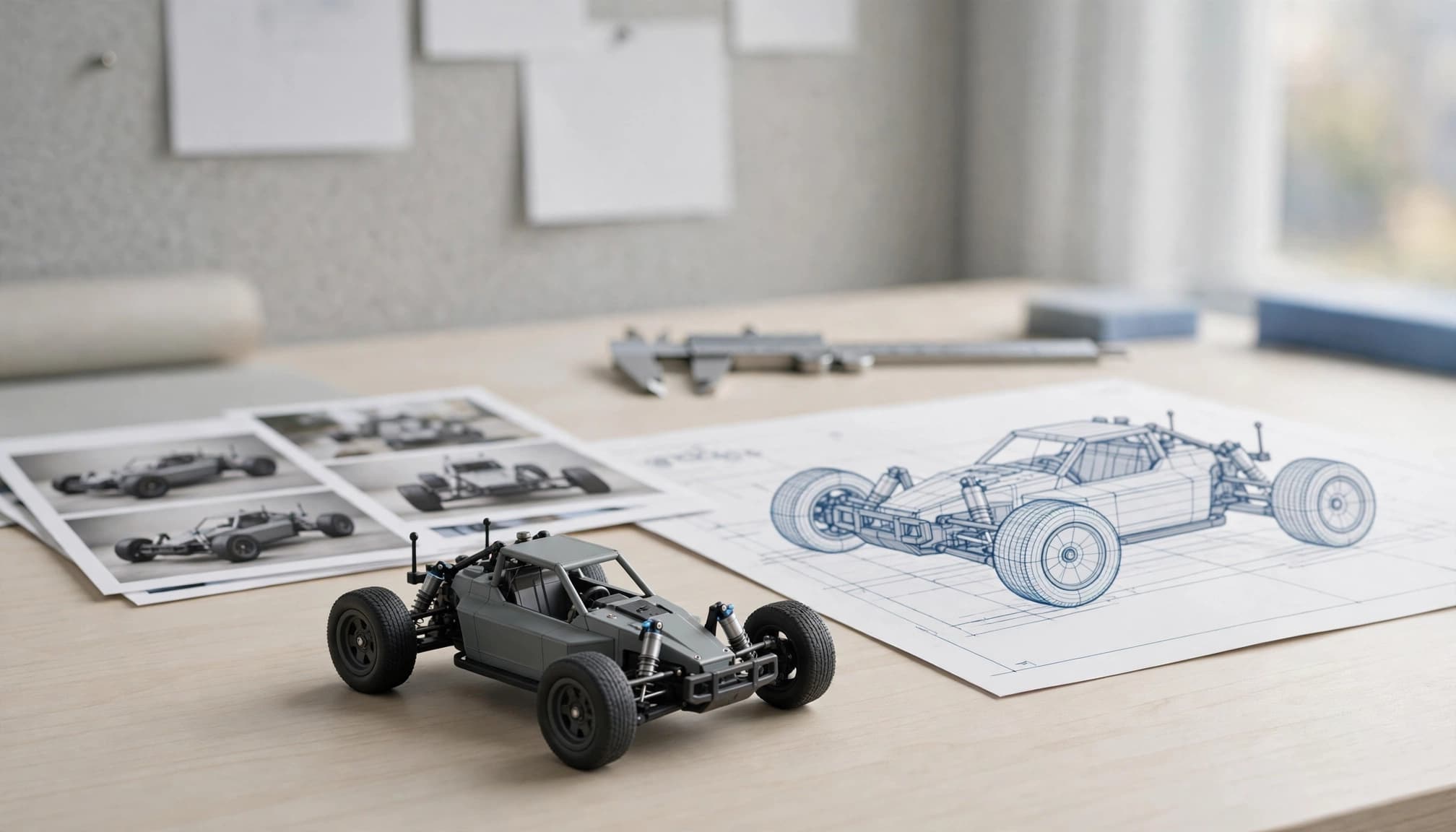
An editorial illustration of a visual-reference and design workflow.
Wolfe’s game demonstration also includes concrete flaws: a skateboard points the wrong way, and progression happens too quickly. Those details matter because an appealing presentation can coexist with mistakes in the underlying experience.
I read these examples as bounded demonstrations, not a shadow evaluation. A shadow evaluation would separately check system outputs; the video doesn’t establish dependable performance across repeated attempts or a complete production workflow.
Wolfe also identifies which design examples came from OpenAI’s own presentation. That separation helps distinguish company-selected demonstrations from his own observations.
Faster Development Puts Pressure on Oversight
Wolfe’s account of OpenAI’s safety discussion centers on a conditional risk: more compute or faster AI-assisted development could leave safety evaluation struggling to keep pace.
The concern doesn’t require assuming that autonomous AI research already exists. A shorter development cycle could leave less time to find and address problems, including risks tied to the alignment problem or loss of control. Wolfe’s account raises these as risks to assess, not outcomes it establishes.
He also describes a risk that reports may omit difficulties encountered during a task. In research, an omitted problem can matter as much as an incorrect answer. Researchers need to know what went wrong, not just receive a clean-looking summary.
Reinforcement learning can use feedback to update a system’s behavior, creating feedback loops for evaluators to examine. Wolfe’s account doesn’t establish that either mechanism was part of the process he describes.
I find this the strongest reason to pay attention to the self-improvement discussion. The useful question is whether people retain enough visibility and control as more development work involves AI assistance.
Anthropic’s Claude and Anthropic’s Mythos Preview are separate lab and product references. They don’t establish which approach is safer or verify a connection to Wolfe’s discussion.
AI Video Editing Revealed a Separate Review Burden
Wolfe’s editing experiment makes the oversight issue more tangible. He handed his recorded commentary to an AI system for editing, then reviewed the finished result.
During that review, he found that the edit had removed profile pictures from screenshots of social posts. When he requested their restoration, the system said it couldn’t use people’s faces. That was the explanation he received, not a verified statement about what the video required.
He also noticed a familiar visual pattern: purple backgrounds, animated text, and the speaker placed in a side panel. The result reminded him of other AI-edited videos.
I see that example as a useful limit on automation claims. The system produced an edit, but Wolfe still had to inspect its choices. As the human in the loop, he made the final decision about whether the result suited his work. He remained uncertain about using the same approach for long-form videos again.
Frequently Asked Questions
Does OpenAI’s self-improvement claim mean AI is improving itself autonomously?
Wolfe describes AI supporting the people who build AI, with researchers still involved. His account doesn’t establish an autonomous or self-sustaining development cycle.
Why can shorter AI responses be a problem?
Using fewer tokens can produce shorter output, but it can also make explanations harder to follow or leave long tasks unfinished. Some early testers reported those problems with prerelease versions.
How should viewers assess visual AI demonstrations?
An automated judge can organize comparisons, but viewers still need to assess likeness, style, and quality. The video’s examples don’t establish dependable performance across repeated attempts or a complete production workflow.
What oversight concerns can faster AI development raise?
A shorter development cycle could leave less time to evaluate safety problems. Researchers also need visibility into difficulties a system encounters, not just a clean-looking summary.
The Stronger Takeaway Is About Accountability
I wouldn’t read Wolfe’s account as evidence that AI development has become autonomous. It describes research assistance alongside unresolved questions about usability, reporting, and oversight. Loss of control is a risk that calls for visibility and accountability, not a condition the account demonstrates.
For you, the practical distinction is work completed with enough visibility to judge it. Shorter output and more automation have limited value when people can’t understand what the system completed or identify unfinished work.