
US businesses using AI meeting bots must follow federal and applicable state call recording consent laws. Federal law provides a one-party-consent exception, but state requirements can be stricter.
I recommend affirmative consent before capture as a practical business default, especially when participants join from different states. A bot’s presence, a calendar disclaimer, or a promise to delete audio doesn’t settle every legal question.
The starting point is understanding what your meeting assistant captures and which rules apply.
Key Takeaways
- Federal law generally permits recording with one participant’s prior consent, subject to limits. That doesn’t override stricter state requirements.
- California protects confidential communications, while Washington has a recorded-announcement provision for covered communications.
- Transcription, temporary audio processing, and permanent recordings involve different technical steps. Product labels don’t determine their legal treatment.
- I favor a documented consent process with a nonrecorded alternative, followed by separate controls for retention and sharing.
How Call Recording Consent Laws Apply to Meeting Bots
The Federal One-Party-Consent Baseline
Under 18 U.S.C. Section 2511, a private person generally falls within the consent exception when they participate in the communication or one participant gives prior consent.
The exception doesn’t apply when the interception’s purpose is committing a criminal or tortious act. It also doesn’t make every recording lawful under state law.
For businesses, the practical distinction is between a federal permission and a complete legal analysis. An employee’s authorization may address the federal consent requirement while leaving a stricter state requirement unresolved.
State Rules Can Add Different Conditions
State laws differ in scope as well as consent requirements. A statute may focus on confidential communications, private conversations, or particular interception methods.
That’s why I wouldn’t build a company policy around a simple map labeled “one-party” and “two-party.” Those labels compress conditions that can matter to the actual meeting.
Also, “two-party consent” can mislead teams running group calls. Where all-party consent applies, the relevant participants aren’t limited to the organizer and one guest. A procurement discussion with several attendees requires a process designed for everyone involved.
California and Washington Show Why State Details Matter
California Protects Confidential Communications
California Penal Code Section 632 addresses intentional eavesdropping or recording of confidential communications without all parties’ consent.
The confidentiality condition matters. The statute doesn’t simply declare every conversation confidential. Its definition considers circumstances indicating that a participant reasonably expects the communication to remain confined to those involved.
For an ordinary private business discussion, I wouldn’t assume that using a conferencing platform removes that expectation. A closed meeting can still involve confidential communication even when people connect through software rather than sitting together.
Washington Provides a Recorded-Announcement Route
Washington RCW 9.73.030 generally requires all participants’ consent for covered private communications and conversations.
The statute also considers consent obtained when one party effectively announces to everyone that the communication is about to be recorded or transmitted. The announcement must itself be recorded.
That provision shows why generic nationwide advice can fail. Washington describes a particular route to consent; businesses shouldn’t assume that identical wording satisfies every other state’s law.
I still prefer an affirmative agreement process for multistate teams because it reduces reliance on different interpretations of notice.
Follow the Audio, Not the Product Label
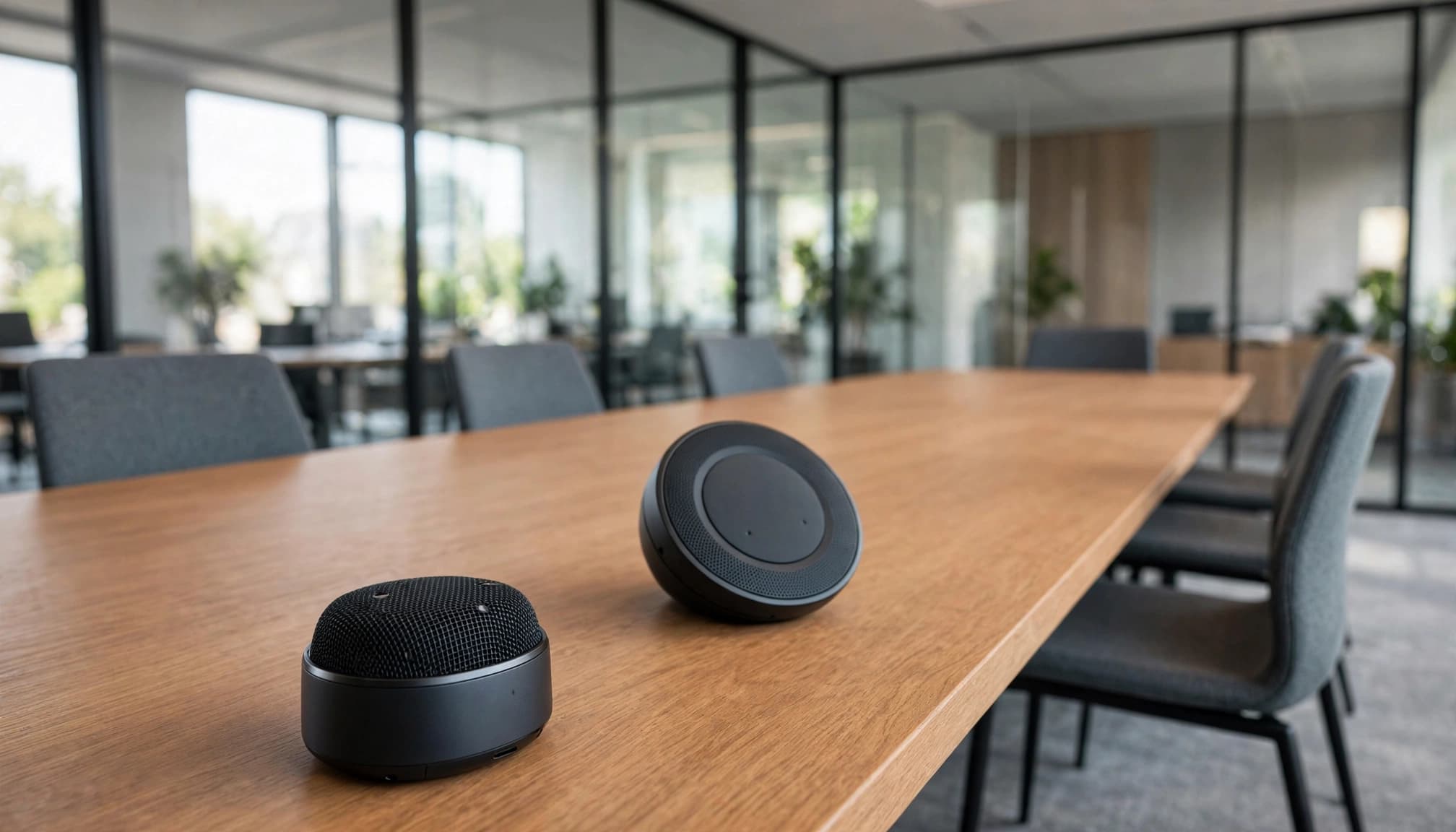
An “AI notetaker” can perform several operations before delivering a short recap. I separate those operations rather than treating the final summary as the entire product.
These distinctions help identify what the consent process needs to describe.
| Processing Stage | What Happens | Business Decision |
|---|---|---|
| Capture | Software acquires meeting audio. | Decide when capture may begin. |
| Transmission | Audio reaches another system. | Identify approved recipients. |
| Transcription | Speech becomes searchable text. | Define permitted uses. |
| Retention | Audio or text remains available. | Set separate retention rules. |
| Distribution | Notes enter email or business apps. | Restrict downstream access. |
The important takeaway is that deleting an audio file doesn’t explain what happened before deletion.
Likewise, “bot-free” describes an interface or capture approach, not a legal exemption. An application can process speech without appearing as a named meeting participant.
The statutes don’t supply one universal answer for every temporary audio buffer or transcript-only architecture. I wouldn’t interpret uncertainty as permission to skip consent.
When choosing an AI meeting assistant, I would prioritize controllable capture over an unobtrusive interface. A discreet application can create more operational risk if participants don’t understand that it is processing their speech.
Interstate Meetings Need a Consistent Business Rule
Remote meetings often connect people in several jurisdictions. Your company’s headquarters, the organizer’s location, and the conferencing provider’s address don’t create a universal answer about governing law.
I recommend an all-participant agreement standard for ordinary interstate business meetings. That’s a conservative operating policy, not a claim that the strictest state’s law automatically governs every call.
This approach has trade-offs. It adds friction, and some participants will decline. However, a location-dependent workflow creates its own problems when employees travel or callers join unexpectedly.
Keep jurisdiction questions separate from the host’s real-time duties. Hosts need a usable process, rather than an obligation to resolve conflicts of law during introductions.
Counsel can address recurring cross-state scenarios, contractual commitments, and exceptions. Meanwhile, your everyday policy can require clear agreement before capture without pretending to resolve every legal issue.
For meetings involving participants outside the United States, this US-focused framework is incomplete. Foreign privacy and recording requirements need a separate assessment.
Give Notice Before Audio Capture Starts
Explain the Actual Processing in Advance
A calendar notice should identify the meeting assistant, explain its purpose, and describe the planned output. It should also identify the intended audience for recordings or notes.
I would distinguish internal note-taking from sales coaching, customer profiling, or broad organizational search. Those uses create different expectations even when they start with the same recording.
Calendar notice helps participants prepare. However, I wouldn’t treat an accepted invitation as a substitute for affirmative agreement under a company-wide consent policy.
Ask for Agreement Before Activating Capture
A practical notice should reflect the enabled workflow. For a meeting using cloud transcription, audio storage, and internal notes, the request could read:
“With your permission, this meeting assistant will send audio to our approved transcription provider and retain a recording for internal notes. You can decline, and we’ll continue without it.”
I would collect agreement before activating the bot, through a written response or an unrecorded discussion. After activation, repeat the disclosure and capture participants’ confirmation as part of the meeting record.
That sequence avoids recording the consent discussion before the business has obtained permission. It also creates evidence beyond an employee’s later recollection.

Handle Consent as an Ongoing Meeting Control
Consent handling doesn’t end when the first participant agrees. Late arrivals, additional bots, and changes in purpose can break an otherwise sensible process.
I would give the host a short operating procedure:
- Keep capture disabled until the intended participants receive the disclosure and agree.
- Record the consent status and the version of the disclosure used.
- Pause capture before admitting a late participant who hasn’t completed that process.
- Stop capture when someone objects or the meeting moves into an excluded topic.
- Route accidental capture through the incident process rather than continuing as though nothing happened.
A nonrecorded alternative should be usable. Manual notes may be sufficient when the purpose is remembering decisions rather than preserving a verbatim record.
Also, identify every active capture method. Removing one bot doesn’t address a second assistant running on another employee’s device.
Put these responsibilities into your AI acceptable use policy so employees understand who may authorize meeting capture.
If unauthorized capture occurs, restrict further access and distribution. Preserve information needed to investigate, and involve counsel where warranted rather than improvising deletion decisions that could affect legal obligations.
Choose Bot Controls That Match the Policy
Control Capture Before Adding Automation
I wouldn’t approve a meeting assistant solely because it generates good summaries. The business needs a way to prevent unwanted capture.
Useful requirements include administrator control over automatic joining, a reliable stop function, and restrictions on which meetings the assistant may attend.
Those are selection criteria, not capabilities I assume every product provides. A tool that cannot support the chosen consent process may be unsuitable even if its transcription is accurate.
Our coverage of AI meeting notes apps helps frame the product choices. For consent-sensitive work, however, capture controls deserve more weight than convenience features.
Separate Notes From Automatic Actions
A transcript, an emailed recap, and a CRM update are separate outputs. Permission to capture a conversation shouldn’t become an unchecked authorization to distribute everything downstream.
I prefer human review before external follow-up emails or broad sharing. Summaries can misidentify speakers, omit conditions, or turn tentative discussion into an apparent commitment.
Assign ownership for corrections, too. An inaccurate note becomes harder to repair after automation copies it into several business systems.
Access permissions need to follow the destination. A restricted meeting loses that boundary if its summary enters a broadly accessible workspace.
Limit Retention and Secondary Use

Consent to capture a meeting is only the beginning of data handling. Decide separately how long to retain audio, transcripts, summaries, and consent records.
I favor keeping each record only as long as its business purpose requires, subject to applicable obligations and legal holds. A useful summary doesn’t automatically justify keeping the complete audio indefinitely.
The FTC’s guidance on AI privacy and confidentiality commitments explains that companies can face liability for breaking promises about customer information. Statements about training, access, or reuse therefore deserve more than marketing-level attention.
Operationally, map copies in shared drives, email, CRM records, and exports. Deleting the original meeting file may leave those copies untouched.
Also, distinguish local processing from cloud processing without assuming either settles privacy. Devices, backups, and exported notes remain part of the workflow.
For larger inventories, AI governance platforms for small businesses can organize ownership and oversight. They don’t replace the decisions about permitted uses or access.
Sensitive Meetings Need More Than Recording Consent
Healthcare illustrates the limits of a recording-only analysis. Under HHS guidance on cloud processing, covered entities and business associates using cloud services for electronic protected health information need an appropriate business associate agreement and compliance with applicable HIPAA requirements.
A participant’s agreement to recording doesn’t, by itself, satisfy those obligations. Conversely, a business associate agreement doesn’t answer every state recording-consent question.
I would also restrict automatic capture for personnel investigations, legal discussions, and meetings containing highly sensitive commercial information. Recording may create a durable record where limited manual notes would meet the actual need.
Voice production introduces another boundary. I would require separate authorization before using meeting audio for voice cloning or public promotional material rather than treating note-taking permission as a blanket release.
Technical access to a recording doesn’t establish permission for every reuse. That distinction matters as speech tools combine transcription, generation, and voice customization.
Related Topics for Deeper Coverage
Three useful follow-up subjects are:
- Designing a meeting-bot approval policy for hybrid workplaces.
- Managing recording deletion across transcripts, backups, and CRM exports.
- Separating voice-cloning authorization from ordinary meeting-recording consent.
FAQ About AI Meeting Recording Consent
Does the Organizer’s Permission Cover Everyone?
Not necessarily. The federal exception can involve one participant’s prior consent, but applicable state law may require more. I recommend gathering agreement from every participant under a consistent business policy rather than assuming the organizer can authorize capture for the entire group.
Is Transcription Without Saved Audio Exempt?
There isn’t a universal exemption established by the statutes discussed here. A system may capture and transmit speech without retaining a permanent audio file. I would base the workflow on those actual processing steps and obtain consent rather than relying on the phrase “transcription only.”
Is a Visible Bot Name Enough?
I wouldn’t use a bot’s display name as the business’s sole consent process. It may reveal that an assistant is present without explaining its functions or data use. Advance disclosure, affirmative agreement, and an auditable record provide a stronger operational approach.
What Should Happen When Someone Declines?
Under the policy I recommend, leave capture disabled and continue with an appropriate nonrecorded alternative. If capture has started, stop it before continuing. Also address other active assistants so the participant’s objection doesn’t apply to only one of several recording methods.
Does Consent Allow Voice Cloning Later?
I wouldn’t interpret permission for internal meeting notes as authorization for voice cloning. That reuse has a different purpose and different consequences. Obtain separate authorization that describes the intended use rather than stretching the original meeting disclosure.
Build Consent Into the Meeting Workflow
AI meeting bots add more than a recording button. They can turn conversation into persistent, searchable information distributed across business systems.
My recommendation is to make consent an operating control: explain the processing, obtain agreement before capture, and support a real nonrecorded alternative. Then govern retention and downstream use separately.
A strong workflow accounts for both the applicable law and the tool’s behavior. A polished summary can’t compensate for unauthorized capture.