
Matt Wolfe’s AI news roundup puts image and video creation alongside assistants that can place phone calls and work with connected information. I see the most useful distinction in what each generative AI demonstration establishes, not in broader promises about complete workflows. This weekly roundup offers a snapshot of AI tools, not a comprehensive market review.
This assessment draws on Wolfe’s video, not firsthand testing by AI Flow Review. For creators, the image and video demonstrations provide a starting point for assessing prompt control and editing flexibility.
Key Takeaways
- Wolfe’s image and video examples show individual demonstrations of prompt and reference control, but they don’t establish repeatable production workflows.
- Optimizely’s SEO assistant produced analysis and prioritized recommendations. The demonstration didn’t show it implementing fixes or improving search visibility.
- Meta Muse discussed connected information, while Grokbot completed an authorized phone call. These examples don’t establish reliable completion of connected tasks or business calls.
- The reported DoorDash and Uber Eats agent-order figures are small beside broader company activity, but their different framing doesn’t support a direct comparison or adoption rate.
- The other reports have clear limits: Claude’s bank safeguards are product claims, and Project Suncatcher’s single in-orbit response doesn’t establish a scaled service.
Image Generation With GPT-Image 2.6 and PH3 Image
Wolfe demonstrates two AI image generators: OpenAI’s GPT-Image 2.6 and Pruna AI’s PH3 Image.
For the ChatGPT example, he requests the San Diego skyline at sunset with sailboats on the water. He then uses the same scene description in PH3 Image’s Hugging Face Space, a browser-based environment for trying the model.
The shared prompt produces AI-generated content centered on the same scene. However, the video doesn’t document a repeated evaluation across different prompts or production tasks.
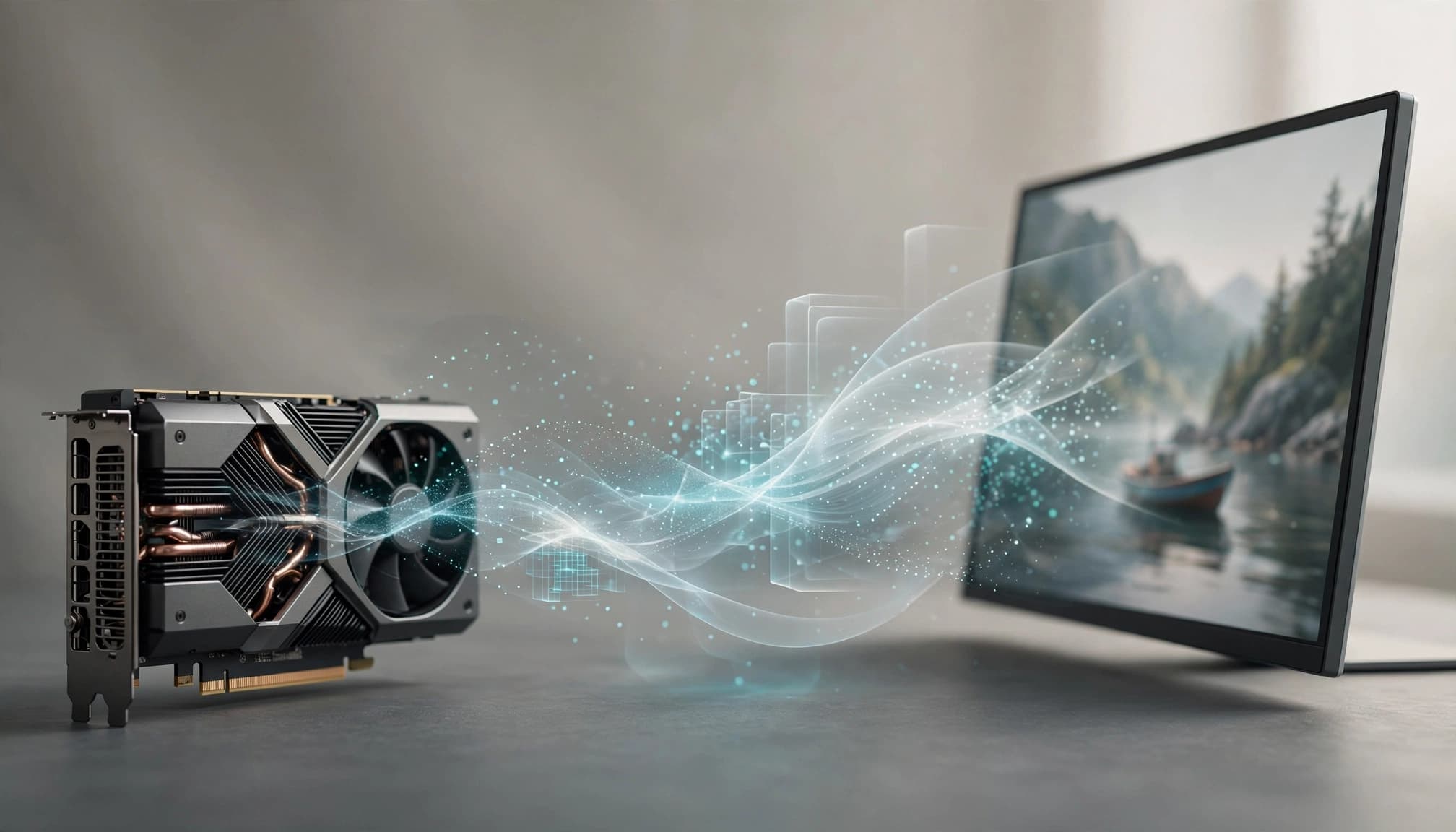
Editorial illustration of an image-generation workflow.
Optimizely’s SEO Assistant Produces Prioritized Recommendations
In the video’s sponsored segment, Wolfe connects Optimizely’s Virtual Teammates to FutureTools and requests an audit of SEO and AI search visibility.
He describes keyword research, content-gap analysis, and checks for visibility in AI-generated answers. The teammate can also monitor the site and maintain prioritized action items.
The distinction matters: this demonstration concerns analysis and recommendations. It doesn’t establish that the assistant implemented fixes or improved search visibility.
Gemini Omni 1.2 Flash Focuses on Reference Control
Wolfe presents Google’s Gemini Omni 1.2 Flash through demonstrations with reference images, generated speech, and background editing. The examples show clothing references and video background changes that retain foreground people.
For his own example, he uses an avatar photograph and a blue-shirt reference. His prompt asks for a spoken YouTube subscription message with a bear juggling chainsaws in the background.
The resulting clip includes the message. This single example doesn’t establish dependable results across a production workflow, but it shows how Gemini can combine reference inputs and speech. The video doesn’t establish that the demonstration ran in Google AI Studio.
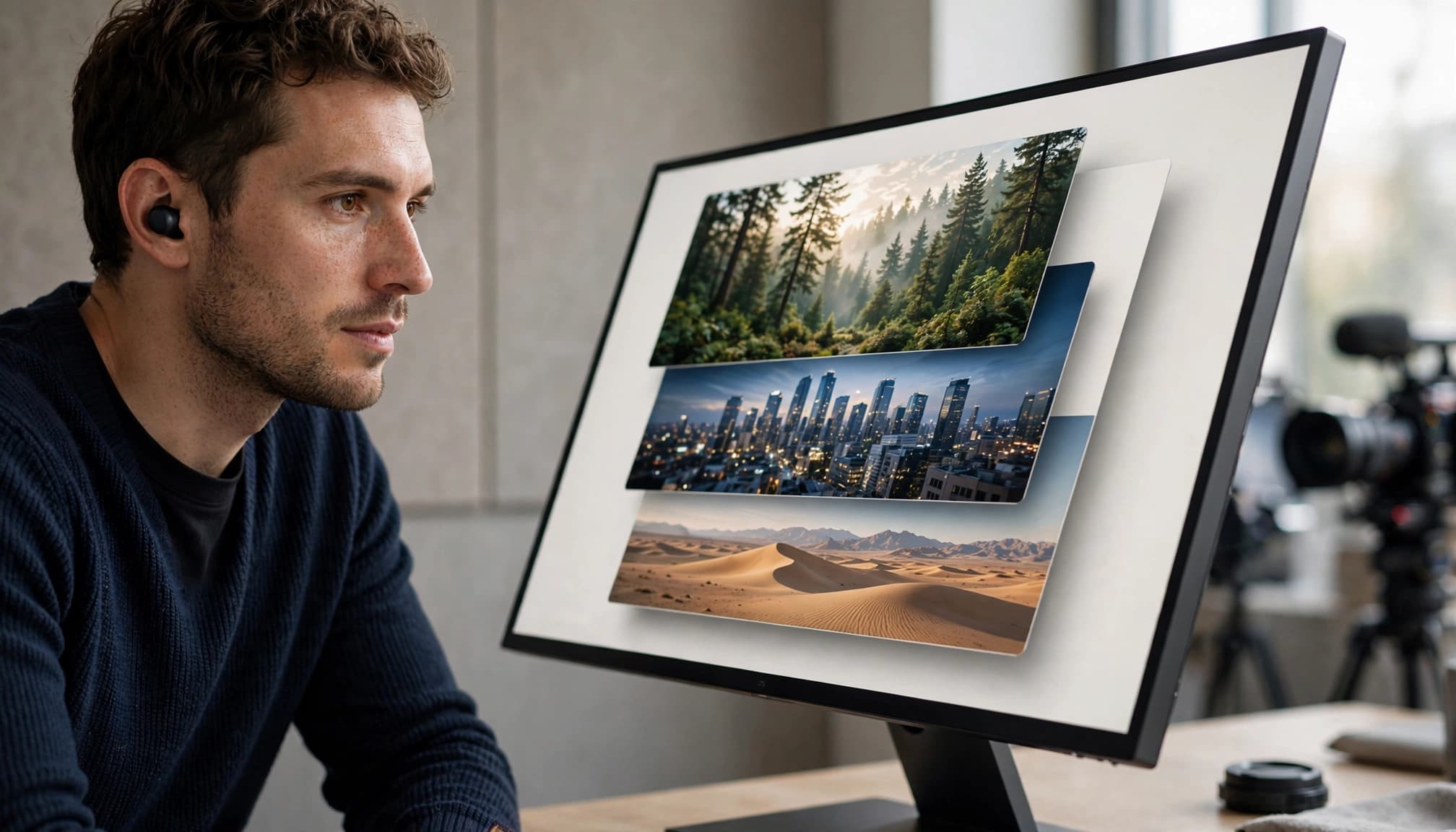
Editorial illustration of background-editing concepts.
These examples cover distinct tasks within AI video generation: creating footage, controlling appearance, and revising existing scenes.
Pika H3 Flex Encounters a Hosted Compute Limit
Wolfe also demonstrates Pika H3 Flex through a Hugging Face Space. After trying the default prompt, he requests the familiar AI-video test subject of Will Smith eating spaghetti.
A longer request fails because of a GPU-duration limit. After shortening the request, he receives a generated clip.
That error is a useful detail. The video reports a compute limit but doesn’t identify the hardware supplier, so attributing it to Nvidia isn’t supported. The test also shows that a hosted interface can impose constraints beyond the prompt itself.
Meta Muse and Grokbot Take Different Approaches to Voice
Meta Muse Adds Conversational Access
In Wolfe’s Meta Muse demonstration, he starts a call with Gary, a voice-based AI chatbot, and asks it to change its voice. The assistant then discusses connected email, calendar information, and content ideas.
Wolfe says voice interaction feels more like speaking to an assistant. Discussing connected tasks doesn’t establish that it completed inbox management or scheduling during the demonstration.
These examples aren’t a comparison with Microsoft Copilot or Microsoft 365, and don’t establish how those products perform.
Grokbot Places an Actual Call
Grokbot’s demonstration goes further: it calls Wolfe’s phone.
First, it challenges his fictional comic-store setup and asks who owns the number. After he confirms it’s his phone and authorizes the test, the call proceeds. The assistant identifies itself as a virtual assistant and asks about store hours.
Wolfe’s reservation is practical: recipients may hang up when they recognize an automated caller. The demonstration establishes that a call occurred, not that businesses will reliably engage with one.
Security, Coding, and Financial Connections
OpenAI and Kimi Updates
Wolfe describes GPT-6 Cyber as a reported cybersecurity-focused AI model intended for security professionals. He also reports shared usage allowances across ChatGPT and Codex.
Separately, he covers the release of Kimi K3.1 Pro’s weights on Hugging Face. These are distinct developments: access to a specialized model, account-level usage changes, and downloadable model weights shouldn’t be treated as equivalent improvements.
Claude’s Reported Bank Integration
Wolfe describes a Claude bank connection through Plaid for questions about spending and available money.
According to the integration description he discusses, access is read-only, full account numbers aren’t exposed, and financial information isn’t used for training. He says he hasn’t connected his own bank account.
Those are reported product safeguards, not findings from an independent security assessment.
AI Editing and Netflix Recommendations
Wolfe discusses Selendis, an AI video-editing app associated with Steve Aoki. Its stated approach is to learn a creator’s preferences through editing decisions, previous videos, and reference material.
He hadn’t received access, so this is an early-access product description rather than a demonstrated editing workflow. He also mentions his separate Claude-assisted editing workflow, but doesn’t walk through it in this roundup.
Meanwhile, Netflix’s described AI Discover tab organizes recommendations around categories such as light viewing, family movie night, and quick watches. Wolfe questions how different that experience will feel from existing recommendations. The announcement alone doesn’t resolve that question.
Agent Ordering Remains a Small Part of the Story
Wolfe cites earnings-call figures that challenge the idea that agents already handle everyday purchasing at scale.
DoorDash reportedly received several hundred agent-generated orders while handling roughly 3 million deliveries daily. He also cites 500 agent-placed Uber Eats orders alongside a broader figure of 320 million trips.
These differently framed figures offer only a limited snapshot of agentic AI adoption; they don’t support a direct comparison or adoption rate. Still, Wolfe’s central observation is clear: the reported agent-order volumes are small beside the companies’ overall activity.
Project Suncatcher’s Reported In-Orbit Response
Wolfe reports that Google’s Project Suncatcher prototype returned an AI response from orbit. He describes a satellite carrying AI computing hardware and sending a result back to Earth.
The scope is limited: a single prototype response doesn’t establish an operational, scaled orbital service. Even within that boundary, it stands out as a concrete demonstration rather than a proposed use case.
Frequently Asked Questions
What did the image-generation demonstrations show?
Wolfe used the same San Diego skyline prompt with OpenAI’s GPT-Image 2.6 and Pruna AI’s PH3 Image. The video doesn’t show repeated tests across prompts or production tasks.
Did Optimizely’s SEO assistant make changes to the site?
The demonstration showed an SEO and AI search visibility audit with prioritized recommendations. It didn’t show the assistant implementing fixes or improving visibility.
What did Grokbot’s phone-call demonstration establish?
After Wolfe confirmed the number was his and authorized the test, Grokbot called his phone and asked about store hours. The call shows that an action occurred, but it doesn’t establish that businesses will reliably engage with automated callers.
Do the delivery figures show that AI agents already order at scale?
Wolfe cited several hundred agent-generated DoorDash orders against roughly 3 million daily deliveries, and 500 agent-placed Uber Eats orders alongside 320 million trips. The figures are framed differently, so they don’t support a direct comparison or an adoption rate.
What does Project Suncatcher’s in-orbit response establish?
Wolfe reports that a prototype satellite carrying AI computing hardware returned a response to Earth. A single result doesn’t establish an operational, scaled orbital service.
Demonstrations Establish Narrower Claims Than Announcements
Wolfe attributes the quieter release period partly to election uncertainty, stock-market movement, and possible announcement timing around Anthropic’s anticipated IPO. Those are his explanations, not confirmed company strategies. This isn’t a market-wide comparison of AI announcements from Apple, Spotify, Pinterest, or Walmart. It covers only the stories Wolfe discusses.
My strongest takeaway is the importance of demonstrated scope. A completed phone call establishes an executed action; an audit establishes recommendations. Keeping those distinctions intact makes this roundup more useful than treating every announcement as a finished workflow.