Matt Wolfe’s weekly roundup covered generative AI, with Krea 3 as its image-tool highlight. Coding tests showed how task-specific results can differ from benchmark scores, a central point in this AI news roundup.
For you, that distinction matters more than another impressive score. Wolfe’s demonstrations provide useful examples, but they don’t prove dependable performance.
Key Takeaways
- Wolfe’s Krea 3 coverage focused on editing existing images, with thumbnail revision as a practical example.
- Open-weight announcements varied in availability: one model still needed post-training, while another was accessed through OpenRouter rather than installed locally.
- Genspark Design produced a layered, editable mobile app concept from Future Tools screenshots, but the demonstration didn’t test a completed application.
- Wolfe’s coding tests showed that working mechanics, visual polish, benchmark scores, and broad reliability are separate measures.
- The roundup included voice, decision, feed, and agent-collaboration tools, but several features hadn’t received hands-on testing.
Krea 3 Puts Image Editing in Focus
Wolfe’s image coverage centered on Krea 3 and his growing interest in editing existing images rather than generating more standalone samples. Thumbnail revision was the practical use case behind that interest.
That focus gives the discussion a more concrete purpose than another collection of attractive generated pictures. It also keeps the assessment tied to a creator’s workflow rather than a universal product verdict.
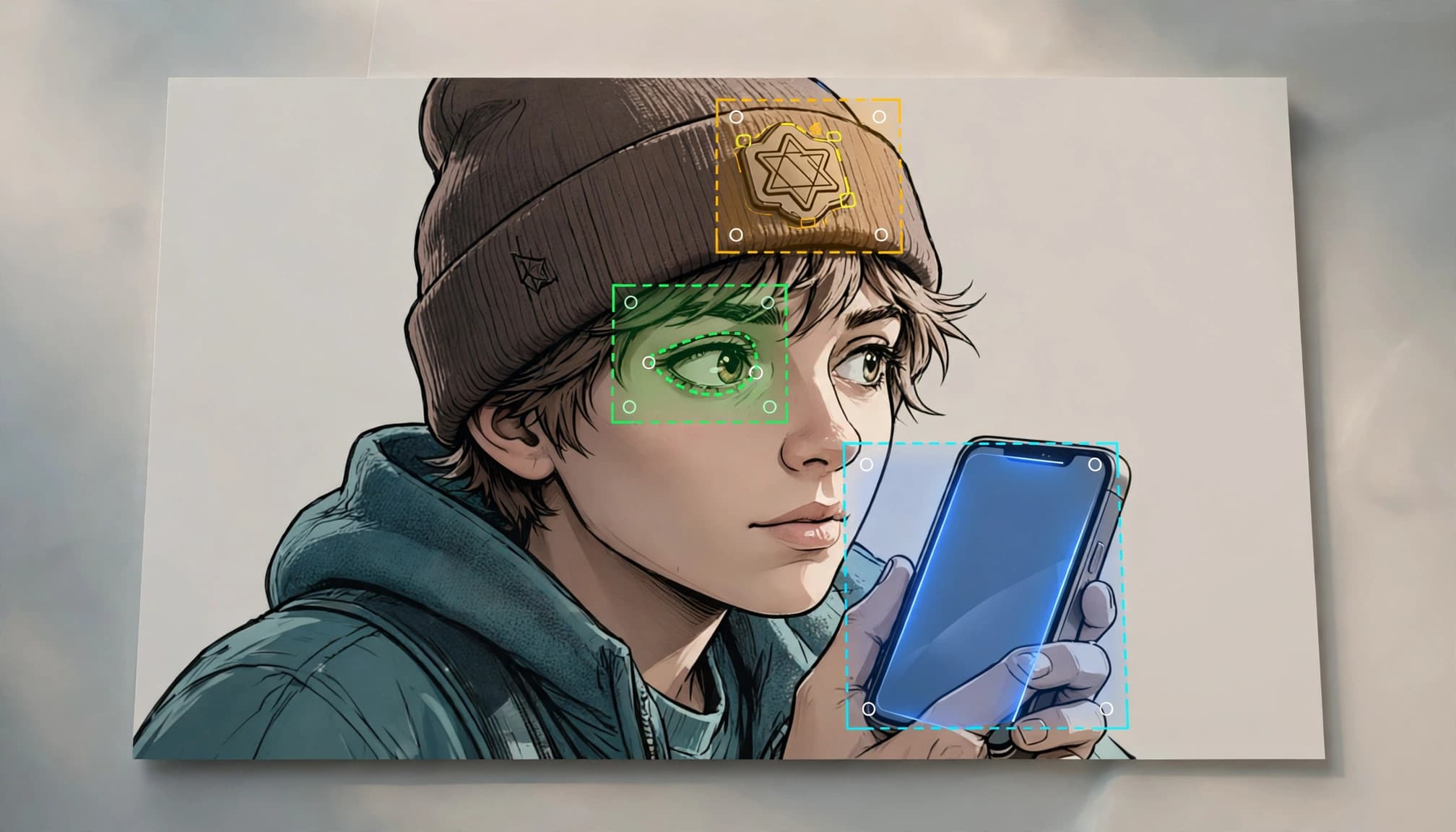
For related coverage, our Seedream 4.0 review examines ByteDance’s unified approach to image generation, editing, and multi-image tasks.
Open Weights and Availability Are Different Questions
Open-weight announcements were another recurring theme, but the models weren’t all at the same release stage.
Microsoft’s announcement concerned a model that had completed pretraining but still needed post-training. Wolfe couldn’t test it. For another announcement, he used OpenRouter rather than installing the model locally.
Those distinctions matter: an announcement, hosted access, and a local installation are different things.
Our Stable Diffusion review provides background on an established open-source image-generation option.
Genspark Design Builds an Editable App Concept
In the video’s sponsored segment, Wolfe gave Genspark Design screenshots of Future Tools and requested a mobile-first app concept.
The output included a home feed, tool pages, search, filters, and news. The designs were layered and editable. Genspark also described collaboration, related asset creation, component and design-token exports, and continuation in Genspark Code.
The demonstration showed an editable design concept, not a completed, tested application.
Gemini 4 Argon Delivers Mixed Coding Results
Wolfe described Gemini 4 Argon as competitive across many benchmarks, although Artificial Analysis placed it below Claude Opus 5.5 on its combined intelligence score.
At recording, he reported access through the API and paid Gemini Pro or Ultra plans. The introductory API price was $2 per million input tokens and $10 per million output tokens through November, with prices expected to roughly double afterward.
His one-prompt Mega Bonk-style game had working camera controls, jumping, and sprinting, but less polished graphics than some alternatives. A separate test produced an STL file for a Gary Busey bust. Wolfe liked the front view more than the profile.
These were specific demonstrations, not broad evidence of software or 3D-modeling reliability.
Meta Muse Wonder Shows the Limits of Benchmark Rankings
Meta Muse Wonder received strong benchmark coverage, including a reported 79% coding score. Wolfe cited API pricing of $4 per million input tokens and $20 per million output tokens, close to Claude Opus pricing at the time of recording.
His hands-on reaction was more restrained.
The generated game included the requested mechanics and camera controls, but its main character looked like a snowman carrying a stick. Functionally, Wolfe considered the result successful. Visually, he preferred Gemini’s version.
In Wolfe’s game tests, working mechanics and visual polish were separate outcomes.
I see that as the useful comparison here. The benchmark results and the demonstration answered different questions.
OpenAI’s Shipping Event Produces Mostly Modest Changes
Wolfe’s update on OpenAI’s 28 Days of Shipping covered several changes:
- Message predictions anticipated the next prompt, while mobile Dot creation and Codex delegation expanded existing workflows.
- GPT-6.1 Sol’s default context in Codex and Work increased to 500,000 tokens.
- Storage changes reportedly reduced disk use by 60%, and additional compute targeted model-capacity errors.
Days without releases triggered resets under the event’s pledge.
Wolfe found the week underwhelming. He also highlighted criticism that storage fixes and service reliability were being presented as headline releases. I read these as useful operational improvements, but the event framing set expectations they didn’t meet.
Decision Models Return Scores Instead of Long Answers
Microsoft Decision-1 and Bespoke Labs’ Nimble-v4 models addressed structured decisions rather than lengthy conversational responses.
The formats discussed included yes/no answers, multiple choice, and ratings. Rubric-based scoring can assess AI responses or the actions of AI agents in agentic AI workflows.
Wolfe described broadly similar functionality across competing offerings, with claimed accuracy differences. That makes the decision task and scoring behavior more informative than treating each announcement as an entirely new category.
Grok Voice and ElevenLabs Address Different Audio Jobs
For Grok Voice 3.0, Wolfe created an AI chatbot for Future Tools that answered questions using the website’s tools and news.
He found its responses quick, though the demonstration included awkward turn-taking when he tried to interrupt. A text-based exchange with ChatGPT doesn’t face the same interruption challenge. The AI chatbot demo tested retrieval and turn-taking, not execution of customer-service actions.
ElevenLabs Instant Soundtracks addressed a different task: generating a soundtrack and synchronized sound effects for an uploaded video.
The roundup didn’t establish commercial-use permissions or production reliability for either workflow.
Feed Controls, Scam Checks, and Agent Collaboration
Facebook announced controls that let users state interests and adjust their feed ranking. Google described using Circle to Search to assess text messages for scam warning signs. Wolfe hadn’t tested either feature, so neither received a hands-on verdict.
Kylon received a more direct reaction. Wolfe had seen a demonstration of its shared chat-style workspace for people and AI agents and found it promising.
That demonstration showed agentic AI orchestration, but it didn’t establish dependable operation across a complete business workflow.
Gaming and Apple Add More AI Announcements
Wolfe described Xbox Labs as an experimental effort involving game mashups and AI-assisted game creation. Epic CEO Tim Sweeney said developers were being reassigned to accelerate AI use and help teams build more.
Wolfe expected players to resist AI-generated content, including graphics, audio, and voices, more strongly than AI-assisted code. That was his interpretation, not a measured audience finding.
He also covered Apple TV 4K and HomeView, Apple’s Siri-equipped smart display. He hadn’t used HomeView, so his discussion remained an initial reaction rather than a product assessment.
Frequently Asked Questions
What did Wolfe highlight about Krea 3?
He focused on editing existing images rather than generating more standalone samples. Thumbnail revision was the practical use case he discussed.
What did the coding demonstrations show?
Gemini 4 Argon’s game had working camera controls, jumping, and sprinting, while Wolfe preferred its graphics less than some alternatives. Meta Muse Wonder’s game included the requested mechanics, but its main character looked less polished to him.
Were the open-weight models available for testing?
The Microsoft model had completed pretraining but still needed post-training, so Wolfe couldn’t test it. He accessed another announced model through OpenRouter rather than installing it locally.
What did Genspark Design create?
Wolfe supplied screenshots of Future Tools and requested a mobile-first app concept with a home feed, tool pages, search, filters, and news. The design was layered and editable, but the demonstration didn’t establish that it was a completed, tested application.
What was the roundup’s main point about benchmarks?
Benchmark scores and hands-on demonstrations answer different questions. A result on one task, such as a game with working controls, doesn’t establish dependable performance across repeated attempts.
Specific Results Matter More Than Broad Rankings
The clearest evidence in this AI roundup came from concrete tasks: an editable app concept, working game controls, and a website-grounded voice assistant. Each showed a useful capability, but none established dependable performance across repeated attempts.
My takeaway is to keep demonstrated results separate from broader claims. Wolfe’s mixed coding results for Gemini, compared with Claude, show why a specific task doesn’t establish broad reliability.