
AI medical scribe software can reduce documentation work, but only when reviewing and transferring the draft takes less effort than writing the note yourself. For an independent practice, I would prioritize finished-note workload, privacy safeguards, and EHR fit over a vendor’s feature count.
The buying decision gets harder when low entry prices exclude useful integrations or a polished draft still requires substantial correction. A credible shortlist starts with the documentation problem your practice needs to solve.
Key Takeaways
- Choose software around your specialty, visit structure, and EHR workflow, rather than a universal ranking.
- A HIPAA marketing claim doesn’t replace a business associate agreement, appropriate security controls, or a practice-level risk assessment.
- Measure review time, corrections, transfer failures, and unfinished charts during a limited pilot.
My assessment is research-based. The products below are candidates for evaluation, not tools I’ve clinically tested.
What AI Medical Scribe Software Actually Does
Ambient Documentation Versus Dictation
An ambient scribe captures a clinical conversation and produces a structured draft. Dictation starts with the clinician deliberately speaking the documentation. Both can reduce typing, but they require different habits.
Ambient capture must separate speakers, identify clinically relevant details, and organize an encounter that rarely follows a template. Dictation gives the clinician more direct control over wording, although it adds a separate documentation task.
Neither approach guarantees an accurate chart. Speech recognition and note generation introduce different opportunities for error.
Drafting Versus Taking Action
Generating an assessment and plan doesn’t establish that a prescription, referral, or follow-up task was created. Those are separate actions with separate permissions.
I would evaluate documentation and execution independently. A product that suggests an order has different risks than one authorized to submit it.
Patient-facing health assistants are another category. My MeetAugust AI review addresses that distinction: helping someone understand a health question isn’t the same job as documenting a professional encounter.
Which Products Belong on a Small-Practice Shortlist?
I would start with a small comparison rather than a dozen overlapping subscriptions. Freed, Heidi Health, and Nabla illustrate different purchasing considerations.
Their published offerings provide a useful starting point:
| Product | Documented Offering | Independent-Practice Consideration |
|---|---|---|
| Freed | Starter includes up to 40 notes monthly; Core offers unlimited note generation; Premier adds EHR push. | Note volume and transfer requirements affect which tier is useful. |
| Heidi Health | A free plan includes unlimited ambient documentation. | Free documentation doesn’t establish that every required workflow or contractual safeguard is included. |
| Nabla | Ambient documentation, dictation, and coding support are part of its stated product scope. | Broader capabilities need to justify their implementation burden. |
The useful distinction is the amount of work remaining after draft generation.
Heidi’s official plan information makes its free documentation offering relevant for an initial shortlist. I wouldn’t treat free access alone as permission to upload patient information.
Nabla describes EHR-connected documentation and additional clinical workflow capabilities. Those are company-described features, not independent evidence that a particular practice will save time.
For a solo clinician, a narrower product can be sufficient. A larger feature set becomes valuable only when the practice can use it reliably.
What Pricing Misses About Total Cost
Freed advertises entry pricing starting at $39 per month. Its published pricing and plan limits also show why the starting figure isn’t the entire purchasing decision: a note-limited tier and an unlimited tier address different workloads.
I would calculate total cost across subscriptions, clinician review, staff administration, implementation, and any integration work. Include the effort required to resolve failed transfers or recover a missing draft.
A subscription can be inexpensive while the workflow remains costly.
The financial interpretation matters, too. Less evening charting can be worthwhile without producing additional practice revenue. Time saved becomes cash savings only when an expense falls. Additional revenue requires capacity, demand, staffing, and actual completed visits.
Avoid assigning a dollar value to every recovered minute and calling the result realized ROI. Track workload improvement and financial outcomes separately.
EHR Integration Is a Workflow Question
Copying Text Versus Structured Transfer
“EHR integration” can describe manual copy-and-paste, browser-assisted insertion, or a deeper connection. Those methods create different workloads.
A copied note may still require section placement, formatting cleanup, and reconciliation with existing chart information. A more integrated workflow can reduce those steps, but it introduces dependencies on accounts, permissions, software versions, and encounter matching.
I would judge integration by the final chart, including where information lands and which fields remain untouched.
A successful note transfer doesn’t establish that medication orders, referrals, or problem-list entries were created.
Read Access Versus Write Access
Chart access and chart modification deserve separate approval. Reading prior history can improve context, but it also exposes more patient information.
Writing introduces another risk: the software can place information in the wrong encounter or overwrite material that should remain unchanged.
Define who can connect the EHR, what the connection can access, and who can revoke it. Restrict permissions to the approved workflow. Browser extensions and external automation services belong in that access review, too.
HIPAA Requires More Than a Marketing Claim
Contracts and Data Handling
HHS explains in its HIPAA cloud-computing guidance that cloud providers handling electronic protected health information generally qualify as business associates. Applicable HIPAA requirements include a business associate agreement.
A vendor’s security badge doesn’t complete the practice’s obligations.
The procurement record should address audio, transcripts, generated notes, retention, deletion, subcontractors, and permitted secondary uses. “We don’t train on your data” answers one question. It doesn’t describe every way information is stored, accessed, or retained.
I would exclude a tool from patient-data use when the necessary contractual and operational safeguards aren’t established.
Everyday Access Controls
Use practice-managed accounts rather than shared personal logins. Apply multifactor authentication where available, limit administrative access, and maintain a process for removing departing staff.
The microphone, browser, phone, and exported note all belong inside the data-handling assessment. A secure service can still be used through an insecure local workflow.
My guide to AI security controls for businesses covers broader access and data-protection considerations. Healthcare use adds obligations that a general small-business security product doesn’t satisfy by itself.
Patient Consent Needs a Real Conversation

Patients need an understandable explanation of what is captured, why it is used, and how declining affects the visit. HIPAA requirements and state recording-consent laws address different obligations.
A 2025 ambient-documentation consent study included 18 clinicians and 103 patients at an academic health center. Patient consent was 81.6% after basic information, compared with 55.3% after additional details about AI functionality, storage, and corporate involvement.
That finding challenges the assumption that a brief announcement captures fully informed preferences. It doesn’t establish what every independent practice should expect.
I would build a short explanation into the encounter and provide a genuine opt-out. Declining ambient capture shouldn’t require a patient to justify the decision.
The workflow also needs a clear pause or stop mechanism. Sensitive disclosures, additional people entering the room, and conversations outside the intended encounter can change what should be captured.
Document the consent process according to practice policy and applicable law. Staff should know when capture begins, how it ends, and which alternative documentation method to use.
Clinical Review Is the Main Safety Control
AI medical scribe software can produce fluent notes that contain unsupported statements or omit important qualifications. Readability is a poor substitute for clinical accuracy.
Review should concentrate on medication names and doses, allergies, negation, laterality, symptom timing, speaker attribution, and the assessment and plan. Also examine statements suggesting that an examination, counseling discussion, or procedure occurred.
An omission and an invented detail require different corrections. A missing fact needs to be added. An unsupported claim needs to be removed and investigated for recurrence.
I would track consequential errors separately from stylistic preferences. A clinician shortening a paragraph isn’t equivalent to correcting a medication dose.
Templates need scrutiny as well. Standardized language can make documentation consistent, but it shouldn’t supply findings that weren’t obtained.
Keep the clinician’s approval gate between generation and finalization. Automatic signing removes the review step at the point where an inaccurate draft becomes part of the medical record.
Run a Pilot That Measures Finished Notes
I would begin with one clinician and a defined visit category. Expanding immediately makes it harder to separate product problems from differences in documentation habits.
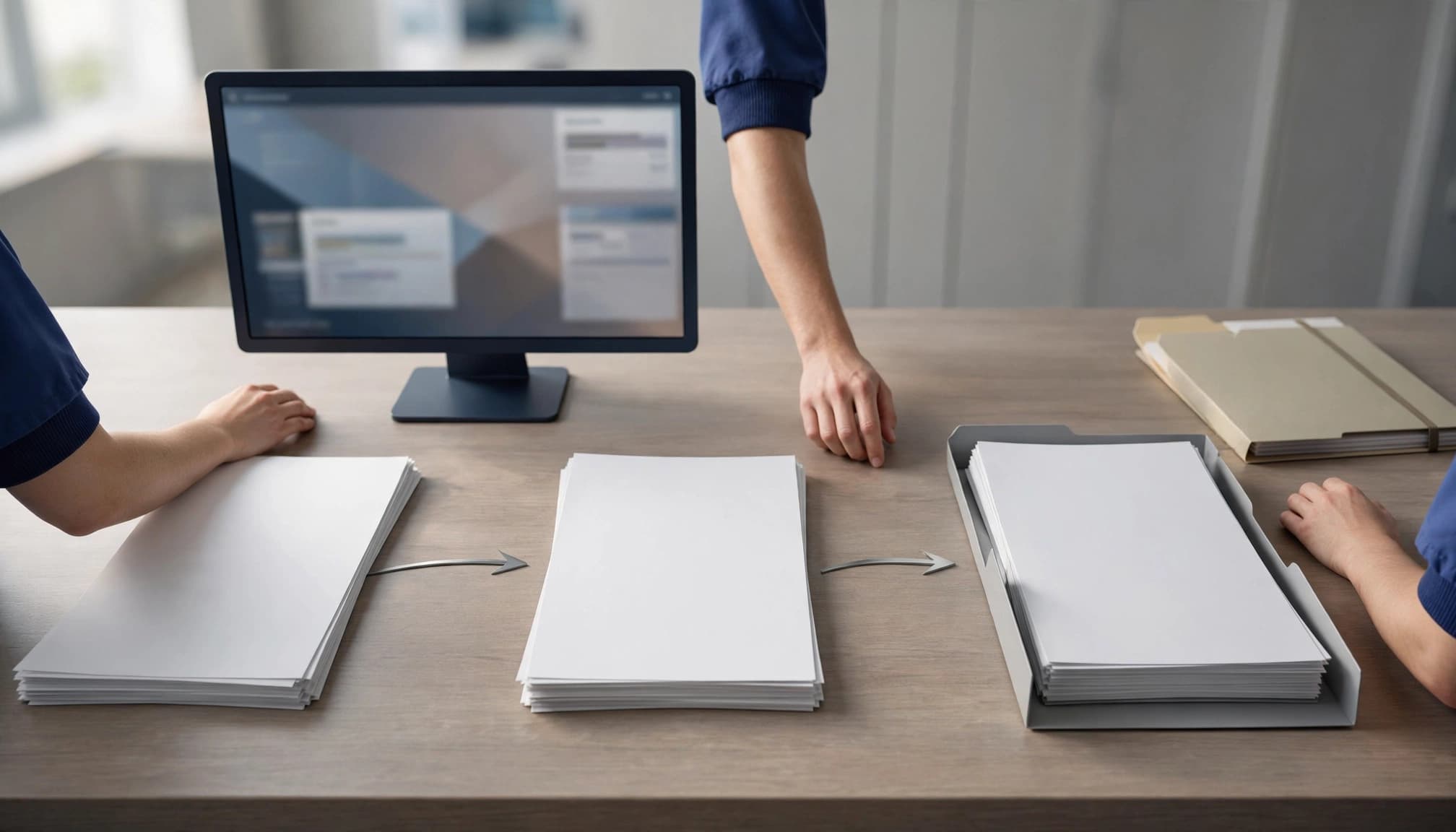
A practical pilot follows four steps:
- Record the existing workload, including documentation time, unsigned charts, and after-hours completion.
- Establish the approved configuration, consent process, template, access permissions, and fallback method before patient-data use.
- Track draft review, corrections, transfer failures, and finalization during a limited evaluation period.
- Compare finished-note workload against the baseline, then decide whether to expand, revise, or stop.
Include ordinary difficult conditions, such as interruptions, overlapping speakers, and medication-heavy discussions. A clean demonstration doesn’t establish reliability during a normal clinic day.
Track failed sessions as part of the denominator. Excluding them makes the product appear more dependable than the operational experience supports.
I would also assign an owner for template changes, support incidents, and periodic review after updates. Maintenance remains part of the workload after onboarding.
For nonclinical handoffs, my guide to small-team workflow automation addresses coordination options. Keep patient information outside unapproved connectors, even when an administrative automation looks convenient.
When an AI Scribe Is the Wrong Purchase
An ambient scribe is a weak fit when the documentation problem comes mainly from poor templates, duplicate data entry, or an inefficient approval process. Adding another application can preserve those problems while adding subscription costs.
It may also disappoint clinicians who already dictate efficiently or whose encounters require extensive nonverbal findings. Conversation capture cannot supply information that was never spoken or otherwise provided.
I would be cautious about buying diagnostic recommendations alongside documentation simply because they appear in the same interface.
The FDA’s January 2026 clinical decision support guidance addresses software functions and the boundaries of device regulation. A documentation feature doesn’t establish the regulatory status or suitability of every other capability in the product.
Additional clinical functionality deserves its own assessment, evidence requirements, and permission boundaries.
Frequently Asked Questions
Can a Free AI Scribe Be Used With Patient Information?
Price doesn’t determine HIPAA suitability. Patient-data use requires the appropriate agreement, security controls, permitted-use terms, and practice procedures. Free access is useful for evaluating a product’s interface, but it isn’t evidence of compliant deployment.
Should Every Clinician Use the Same Note Template?
A common structure can simplify review, but specialties and encounter types need different content. I would standardize required sections while allowing clinically necessary differences. Measure whether customization improves completeness without adding unsupported boilerplate.
How Should Multilingual Visits Be Evaluated?
Assess speaker attribution, medication terminology, negation, and the relationship between the spoken encounter and the final note. Interpreter-mediated visits deserve their own evaluation. A vendor’s language count doesn’t demonstrate reliable performance across those conditions.
What Happens When Capture or Transfer Fails?
The practice needs an established documentation fallback and a way to identify incomplete encounters. Retrying a transfer also creates a duplicate-note risk. Assign responsibility for recovery rather than assuming the clinician or front desk will notice every failure.
Further Topics for Practice Leaders
Three narrower topics deserve further evaluation:
- A HIPAA procurement checklist for ambient AI scribes.
- EHR note transfer versus order execution: permissions and approval gates.
- Measuring AI scribe ROI without overstating time savings.
Choose Around the Finished Clinical Record
The strongest reason to buy an AI scribe is a measurable reduction in documentation burden without weakening the clinical record. A polished draft, low starting price, or long integration list doesn’t establish that result.
I would choose the smallest workable configuration, preserve clinician approval, and expand only after the pilot demonstrates a dependable finished-note workflow. The useful product is the one that leaves your practice with less work to correct, transfer, and manage.