Matt Wolfe’s AI news roundup shows how quickly coding assistants and task-running agents are gaining new controls and integrations. My strongest takeaway is that easier execution doesn’t establish reliable execution. A generated answer, a proposed action, and a completed task are different outcomes.
For you, the practical questions are permissions, review burden, workflow fit, and evidence that the output works. Claude’s dashboard and animation features provide a useful starting point.
Claude Dashboards and Motion Reduce Setup Friction
Wolfe describes Claude’s dashboards and animated explainers as more integrated ways to handle tasks that were already possible with additional setup.
The dashboard feature connects with platforms such as BigQuery, Databricks, Snowflake, and Salesforce. Claude Motion creates animated explainers, while similar work could already be produced through JavaScript and tools such as Hyperframes or Remotion.
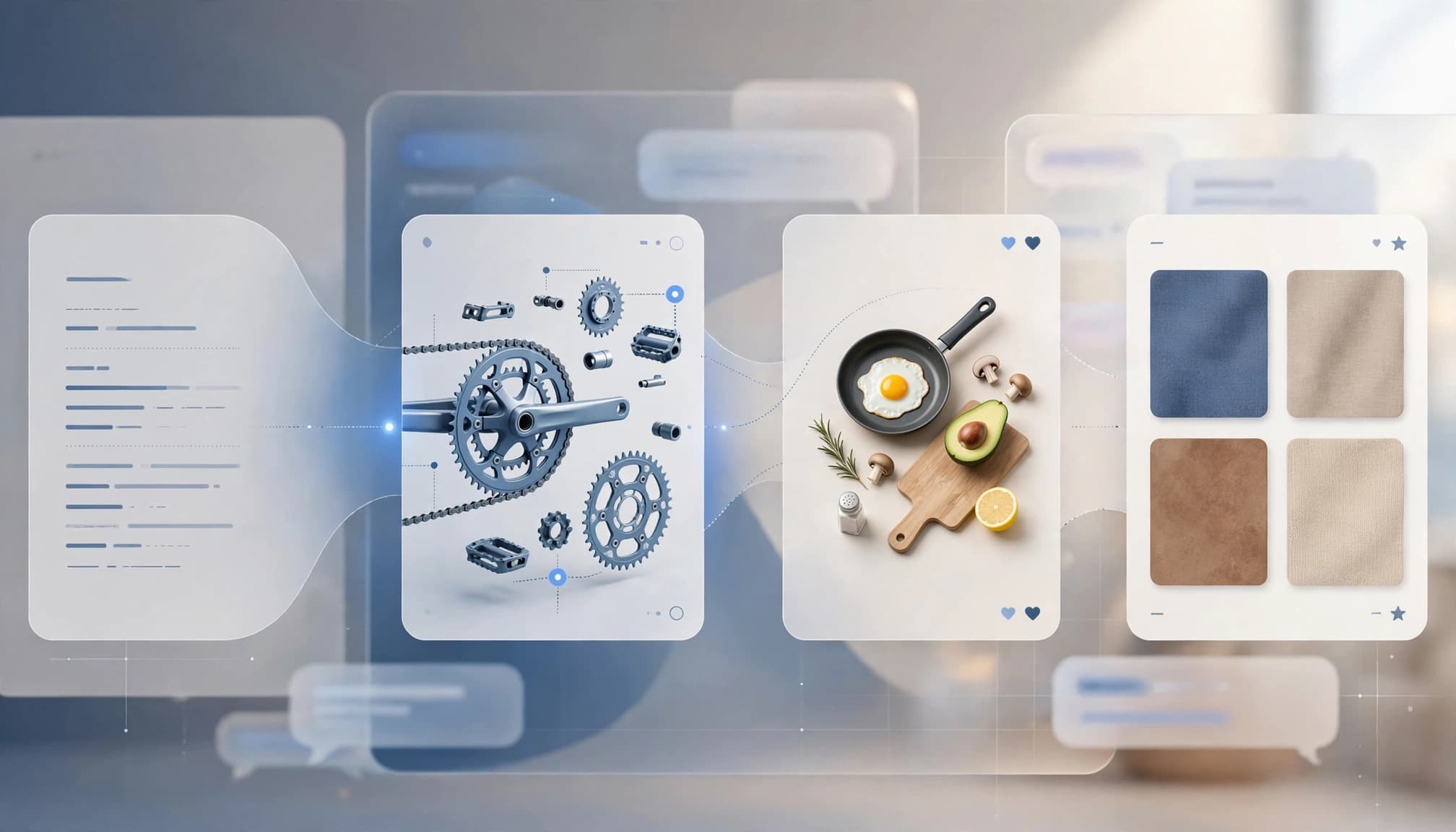
In Wolfe’s account, dashboards were available on paid plans, while Motion was a Team and Enterprise beta. He criticized its exclusion from his Max subscription despite that plan’s early-access positioning.
I see the practical benefit as fewer setup steps. The demonstration doesn’t establish animation quality across repeated attempts or the maintenance burden of a live dashboard.
HyperAgent Demonstrates Specialized Team Handoffs
The video’s sponsored HyperAgent interview-preparation demonstration divides work among three agents. Scout researches a guest, Echo develops questions using that research and a previous interview, and Vox produces a rundown.
Wolfe requests preparation for Riley Brown: eight questions, a 30-minute rundown, and three suggested demos. He reviews the plan before execution and then examines the research, production outline, and sources.
The permission boundary matters: email and calendar access remain disconnected because those agents don’t need them. Shared rooms let teammates use the same agents and instructions.
This is a concrete example of the role separation discussed in our AI agent builder checklist. It demonstrates a handoff workflow, without establishing how reliably it handles incomplete research or conflicting instructions.
Codex Approval Controls Change the Oversight Burden
Wolfe discusses Codex’s auto-review announcement, which makes “Approve for me” available to signed-in users. His explanation is that the mode interrupts less often than the default approval setting while retaining escalation for concerning actions.
That changes how frequently a person is asked to intervene. It doesn’t establish that every accepted action is correct or appropriate.
He also demonstrates instant steering: a running request can be redirected rather than waiting for completion. His example changes an image request from a dog to a wolf.
Faster steering reduces the delay before an agent changes direction. It doesn’t establish whether earlier actions need to be undone.
For coding work, I distinguish generated code from code that was executed, tested, reviewed, and shown to work. These interface demonstrations don’t provide repository-level evidence of correctness, test coverage, maintainability, or debugging performance.
Coding Demos Need Task-Specific Evaluation
The roundup doesn’t document a repeated coding evaluation with a defined repository, language, test suite, or failure criteria. I wouldn’t treat its demonstrations as evidence that an assistant reliably produces production-ready software.

Our AI tool evaluation scorecard addresses that distinction: success needs a defined task and explicit failure conditions.
The relevant questions include whether an assistant understands repository context, respects permission boundaries, produces sufficient tests, and leaves changes that a developer can maintain. Total cost also includes review, debugging, and recovery work. A benchmark result alone doesn’t establish real-world productivity.
Decisions and Meeting Notes Serve Different Jobs
Wolfe describes the Decisions API as a developer interface for bounded outputs. Predicates estimate whether statements are true, choices select among predefined options, and scores evaluate inputs within a numeric range.
These outputs are easier to consume programmatically than open-ended prose. Their structure doesn’t make the underlying judgment correct, and a confidence score shouldn’t be mistaken for certainty.
The ChatGPT Meetings plugin handles another workflow: meeting notes, personalized summaries, and next steps. Wolfe compares it with Granola and describes using meeting context for subsequent questions and follow-up work.
Capturing a task in meeting notes remains separate from executing that task successfully.
GrokBot Combines Model Routing With Specialized Bots
According to the multi-model backend announcement discussed by Wolfe, GrokBot can select outside services such as Opus, Midjourney, and Suno for different tasks. Whether OpenAI models are included remains unanswered in his account.
The X-monitoring capability supports searching, reading, and monitoring posts. Wolfe’s demonstration reviews his last 75 posts, identifies stronger and weaker performers, and reports a posting-time pattern. That is an analysis of his account, not a general marketing rule.
His broader setup includes email-triage and research bots, with a chief-of-staff bot coordinating work. Users can address that coordinator or individual specialists.
I find the separation useful because each worker can have a distinct job. More agents also mean more handoffs to inspect when information is incomplete or an action fails.
Google’s Tools Span Games, Local Notes, and Enterprise Agents
Game Creation and Offline Transcription
Wolfe describes Google Playground as a prompt-based game builder with games contributed by other creators. He plays Skyfall Defender during the demonstration.
He also covers Google’s offline meeting note-taker, described as processing meetings locally on a Mac. Local processing is a meaningful data-handling distinction. It doesn’t establish transcription accuracy or eliminate the need to review notes.
Enterprise Orchestration and Content Identification
The Gemini Agent announcement concerns business workflows across services including Google Workspace, Microsoft 365, and Slack. Wolfe distinguishes this enterprise offering from consumer-focused agents.
He also discusses SynthID Detector. Its supported-provider scope matters: the feature shouldn’t be interpreted as a universal detector for every AI-generated file.
More Agents, Policy Changes, and a Labor Forecast
The Hark Pro demonstration shows shopping, presentation preparation, recruiting, ride booking, and return-label tasks. Meta’s Muse gadget code explores a different interface, including Raspberry Pi-based devices.
Wolfe also covers Anthropic’s prohibition on sustained, needless model abuse. The clarification excludes ordinary frustration, research, testing, and dark creative themes.
Finally, he cites Mustafa Suleyman’s discussion of Daron Acemoglu’s forecast: roughly 5% of human work replaced within ten years. That’s a forecast, not a measured outcome.
Dependable Workflows Remain the Meaningful Test
My takeaway is that these announcements make agent interaction more integrated and flexible. They don’t establish dependable results across repositories, meetings, or operational tasks.
The meaningful distinction is completed, reviewed work. Fewer clicks and more capable-looking demos matter only when the resulting workflow remains correct, controlled, and practical to maintain.