It’s 11:47 pm, I’m half-awake, and my brain is doing that thing where a normal symptom turns into a full-on spiral. Is this medication side effect serious? Does this lab value matter? Should I wait until morning, or call someone now?
That’s the headspace where MeetAugust AI makes sense. I tested it as an always-available health companion to help me understand symptoms, meds, and lab reports between real clinical visits, not to replace them. This is a product review, not medical advice.
MeetAugust (also called August AI) markets itself with big trust signals: free access, built by doctors, privacy and HIPAA-aligned messaging, and “millions of users.” I went in cautiously optimistic, because health info is high stakes, and AI can be confidently wrong if you let it.
What MeetAugust AI is, and what it is not
MeetAugust AI is basically a medical explainer that lives where you already are, like WhatsApp, plus web and mobile apps. In day-to-day use, it feels like a calm friend who can translate medical language into plain English, and then help you decide what to ask next.
It’s also trying to be more than a symptom checker. The product positioning leans toward a “health companion” that can remember context over time, review history, and help with follow-ups, not just one-off chats.
On its site, the company talks about its mission and background (including how misdiagnosis can send people searching for answers on their own). If you want that context straight from the source, here’s the MeetAugust team and story page.
What it is not: it can’t examine you, order tests, or take responsibility for emergency care. It can help you think, not treat.
The biggest promise: clear medical guidance in plain language
“Clear guidance” sounds like marketing until you see what it looks like in practice. For me, it meant:
- Rewriting a lab panel into “what’s high, what’s low, what’s usually watched.”
- Explaining meds with the “why,” the “how to take,” and the “watch-outs.”
- Helping me turn a messy worry into a short list of questions for my clinician.
I also get why anxious users like it. When a tool gives you a structured next step, your mind stops free-falling. It doesn’t make the problem go away, but it can lower the noise.
Quick credibility check: what I look for before I trust a medical AI
MeetAugust advertises a perfect USMLE score, and that’s an attention-grabber. Still, an exam score is not the same thing as safe real-world guidance. Before I trust any medical AI, I look for a few signals:
It should be consistent, admit limits, and flag red-flag symptoms clearly. It should also avoid pretending it’s diagnosing, and instead stick to possibilities, risk level, and what to do next.
MeetAugust mostly follows that playbook in my testing, but I still treat it like an virtual assistant, not an authority.
How MeetAugust AI actually works when I use it day to day
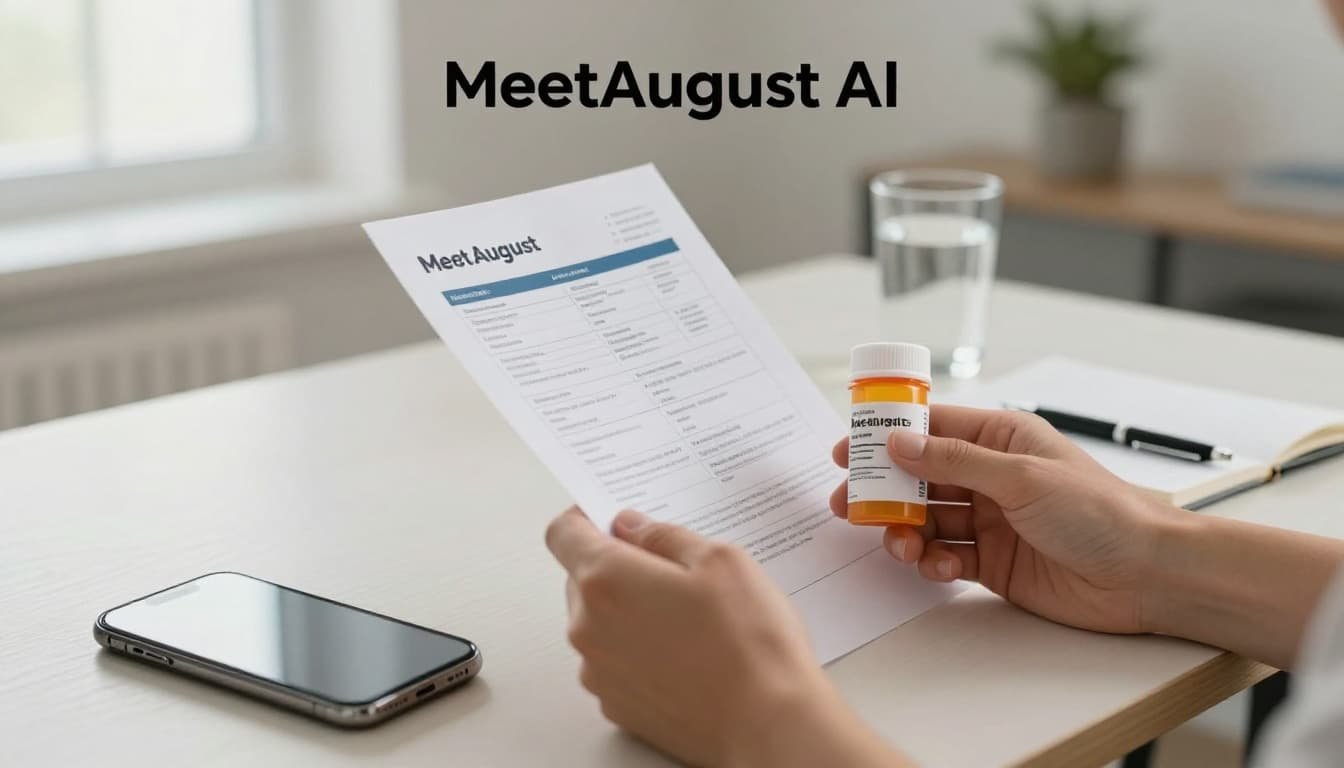
Using it is straightforward. I start a chat, describe what’s going on, and add context (age range, relevant conditions, meds, timing). If I’m dealing with paperwork, I upload a photo of a lab report or prescription.
The response usually comes back in a structured format: what it thinks is going on (as possibilities), what would make it more concerning, what I can do right now, and what I should ask a professional.
What surprised me is how much the “memory” angle changes the feel. If an assistant can remember allergies, ongoing meds, or a pattern across months, it stops feeling like a single Google search and starts feeling like a running health notebook.
Third-party tool directories echo similar strengths, especially around report reading and WhatsApp-based access. One example is this August feature breakdown and pricing notes, which lines up with how the product behaves in real use.

Input options I can use: symptoms, photos, lab reports, prescriptions, and history
In my testing, the most useful inputs were the ones that reduce ambiguity. Here’s what I actually used:
Symptoms in plain words (with timing and severity) get you a fast set of “could be” explanations and safety checks. Photos and documents are where it feels stronger than basic symptom bots. Lab reports and prescriptions often trigger a more concrete response: definitions, “why it matters,” and what to monitor.
There’s also a “medical history review” style workflow. If you keep feeding it relevant history, the follow-ups get sharper, because you’re not starting from zero every time.
What the answers look like: differential ideas, next steps, and questions for my doctor
MeetAugust doesn’t just hand you a label. Most of the time it gives a short differential (possible causes), and then focuses on actions: hydration, rest, tracking, medication timing, or “talk to a clinician within X time.”
My favorite part is the question list. It’s like showing up to an appointment with a mini-briefing, instead of trying to remember everything while you’re stressed.
I still sanity-check anything medication-related with a pharmacist or clinician, especially dosing, interactions, pregnancy risk, pediatrics, and anything involving chest pain or breathing.
Real world use cases where MeetAugust AI feels genuinely helpful
This is the part that matters. A health assistant lives or dies on those ordinary moments when you need clarity fast.
For “should I worry?” triage, it helped me slow down and sort symptoms by urgency. For lab work, it did a good job translating jargon into “what’s being measured and why.” For prescriptions, it could highlight common interactions and side effects to watch for, which is useful if you’re juggling multiple meds.
It also includes wellness planning. That can sound fluffy, but when it’s tied to your actual context (sleep, diet, movement, stress, and reminders), it becomes practical. In app update notes from early 2026, MeetAugust added features like voice chat, clearer profile tools, and blood work-focused utilities, which matches the direction it’s heading.
Other reviewers describe similar “companion” value, including mental well-being support and regular check-ins. One example is this product overview and use-case summary, which mirrors the broad set of scenarios the tool targets. Results vary, and I’d never treat emotional support from AI as a replacement for therapy, but as a first step, it can be grounding.

When I am staring at a lab report and do not know what matters
My go-to workflow is simple: I upload the report, ask for a plain-English summary, then ask what questions I should bring to my doctor.
MeetAugust tends to call out highs and lows, define the markers, and explain what might influence them (diet, hydration, time of day, recent illness, meds). It also helps me avoid a classic mistake: treating one lab value like a verdict, instead of part of a pattern.
If it flags potential medication interactions or “watch-outs,” I treat that as a prompt to confirm, not a final answer. A pharmacist is still the best safety net for medication complexity.
When symptoms pop up and I need a calm plan, not panic scrolling
This is where it felt most human to me. If I say, “I have a fever and a headache, day 3, here’s what I’ve tried,” it usually responds with a practical decision tree: what’s typical, what’s concerning, and how to monitor changes.
It also does something subtle but valuable: it nudges me away from doom-scrolling and toward action. Track temperature, notice rash, assess dehydration, check for stiff neck, decide whether to seek care.
If something feels like an emergency, I don’t use AI at all. I use local emergency services.
MeetAugust vs other AI health assistants like Ada and Healthily
Ada and Healthily are well-known for guided symptom-checker flows, and some people prefer that structured questionnaire style. MeetAugust’s vibe is more conversational, and it seems to emphasize documents and continuity.
I also notice a “second opinion” framing with MeetAugust AI. It often encourages me to verify and prepare questions, which is a healthier posture than pretending to replace a clinician.
If you want a directory-style snapshot of MeetAugust AI positioning and feature set, this MeetAugust tutorial-style review is a decent reference point.
Where MeetAugust stands out: memory plus report uploads plus messaging access
These three pieces change the experience:
Messaging access means I actually use it. Report uploads mean I can work with real data, not vague descriptions. Memory means the next chat can build on the last one, which matters if you manage chronic issues, recurring labs, or long-term meds.
It’s like the difference between a single sticky note and an ongoing health notebook.
Where I would still consider alternatives
If I want a strict symptom-checker questionnaire with a very guided flow, I’d consider Ada or Healthily first. If I need region-specific clinical pathways, or tight integration with a hospital system, MeetAugust may feel more general.
And if I’m choosing a tool for a family member who needs high reassurance from published clinical validation, I’d look for the most transparent evidence and oversight available, even if the experience is less convenient.
Privacy, data, and safety checks I would not skip
This is the critical section, because health data is personal in a way that your grocery receipts aren’t.
MeetAugust states that it uses strong security practices, and it advertises HIPAA and GDPR-aligned handling, plus encryption. It also claims you don’t need to provide personally identifiable info for it to be helpful, which matches how I used it.
In early 2026 updates, the app also emphasized clearer chat history controls and deletion-style options. I like seeing tools move in that direction, because privacy features should be easy, not buried.
Still, I assume anything I upload is sensitive, and I act like it.
What data I might share, and how I can share less
I try to share only what’s needed to answer the question. If I’m uploading a lab report or discharge summary, I remove or cover obvious identifiers when I can.
A practical rule I follow: if the assistant doesn’t need it to interpret the result, I don’t send it. Names, addresses, full date of birth, account numbers, and facility IDs usually fall into that category.
Safety limits: what it can help with, and when I should seek urgent care
I use MeetAugust AI for understanding and prep, not emergency decisions. I seek urgent help right away for red flags like chest pain, trouble breathing, face drooping or sudden weakness (stroke signs), severe allergic reaction, severe bleeding, suicidal thoughts, or sudden confusion.
That list isn’t “being dramatic,” it’s basic safety. An AI chat is not the place to hesitate.
Pricing and plans, plus who should and should not use it
As of February 2026, MeetAugust AI is marketed as free to start, and the app store notes point in the same direction. I’m careful here because pricing and feature access can vary by location and over time. If you see an upgrade prompt, assume it’s tied to advanced features, deeper analysis tools, or expanded profiles.
What I get for free, and what usually pushes people to upgrade
In my experience, free access covers the core value: asking questions, symptom guidance, and basic explanations. Upgrade pressure usually appears when you want ongoing tracking, deeper report utilities (think blood work focus), more reminders, voice features, or more persistent profiles.
If you’re only using it occasionally, free may be plenty.
Best fit and poor fit, in plain English
MeetAugust AI is best for people who want an AI layer between them and their medical data, without pretending it replaces a clinician.
Best fit:
- Busy schedules and long gaps between appointments
- Caregivers who need help organizing questions and reports
- Health anxiety when you need structure and calm next steps
- Chronic tracking where context over time matters
Poor fit:
- Medical emergencies or rapidly worsening symptoms
- People who want zero data sharing under any circumstances
- Situations needing a physical exam to be safe
- Minors, unless the product policy and guardians allow it
Pros and cons, no sugar coating
I like MeetAugust ai, but I don’t treat it like a magic tool.
On the pro side, it’s fast, clear, and good at translating reports. It’s also great at helping me prepare for a doctor visit, because it turns vague worry into specific questions. The WhatsApp-style convenience makes it easier to use consistently, and the tone is usually calm and supportive. The privacy controls and chat management features (especially the newer ones) are moving in the right direction.
On the con side, it can’t diagnose, and it can still be wrong. AI can sound confident even when it’s guessing, especially if my input is messy or incomplete. There’s also a real privacy tradeoff any time you upload health documents, even with good security practices.
How I mitigate that: I use it to generate questions and organize info, then I confirm the important stuff with a licensed clinician or pharmacist. I don’t use it to decide emergencies.
For another outside perspective on its positioning and feature list, this August listing in an AI tool directory is a useful cross-check.
Where I land after testing MeetAugust
MeetAugust AI isn’t a doctor, and it shouldn’t pretend to be. Used the right way, it’s a solid health companion that helps me translate, organize, and calm down enough to make a good next decision.
If you’re curious, I’d start with a low-stakes task first, like asking it to explain one lab term or a medication instruction. Build trust slowly, keep your privacy habits tight, and use it to show up to real care with better questions.