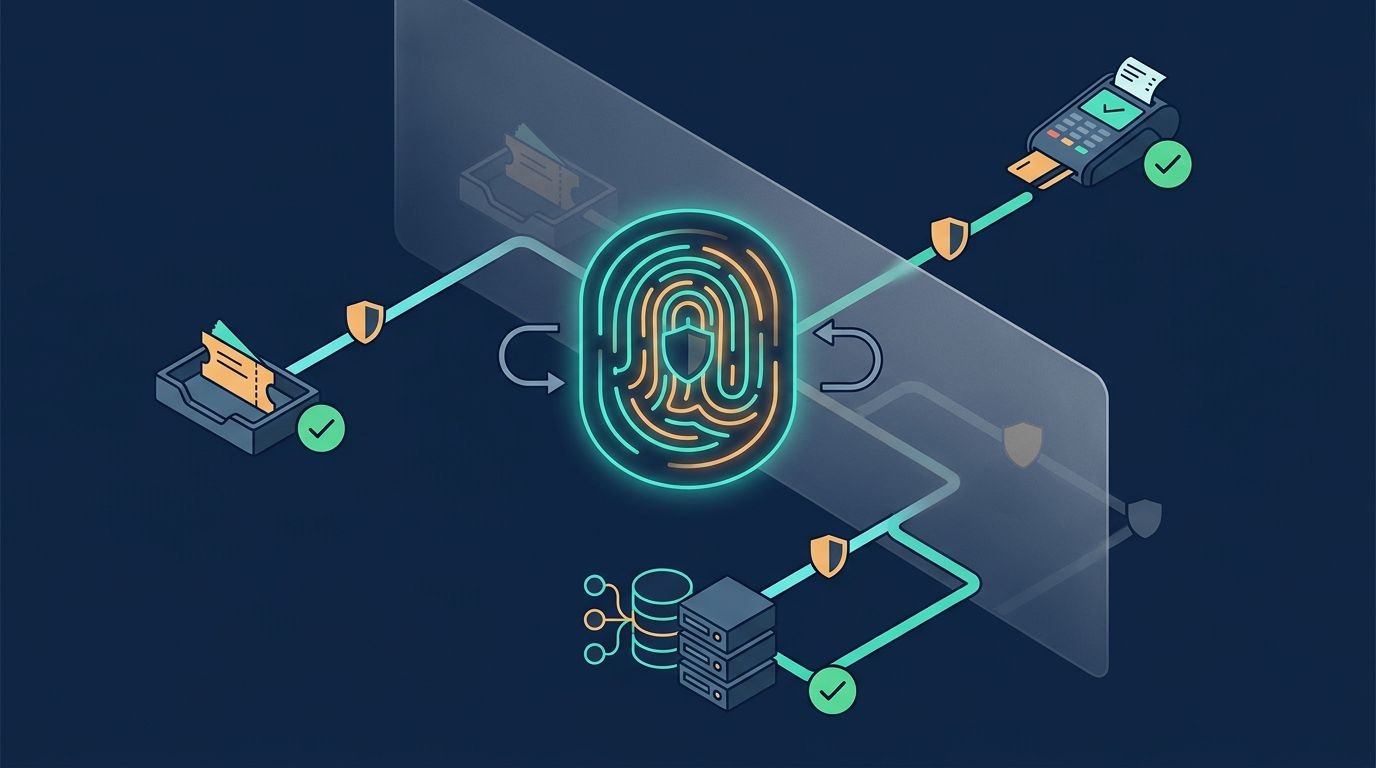
During a multi-turn conversation, a retry can turn a timeout into a duplicate payment, second support ticket, or overwritten customer record.
When I review production agent workflows in LLM systems, retry behavior is often less reliable than the model itself. The hard problem is not retrying a failed request during tool calling. It is knowing whether the request failed before or after an external system acted, especially when no response arrives.
A safe design records intent before a tool call and preserves that record beyond the agent process. In distributed systems, uncertain outcomes become states to investigate.
Key Takeaways
- Treat every tool call with side effects as a durable job with an action ID, idempotency key, execution state, attempt history, and final receipt.
- Persist the action record before delivery, use conditional claims or leases for workers, and keep execution state outside the agent process so it survives restarts and queue redelivery.
- Classify errors before retrying: use bounded exponential backoff with jitter for transient failures, but move post-dispatch timeouts into an
unknownstate for reconciliation. - Generate idempotency keys from stable business intent and bind them to the exact approved payload; never let the model, retry number, or timestamp create a new identity.
- Resume the agent from a durable checkpoint with the confirmed receipt instead of replaying the full reasoning chain, and monitor unknown actions, collisions, retry budgets, and reconciliation time.
Why AI agent retry logic fail inside an agent loop
A basic retry wrapper can work for a short-lived read request. It offers a weak retry strategy for error handling when tool calling can reach a CRM, payment API, email service, or internal system of record.
Consider what happens after an agent builds context through a multi-turn conversation and uses tool calling to create a customer record. The request leaves the container. The CRM creates the record, but the connection drops before the agent receives the response. A normal retry sees a timeout and sends the same request again.
The agent has no proof that the first attempt failed. It only knows it did not receive a response.
That gap gets worse with container recycling, queue redelivery, or an agent run resumed after deployment, all common in distributed systems. In-memory counters, local variables, and retry timers disappear, and a resumed run may lose the original context from a multi-turn conversation. A worker elsewhere in distributed systems may then resume with incomplete context and repeat work that already happened.

The practical rule is simple: a tool call with side effects is a durable job, not a function call. Creating a record, sending a message, approving a refund, changing a subscription, or opening a ticket needs its own execution history.
This distinction is also behind common tool-call failure patterns. HTTP retries can be safe for some reads. They become risky when the endpoint changes money, data, permissions, or customer communication.
I also treat a restart as a normal condition, not an exceptional one. If the process dies between “request submitted” and “response stored,” the durable record must tell the next worker what happened and what it may safely do next.
Give retries a durable execution record
Durable execution means the retry state lives in a database or workflow engine, not in the model loop. It must also survive a multi-turn conversation, rather than disappearing when the model produces its next response. I want every external action to have an immutable action ID, an idempotency key, a state, a request fingerprint, attempt history, and a final receipt.
A basic action ledger can use these states:
| State | What it means | What the worker may do |
|---|---|---|
| Planned | The action and payload were saved before delivery. | Claim the action once. |
| Executing | One worker owns the current attempt. | Send the request or continue an approved attempt. |
| Unknown | The request may have reached the provider, but no result was confirmed. | Reconcile before sending again. |
| Succeeded or failed | A terminal receipt or final error was saved. | Do not repeat the same action. |
The ledger should govern the next permitted action, giving each worker a retry strategy based on the recorded state.
Write the action row in the same transaction that records the business event requiring it. This boundary matters in distributed systems and forms the transactional outbox pattern in practice. If an agent approves a request to create a case, persist the approved payload and action record before any worker contacts the case system.
A worker should claim the job through a conditional update, lease, or database lock. In distributed systems, that claim prevents two queue consumers from sending the same action at once. If the worker crashes, another worker can reclaim the job only after the lease expires.
Workflow engines help preserve progress across process failures. Temporal and Inngest can resume a workflow after a multi-turn conversation has accumulated. LangGraph can checkpoint graph state and pause protected actions. These frameworks support durable progress, but they do not replace provider-side duplicate protection. The downstream API still needs its own safeguards.
The model can decide what action to request through tool calling. It should not decide whether an uncertain past action is safe to repeat.
For no-code workflow automation, tool calling can look correct until an app times out after receiving the request. I look for duplicate checks, stored execution IDs, and human review around money-facing actions before trusting a workflow.
Classify errors before choosing a delay
Retrying every error wastes capacity and hides defects. Error classification should happen before the system calculates backoff, so error handling for tool calling and other external actions follows a clear policy.
That error classification leads to these default responses:
| Situation | Common signal | Default response |
|---|---|---|
| Transient errors | Connection reset, 502, 503, or 504 | Retry with a bounded delay. |
| Rate limits | HTTP 429 or provider quota signal | Wait for the provider’s reset guidance, then retry. |
| Invalid input | Malformed payload or context-size error | Correct the input or fail the action. |
| Authentication or permission issue | HTTP 401 or 403 | Refresh credentials only when supported, otherwise stop. |
| Conflicting record | HTTP 409 or duplicate response | Inspect the existing resource before acting again. |
| No confirmed outcome | Timeout after request dispatch | Mark as unknown and reconcile. |
The last row is the one teams skip. Transient errors before the request leaves your network may be retriable. A timeout after the provider receives it is an unknown outcome. Those failure modes matter in a multi-turn conversation, where accumulated context can make repeated requests look like new work.
Rate limits also need their own policy. A blanket retry every few seconds can repeat requests in a multi-turn conversation, worsening the provider’s queue and triggering more restrictions. Practical rate-limit retry patterns are useful reference material, but your actual wait period must follow the limits and response headers of the API you call. Together, these rules form an adaptive retry approach, connecting classification, backoff, and stop conditions through one retry strategy.
Use exponential backoff with jitter
Exponential backoff spreads repeated attempts over longer intervals. Jitter addresses the thundering herd problem by keeping a large group of workers from trying again at the same second.
A common calculation is:
delay = random(0, min(cap, base * 2^attempt))
With a one-second base and a 60-second cap, later attempts wait longer without creating a fixed retry wave. If the API sends a Retry-After value, don’t retry sooner than that value.

I set three limits for each integration:
- A retry budget with a maximum number of attempts that fits the operation’s risk and urgency.
- A total retry window that ends before the business action becomes stale.
- A circuit breaker that pauses new requests after a provider reaches a defined failure threshold.
A circuit breaker protects both sides. In distributed systems, it stops a fleet of workers from hammering a failing API. It also gives operators a visible signal that the issue is broader than one run.
Generate idempotency keys from stable intent
An idempotency key makes repeated delivery of the same approved action return the same result instead of creating a new action. It turns retrying from a guess into a bounded operation. That gives a retry strategy a stable boundary.
The key must come from stable, deterministic facts. I do not let the LLM invent it. Prompt mutation can rephrase intent, omit fields, or request a similar action later.
For a customer-facing action, I derive a key from values such as:
tenant_id | workflow_version | source_event_id | action_type | target_record_id | approved_payload_hash
The source event ID gives each event its own stable action identity. In a multi-turn conversation, it separates genuinely new requests from retries. The action type and target record bind the key to the business operation. The payload hash catches a dangerous mismatch, where the same key arrives with different content.
Do not add the retry number, current timestamp, or model-generated explanation. Those values make the same action look new on every attempt.

Store the original request fingerprint alongside the key. Stable identifiers and fingerprints help distributed systems compare requests across workers and providers. If a later request has the same key but a different payload, reject it for review. Silently accepting changed content creates an audit gap.
Some providers accept an idempotency key directly. Others do not. Where an API lacks that feature, use your own action ledger and a natural uniqueness rule in the receiving system when possible. A CRM record might be unique on an external source ID. A support ticket may be deduplicated by the inbound event ID.
AI agent retry logic also needs to bind human approval to the exact payload. In a multi-turn conversation, approval for “send a renewal email” covers the reviewed recipient, content, and attachments, not regenerated versions. Persist the reviewed recipient, content, attachments, action ID, and key as one sealed payload. The executor should use tool calling to run it once after a resume, not regenerate the request.
Reconcile unknown outcomes before retrying
Unknown does not mean failed. It means the system lacks proof, so error handling needs a separate policy.
When a call times out after dispatch during a multi-turn conversation, I move the action into an unknown state. The reconciliation worker then checks for a result before any retry is allowed.
A practical sequence looks like this:
- Preserve the action ID, idempotency key, provider request ID, and last attempt time.
- Wait through a short reconciliation window that fits the provider’s processing model and rate limits.
- Query the provider’s status endpoint or search for the action using the stored external reference.
- Save a confirmed receipt, or let the reconciliation worker follow this retry strategy only when the provider’s duplicate protections make another request safe.
If the provider cannot report status or accept an idempotency key, automatic replay is a poor trade-off for high-risk actions. Use a review queue as a fallback route instead. A person can compare the source system, destination system, and intended payload before approving another attempt.
A practitioner discussion of retry state surviving agent restarts reaches the same operational point in distributed systems: retry state needs to outlive the agent that initiated it.
Return results without replaying the reasoning chain
An asynchronous job should resume the right step, not replay the full agent conversation.
During tool calling, persist a dispatch checkpoint for the paused multi-turn conversation with the run ID, action ID, workflow state version, selected tool, approved payload, and a compact task summary. Do not store hidden reasoning as the execution record. Store observable inputs, decisions, tool arguments, and receipts.
When the worker gets a final result, it should atomically update the action record and publish a completion event. The agent orchestration resumes from the waiting node with the action receipt and current state version.
To preserve context awareness, the model receives only the context it needs for the multi-turn conversation: the task summary, current conversation state, result payload, and any changed records. That avoids a second tool call caused by replaying stale context.
A vector database such as Pinecone or Weaviate can help retrieve conversation memory or supporting documents. It is not the source of truth for execution state. Retrieval is probabilistic, while a transaction ledger needs exact identity, timestamps, and deterministic status transitions.
Monitor the signals that expose duplicate risk
Observability tools such as Prometheus and Grafana can show retry pressure before customers report duplicates. I separate retry volume from duplicate prevention, because fewer retries do not prove an action completed safely.
Track at least these metrics:
- Retry attempts by integration, error class, and attempt number.
- Actions held in
unknownstate and the age of the oldest one. - Idempotency collisions, including keys rejected because the payload changed.
- Reconciliation time, terminal success rate, and review-queue volume.
- Retry budget consumption by integration and workflow.
- Circuit breaker openings and rate limits.
Avoid putting action IDs, email addresses, or raw payloads into metric labels. That creates high-cardinality metrics and can expose customer data. Put those details in structured logs or traces with access controls.
For debugging, every trace should connect the agent run ID to a multi-turn conversation, action ID, idempotency key hash, provider request ID, and final receipt. This error handling helps operators in distributed systems investigate repeated activity across the same multi-turn conversation. I want to answer one question quickly: “Did this exact action execute, and where is the proof?”
Retry wrappers in LangChain, LangGraph, AutoGen, CrewAI, or Python libraries such as Tenacity can still help with transient errors. Keep them narrow utilities within agent orchestration and tool calling, not the execution authority. They should call into the durable action layer, not replace it.
Make retries boring
Reliable agents in distributed systems do not recover by repeatedly asking the model what to do next in a multi-turn conversation. They recover because each side effect from tool calling has a durable identity, a clear state, and a record that survives the worker.
The strongest AI agent retry logic uses a retry strategy for unknown outcomes, sending them to reconciliation instead of replay. That failure recovery path lets an agent restart, wait, and resume without creating a second action.
FAQ
What errors should an AI agent retry logic automatically?
Retry temporary network failures, provider 5xx errors, and rate limits when the action has a durable record and idempotency protection. Use error handling to separate automatic retries from reconciliation, then stop on malformed input, unsupported permissions, policy failures, or invalid tool arguments. A post-dispatch timeout should enter reconciliation first, especially when a multi-turn conversation contains several independent actions.
Can a vector database preserve agent state across retries?
It can preserve retrievable context from a multi-turn conversation, including summaries, documents, and prior task notes. It should not decide whether a payment, email, record update, or ticket creation already happened. Keep execution truth in a durable workflow store or transaction ledger.
Should one idempotency key cover an entire multi-turn conversation?
No. Generate one key per business action. A multi-turn conversation can contain several legitimate actions, such as updating a contact, opening a case, and sending a follow-up. Each action needs its own source event, payload binding, status, and receipt.
Suggested related articles
- n8n AI automation workflows for practical workflow designs with duplicate checks and approval steps.
- AI workflow automation tools for small teams for comparing platforms that fit different operational requirements.
- Zapier AI review and agent actions for a practical look at agent-style automation limits and trust controls.